
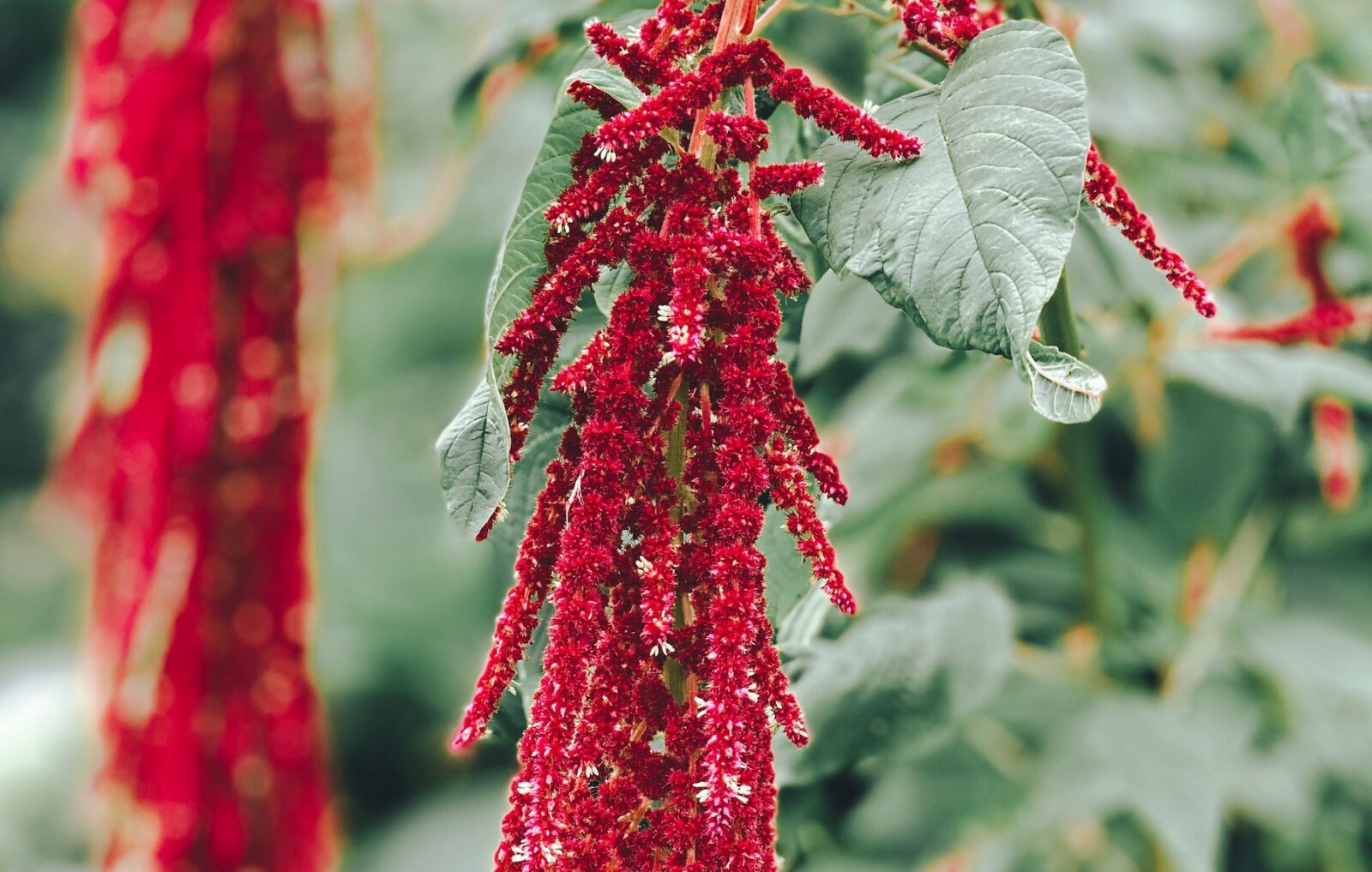
The origins of amaranth can be traced back to ancient Mexico, where the Aztecs cultivated it around 8,000 years ago. Today, it is grown in various regions including China, Russia, Eastern Europe, Peru, and Mexico is witnessing its resurgence.
Amaranth is a tall plant, often reaching heights of 5 to 7 feet, characterized by broad green leaves and vibrant purple, red, or gold flowers. With around 60 different species, it produces small seeds and is commonly referred to as a “grain,” although it differs from traditional grains like oats, wheat, or rice. It is sometimes known as a “pseudo-cereal” as well.
One of the significant qualities of this small grain is that it is gluten-free. When ground, its flour appears white and powdery, similar to regular flour.
Due to its density, amaranth is too heavy to be used on its own. It is best utilized in combination with other grains to enhance the nutritional value without altering the taste of the final product.
Cooking with amaranth can be enjoyable due to its versatility. When prepared correctly, it can serve as a healthy substitute for cereals or a popped snack similar to popcorn. It can also be incorporated into stews and soups or mixed with other grains to enhance their nutritional profiles.
The health benefits of amaranth are remarkable, which is why it is gaining recognition among grains. It is rich in essential minerals such as calcium, iron, phosphorus, and potassium. Additionally, it boasts an impressive protein content, with 13.6 grams per 100-gram serving.
Amaranth is a valuable source of lysine, an essential amino acid crucial for protein synthesis, with a content of 0.747 grams per 100-gram serving. It also contains primary proteins like methionine and leucine. Methionine plays regulatory roles in the immune and digestive systems, as well as metabolic processes. Leucine contributes to muscle protein synthesis and inhibits protein degradation in skeletal muscle and liver.
In terms of nutritional content, a hundred grams of raw amaranth provides 7.61 milligrams of iron, 6.7 grams of fiber, 557 milligrams of phosphorus, 159 milligrams of calcium, 248 milligrams of magnesium, 508 milligrams of potassium, and 4.2 milligrams of vitamin C. It also contains healthy oils, including unsaturated fatty acids and omega-3, which are vital for optimal nutrition.
Studies conducted on amaranth have revealed its potential health benefits. The seeds contain not only important nutritional properties but also phytochemical compounds like rutin and nicotiflorin, as well as peptides that can help reduce hypertension and the risk of cancer.
Further research is recommended to explore the potential health benefits of peptides in amaranth, particularly lunasin, previously identified in soybeans for its anti-cancer properties and potential to mitigate chronic diseases such as inflammation, diabetes, heart disease, and stroke.
Since cardiovascular disease (CVD) is associated with high blood cholesterol, hypertension, obesity, and diabetes, reducing saturated fat while increasing unsaturated fatty acids has been shown to prevent CVD. Amaranth has been studied in relation to these findings and shows potential benefits for patients with cardiovascular disease.
The test results also indicate that amaranth oil could be a functional food product for the prevention and treatment of cardiovascular diseases.In addition to its nutritional value, amaranth has been the subject of various studies that have yielded interesting findings. For instance, researchers have discovered phytochemical compounds like rutin and nicotiflorin in amaranth seeds, which have demonstrated the ability to lower hypertension and reduce the risk of cancer.
Further investigations are warranted to explore the potential health benefits of specific peptides found in amaranth, including lunasin. Lunasin, previously identified in soybeans, is believed to possess cancer-preventing properties and may also help in mitigating chronic diseases such as inflammation, diabetes, heart disease, and stroke.
Considering that cardiovascular disease (CVD) is closely linked to factors like high blood cholesterol, hypertension, obesity, and diabetes, scientists have explored the impact of reducing saturated fat and increasing unsaturated fatty acids. In this context, amaranth has shown promise as a potentially beneficial ingredient for individuals with cardiovascular disease.
Test results have also indicated that amaranth oil could serve as a functional food product for the prevention and treatment of cardiovascular diseases. The unique combination of nutrients and compounds found in amaranth makes it an intriguing subject for further research and potential therapeutic applications.
Overall, the history, nutritional profile, and health benefits of amaranth contribute to its growing popularity and recognition as a valuable grain alternative. Its rich mineral content, remarkable protein levels, gluten-free nature, and potential disease-fighting properties make it an attractive addition to a healthy diet.