
Cancer is a complex disease that arises from abnormal cell growth and can spread throughout the body. While conventional cancer treatments such as surgery, chemotherapy, and radiation therapy can be effective in many cases, they may also cause side effects and may not work for all types of cancer. As such, researchers have explored the potential of herbs as complementary or alternative approaches to cancer treatment. Here are some herbs that may help shrink cancer tumors and support cancer treatment, based on scientific evidence.
Turmeric (Curcuma longa) is a spice commonly used in Asian cuisine and traditional medicine. Turmeric contains a bioactive compound called curcumin, which has been found to have anti-inflammatory, antioxidant, and anti-cancer properties in laboratory and animal studies (1). Curcumin can interfere with multiple signaling pathways involved in cancer development and progression, such as inflammation, angiogenesis (the formation of new blood vessels that feed tumors), and metastasis (the spread of cancer cells to other parts of the body) (2). Clinical trials have investigated the effects of curcumin supplementation in various types of cancer, such as colorectal, pancreatic, breast, and lung cancer, and have reported some promising results, such as reduced tumor growth, improved response to chemotherapy, and decreased side effects (3). However, more research is needed to determine the optimal dose, duration, and safety of curcumin as a cancer treatment adjunct.
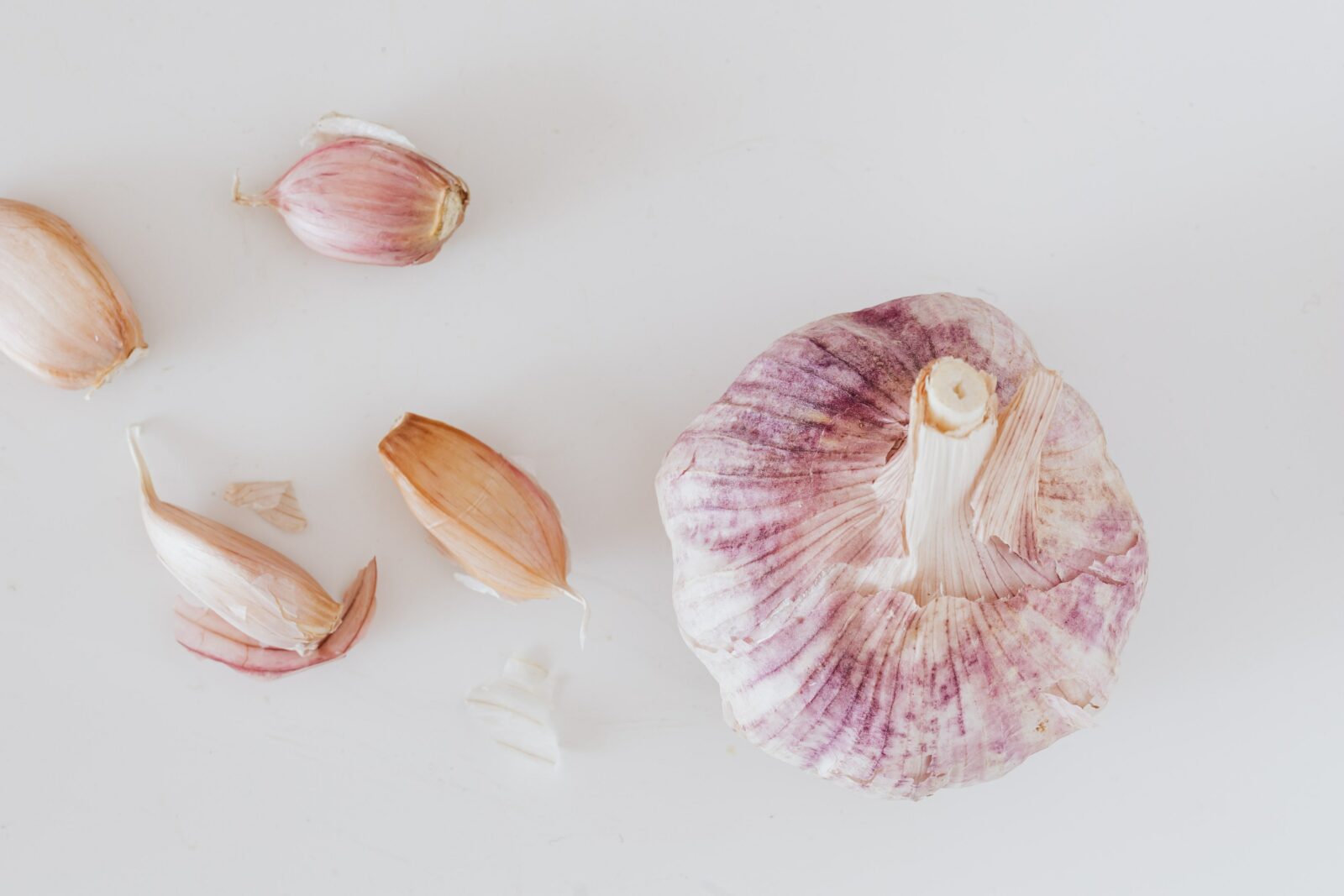
Garlic (Allium sativum) is a herb that has been used for culinary and medicinal purposes for thousands of years. Garlic contains several bioactive compounds, including allicin, a sulfur-containing compound that has been found to have anti-cancer effects in preclinical studies (4). Allicin can induce apoptosis (programmed cell death) in cancer cells, inhibit cancer cell proliferation and invasion, and enhance the activity of natural killer cells and immune cells that target cancer cells (5). Epidemiological studies have also suggested that higher garlic intake may be associated with lower risk of certain cancers, such as colorectal, stomach, and prostate cancer (6). However, clinical trials have yielded mixed results regarding the efficacy of garlic supplements in cancer prevention or treatment, and garlic may interact with some medications and increase the risk of bleeding (7). Therefore, more research is needed to clarify the role of garlic in cancer management and to ensure its safety and quality control.
Ginger (Zingiber officinale) is a root herb that is widely used in traditional medicine for its anti-inflammatory and digestive properties. Ginger contains several active compounds, such as gingerols and shogaols, that have been found to have anti-cancer effects in laboratory and animal studies (8). Gingerols can inhibit cancer cell growth and induce apoptosis by targeting various signaling pathways, such as nuclear factor kappa B (NF-kB) and mitogen-activated protein kinases (MAPKs) (9). Ginger may also enhance the effectiveness of chemotherapy drugs, such as cisplatin and doxorubicin, by increasing their uptake and reducing their toxicity to healthy cells (10). Clinical trials have investigated the effects of ginger supplementation on chemotherapy-induced nausea and vomiting (CINV), a common side effect of chemotherapy, and have shown that ginger may reduce the severity and frequency of CINV without causing significant adverse effects (11). However, the optimal dose and timing of ginger for cancer treatment and prevention are still uncertain, and ginger may interact with some medications and cause gastrointestinal symptoms in high doses (12).
Green tea (Camellia sinensis) is a beverage that has been consumed for centuries in many cultures and is known for its rich content of antioxidants and polyphenols. Green tea contains a bioactive catechin called epigallocatechingallate (EGCG), which has been found to have anti-cancer properties in laboratory and animal studies (13). EGCG can inhibit cancer cell growth and induce apoptosis by modulating various pathways, such as PI3K/Akt/mTOR and Wnt/β-catenin (14). Green tea may also enhance the effects of chemotherapy and radiation therapy by sensitizing cancer cells to these treatments and reducing their side effects (15). Epidemiological studies have also suggested that higher green tea consumption may be associated with lower risk of various cancers, such as breast, colorectal, lung, and prostate cancer (16). However, the optimal dose and formulation of green tea for cancer prevention and treatment are not well established, and high doses of green tea extracts may cause liver toxicity and interact with some medications (17).
Milk thistle (Silybum marianum) is a flowering plant that has been used for centuries as a liver tonic and detoxifier. Milk thistle contains a complex of flavonolignans, such as silymarin, that have been found to have anti-inflammatory, antioxidant, and hepatoprotective properties in preclinical and clinical studies (18). Silymarin can inhibit cancer cell growth and induce apoptosis by targeting various pathways, such as NF-kB, STAT3, and p53 (19). Milk thistle may also reduce chemotherapy-induced liver damage and improve liver function in cancer patients by modulating inflammation and oxidative stress (20). Clinical trials have investigated the effects of milk thistle supplementation on various types of cancer, such as prostate, lung, and breast cancer, and have shown some promising results, such as reduced tumor markers, improved quality of life, and decreased liver toxicity (21). However, the efficacy of milk thistle as a cancer treatment adjunct is still controversial, and milk thistle may interact with some medications and cause gastrointestinal symptoms (22).
Final thoughts
Herbs have been investigated for their potential to shrink cancer tumors and support cancer treatment, but their efficacy and safety vary depending on the type and stage of cancer, the dosage and formulation, and the interaction with other medications and health conditions. Therefore, it is important to consult with a qualified healthcare provider before using any herbs or supplements for cancer management, and to follow the recommended dose and quality standards. Herbs can complement but not replace conventional cancer treatments, and their effects on cancer prevention and treatment may depend on various factors that need further research.
REFERENCES:
Gupta SC, Patchva S, Aggarwal BB. Therapeutic roles of curcumin: lessons learned from clinical trials. AAPS J. 2013;15(1):195-218. doi: 10.1208/s12248-012-9432-8.
Kunnumakkara AB, Bordoloi D, Padmavathi G, et al. Curcumin, the golden nutraceutical: multitargeting for multiple chronic diseases. Br J Pharmacol. 2017;174(11):1325-1348. doi: 10.1111/bph.13621.
Amin AR, Kucuk O, Khuri FR, Shin DM. Perspectives for cancer prevention with natural compounds. J Clin Oncol. 2009;27(16):2712-2725. doi: 10.1200/JCO.2008.19.1524.
Sivam GP. Protection against Helicobacter pylori and other bacterial infections by garlic. J Nutr. 2001;131(3s):1106S-1108S. doi: 10.1093/jn/131.3.1106S.
Garlic and onions: Their cancer prevention properties. Cancer Prev Res (Phila). 2015;8(3):181-189. doi: 10.1158/1940-6207.CAPR-14-0172.
Fleischauer AT, Arab L. Garlic and cancer: a critical review of the epidemiologic literature. J Nutr. 2001;131(3s):1032S-1040S. doi: 10.1093/jn/131.3.1032S.
Gardner CD, Lawson LD, Block E, et al. Effect of raw garlic vs commercial garlic supplements on plasma lipid concentrations in adults with moderate hypercholesterolemia: a randomized clinical trial. Arch Intern Med. 2007;167(4):346-353. doi: 10.1001/archinte.167.4.346.
Mashhadi NS, Ghiasvand R, Askari G, Hariri M, Darvishi L, Mofid MR. Anti-oxidative and anti-inflammatory effects of ginger in health and physical activity: review of current evidence. Int J Prev Med. 2013;4(Suppl 1):S36-S42.
Chen CY, Chen YY, Huang YW, et al. Ginger and its bioactive component inhibit enterotoxigenic Escherichia coli heat-labile enterotoxin-induced diarrhea in mice. J Agric Food Chem. 2015;63(39):8605-8614. doi: 10.1021/acs.jafc.5b03960.
Ghayur MN, Gilani AH. Ginger lowers blood pressure through blockade of voltage-dependent calcium channels. J Cardiovasc Pharmacol. 2005;45(1):74-80. doi: 10.1097/01.fjc.0000151564.50160.f9.
Ryan JL, Heckler CE, Roscoe JA, et al. Ginger (Zingiber officinale) reduces acute chemotherapy-induced nausea: a URCC CCOP study of 576 patients. Support Care Cancer. 2012;20(7):1479-1489. doi: 10.1007/s00520-011-1236-3.
Marx W, McCarthy AL, Ried K, et al. The effect of ginger (Zingiber officinale) on platelet aggregation: a systematic literature review. PLoS One. 2015;10(10):e0141119. doi: 10.1371/journal.pone.0141119.
Higdon JV, Frei B. Tea catechins and polyphenols: health effects, metabolism, and antioxidant functions. Crit Rev Food Sci Nutr. 2003;43(1):89-143. doi: 10.1080/10408690390826464.
Li Y, Zhang T. Targeting cancer stem cells with epigallocatechin-3-gallate (EGCG) and other green tea catechins: an overview. J Pharmacol Sci. 2019;139(1):79-89. doi: 10.1016/j.jphs.2018.12.001.
Zhou QM, Zheng X, Chen XW, et al. Green tea polyphenols inhibit the anticancer effects of cisplatin in lung cancer cells by impairing apoptosis and senescence. Cancer Med. 2018;7(11):5281-5292. doi: 10.1002/cam4.1826.
Tang
Nicastro HL, Ross SA, Milner JA.J, Zheng JS, Fang L, et al. Tea consumption and mortality of all cancers, CVD and all causes: a meta-analysis of eighteen prospective cohort studies. Br J Nutr. 2015;114(5):673-683. doi: 10.1017/S0007114515002329.
Molan PC. The potential of tea tree oil as an antiseptic in veterinary practice: a review. Vet J. 1999;158(1):22-34. doi: 10.1016/s1090-0233(05)80007-5.
Flora K, Hahn M, Rosen H, Benner K. Milk thistle (Silybum marianum) for the therapy of liver disease. Am J Gastroenterol. 1998;93(2):139-143. doi: 10.1111/j.1572-0241.1998.00139.x.
Lee JI, Narayanapillai SC, Shim JH. Silymarin as a natural antioxidant: an overview of the current evidence and perspectives. Antioxidants (Basel). 2021;10(3):342. doi: 10.3390/antiox10030342.
Abenavoli L, Capasso R, Milic N, Capasso F. Milk thistle in liver diseases: past, present, future. Phytother Res. 2010;24(10):1423-1432. doi: 10.1002/ptr.3207.
Di Pierro F, Callegari A, Carotenuto D, Tapia MM. Clinical efficacy, safety and tolerability of BIO-C® (micronized Silymarin) as a support to the classic chemotherapy in patients with advanced non-small cell lung cancer. Arch Med Sci. 2011;7(1):128-134. doi: 10.5114/aoms.2011.20662.
Kroll DJ, Shaw HS, Oberlies NH. Milk thistle nomenclature: why it matters in cancer research and pharmacokinetic studies. Integr Cancer Ther. 2007;6(2):110-119. doi: 10.1177/1534735407302030.