
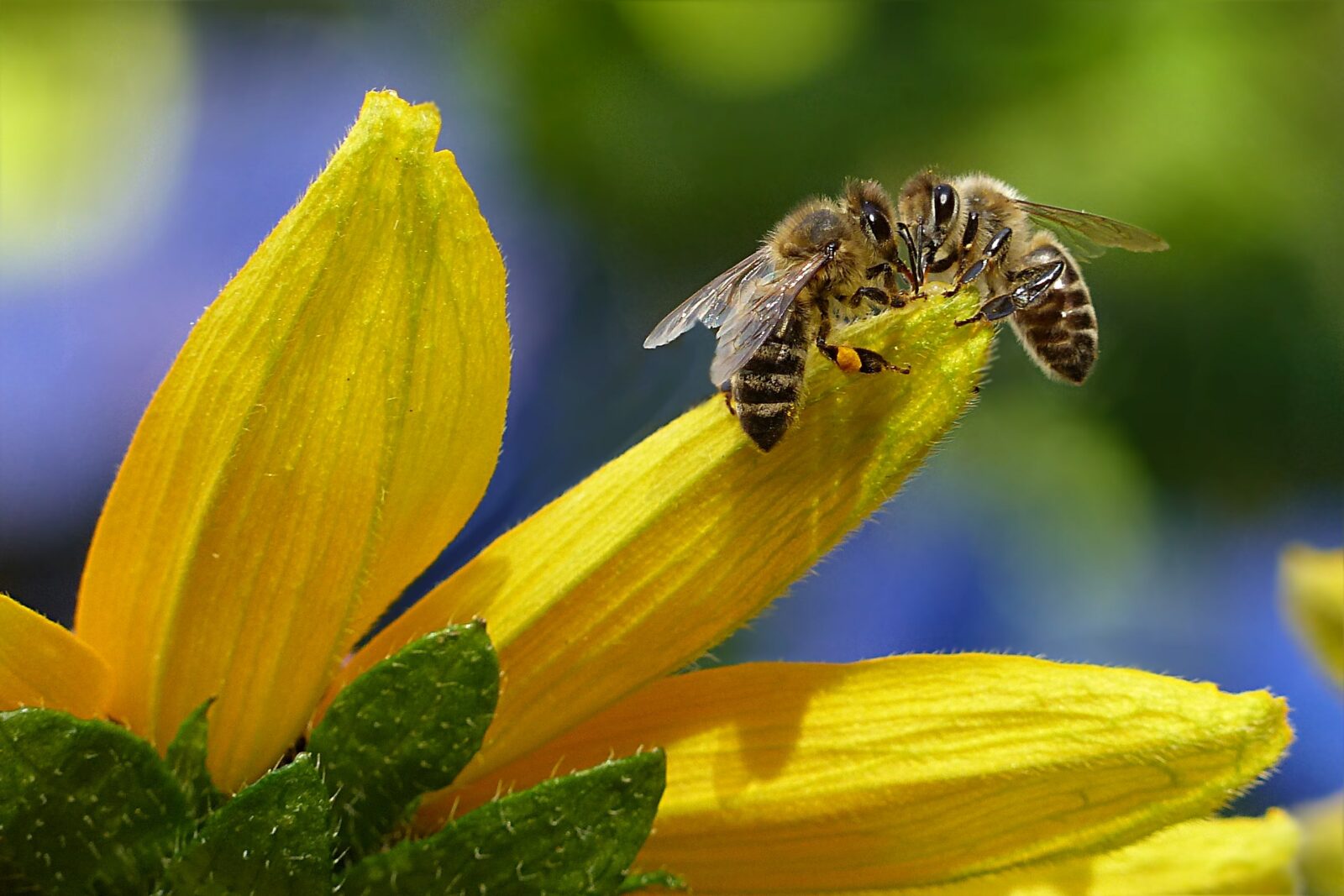
Our ancestors have used honey, venom, and propolis (the resin-like material made by bees from the buds of poplar and cone-bearing trees. Bees use it to build hives) from the European honey bee, Apis mellifera, as treatments for common ailments.
Just recently, a study in Australia has given credence to this ancient practice and discovered that honeybee venom and its active component, melittin, are toxic to a wide range of cancer tumors, including pancreatic, breast, lung, ovarian, and skin cancers.
If you have ever been stung by a bee, melittin is the molecule that makes the bee sting so painful. However, scientists are still studying how it can kill cancer cells while leaving normal cells unharmed.
Honey bee venom kills cancer cells
This amazing study has found that honey bee venom may be a potent treatment against breast cancer. The venom from the European honey bee (Apis mellifera) was found to rapidly destroy triple-negative breast cancer and HER2 enriched breast cancer cells with very little effect on healthy cells.
The study looked at the effect this venom had on normal breast cells and cells from clinical subtypes of breast cancer: hormone receptor-positive, HER2-enriched, and triple-negative breast cancer.
The researchers tested melittin – a small, positively charged peptide that is a major component in honeybee venom – as well as a synthetically reproduced version. They found that the synthetic product mirrored the majority of anti-cancer effects of honeybee venom.
The researchers also found that melittin may be used with small molecules or chemotherapies, such as docetaxel. The combination of docetaxel and melittin was “extremely efficient” at decreasing tumor growth in mice.
This study has important implications because triple-negative breast cancer and HER2-enriched tumors are highly aggressive breast cancer subtypes. Triple-negative breast cancer generally has the poorest outcomes in addition to very few treatment options.
The study was conducted at the Harry Perkins Institute of Medical Research (Australia) and The University of Western Australia. They used the venom from over 300 English, Australian, and Irish honey bees.
Melittin is a positively charged, amphipathic 26-amino-acid peptide. The scientists found it targeted the cancer cells by ending the activity of molecules overexpressed in these cancers.
“We found both honeybee venom and melittin significantly, selectively and rapidly reduced the viability of triple-negative breast cancer and HER2-enriched breast cancer cells,” said Dr Ciara Duffy. “The venom was extremely potent.”
In addition, melittin was very quick. The honey bee venom produced 100% cancer cell death and destroyed cancer cell membranes within 60 minutes. It did this while leaving normal cells unharmed.
Melittin impacts the signaling pathways
Attaching an RGD peptide to melittin (RGD1-melittin) was found to further enhance the targeting of melittin to malignant cells while leaving normal cells alone. Melittin was also able to ‘substantially reduce’ the chemical messages needed for cancer cell growth and cell division.
“We looked at how honeybee venom and melittin affect the cancer signaling pathways, the chemical messages that are fundamental for cancer cell growth and reproduction, and we found that very quickly these signaling pathways were shut down,” said Duffy.
“Melittin modulated the signaling in breast cancer cells by suppressing the activation of the receptor that is commonly overexpressed in triple-negative breast cancer, the epidermal growth factor receptor, and it suppressed the activation of HER2 which is over-expressed in HER2-enriched breast cancer.”
Melittin may be combined with small molecules
Because melittin forms pores in breast cancer cell membranes, the scientists also investigated its use with existing chemotherapy drugs. They suspected that the action could enable the entry of other treatments into the cancer cells.
“We found that melittin can be used with small molecules or chemotherapies, such as docetaxel, to treat highly-aggressive types of breast cancer,” said Duffy. “The combination of melittin and docetaxel was extremely efficient in reducing tumor growth in mice.”
Why is this important? The efficacy of melittin in combination therapies could increase the potency of other chemotherapies which could mean smaller doses. This would likely make the treatments more cost-effective with potentially fewer side effects.
This study is the first of its kind. While the results are exciting and promising, more studies will be needed to determine issues such as the optimum method of delivery of melittin, maximum tolerated doses, and toxicities.
Honey bee venom
The study was specific to honey bee venom from the European honey bee. There are over 20,000 species of bees worldwide. The study used European honey bees found in England, Australia, and Ireland. The study found nearly identical results from the bees from each country.
It also looked at venom from bumblebees. However, that venom did not produce cell death.
One of the first studies on the effects of bee venom was published in 1950. It investigated the effect of venom on the growth of tumors in plants. Since then, the interest in apitherapy has grown. Apitherapy is a branch of alternative medicine that uses honey bee products, including honey, pollen, propolis, royal jelly, and bee venom.
In addition, interest in studying the efficacy of honey bee venom on varying cancers has grown as well. However, scientists are still investigating the specific molecular mechanisms and selectivity of biomolecular components of honeybee venom as anticancer agents. Further studies are needed.
“Understanding the molecular basis and specificity of bee venom against cancer cells is key for developing and optimizing novel effective therapeutics from a natural product that is widely available and cost-effective to produce in many communities around the world,” say researchers.
The potential for honey bee venom
“Honeybee venom is available globally and offers cost-effective and easily accessible treatment options in remote or less-developed regions,” continue the researchers.
“Further research will be required to assess whether the venom of some genotypes of bees has more potent or specific anticancer activities, which could then be exploited.”
“Beyond breast cancer, tumors overexpressing EGFR include lung, glioblastoma, and colorectal cancers, and tumors that can overexpress HER2 include gastric, ovarian, endometrial, bladder, lung, colon, and head and neck cancers.”
Earlier this year, City of Hope scientists published research on the use of chlorotoxin (CLTX), a component of scorpion venom, with brain tumor cells. The researchers developed and tested the first chimeric antigen receptor (CAR) T cell therapy using chlorotoxin to direct T cells to target brain tumor cells.