
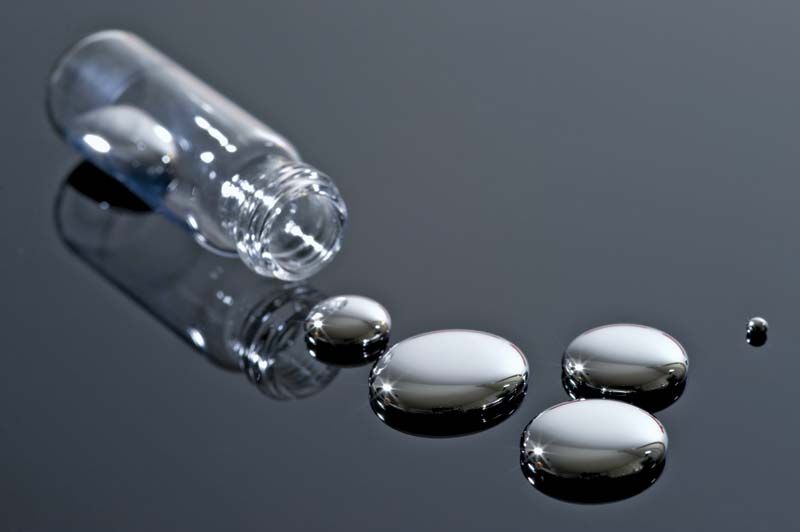
While mercury and compounds including mercury are toxic, scientists still debate just how toxic they are. Toxic effects may be occurring at lower concentrations than previously thought. However, this can be difficult to prove because the suspected toxic effects are subtle, and their mechanisms are complex. Methylmercury is of particular concern because it can accumulate along the food chain to reach high concentrations.
Methylmercury
This is also true about methylmercury because large numbers of people are exposed to it, and scientists understand its toxicity more clearly. Methylmercury in food is a particular health hazard because it is easily taken up into the body through the stomach and intestines. It is poisonous to the nervous system and may affect the heart and circulatory systems. Exposure during pregnancy must be avoided because it may harm the development of the unborn baby’s brain.
In addition, evidence is accumulating that suggests methylmercury can cause cancer in humans, but it is not conclusive. The International Agency for Research on Cancer (IARC) has classified methylmercury as “possibly carcinogenic to humans.”
Elemental mercury
Elemental mercury is also poisonous to the nervous system. Exposure occurs by inhalation, and the mercury enters the body through the lungs. It is spread into the bloodstream and brain. However, when elemental mercury is ingested, little is absorbed into the body.
Inhaling elemental mercury can cause neurological and behavioral disorders, such as tremors, emotional instability, insomnia, memory loss, neuromuscular changes and headaches. It may also harm the kidneys and thyroid. High exposure can cause death. Currently, no evidence exists that elemental mercury causes cancer.
How do we become exposed to mercury?
The main source of elemental mercury inhalation is due to dental amalgam, a common tooth filling.
People can also receive extra doses in specific situations, such as when mercury compounds are used in skin-lightening creams, soaps, vaccines, and traditional medicine. Exposure may also occur from pollution through air and water.
For some people, the workplace may also be an important source of exposure. Examples include chlor-alkali plants, mercury mines, thermometer factories, refineries and dental clinics, as well as the mining and manufacturing of gold extracted with mercury.
Diet, particularly fish, is generally the main source of both inorganic and organic mercury. Methylmercury is by far the most common organic form, and is especially found in fish and other seafood.
Is there such a thing as a safe level of mercury?
It is always best to avoid mercury. Be aware of your food and surroundings. That said, the government has established guidelines to give you an idea of when you should be seriously concerned about exposure.
For methylmercury, the US Environmental Protection Agency (EPA) has estimated a safe daily intake level of 0.1 µg/kg body weight per day. This was based on a study in the Faroe Islands, where fish containing significant levels of mercury form a large part of the diet. The study compared development test scores for children whose mothers had been exposed during pregnancy. A European Union scientific review supported this as a safe daily intake level.
For elemental mercury, several studies show that long-term workplace exposures– at around 20 µg/m3 of air or higher – have subtle toxic effects on the central nervous system.
What is the risk of mercury exposure today?
Diet and amalgam fillings in teeth are the main sources of methylmercury and elementary mercury exposure for most people, sources such as local pollution, exposure at work, cultural practices and traditional medicines are sources in some areas of the world.
A recent study of 1,700 women in the USA found that about 8% of them had mercury concentrations in their blood and hair exceeding the levels that correspond to the US EPA’s estimated safe dose. Data indicate that exposures in Greenland, Japan and some other areas are generally higher than in the USA.
Fish is the main food source in many parts of the world and provides nutrients that are not easily replaced. Mercury contamination adds health risks to this important food supply. Many countries, international organizations and scientific investigations have reported mercury concentrations in fish between about 0.05 and 1.4 mg/kg of fish tissue, depending on the water and the fish.
Predator fish and marine mammals that eat other fish tend to have higher levels of mercury because mercury bioaccumulates in fish and is biomagnified up the food chain. Mercury levels are thus higher in such fish as king mackerel, pike, shark, swordfish, walleye, barracuda, large tuna, scabbard and marlin.
Moderate consumption of fish with low mercury levels will likely not cause problematic exposure. However, because mercury can accumulate, you want to consider all possible exposure, especially from dental fillings. The best course of action is to limit all exposure.