
What do the following foods have in common?
- Sodas and soft drinks
- Energy drinks
- Sports drinks
- Jello
- Gummy snacks
- Strawberry-flavored milk
- Most cereals
- Fruit bars
- Doritos
- Hamburger Helper
- Kraft macaroni and cheese
- JIF Peanut Butter Bars
- Fruit Loops Fruit Snacks
- Lucky Charms
- Dannon Light ‘n Fit White Chocolate nonfat yogurt
- Lipton Brisk Iced Tea
- Kraft Spicy Honey barbecue sauce
- Hershey’s Lite Syrup (chocolate)
- Kellogg’s Nutri-Grain cereal bar (mixed berry)
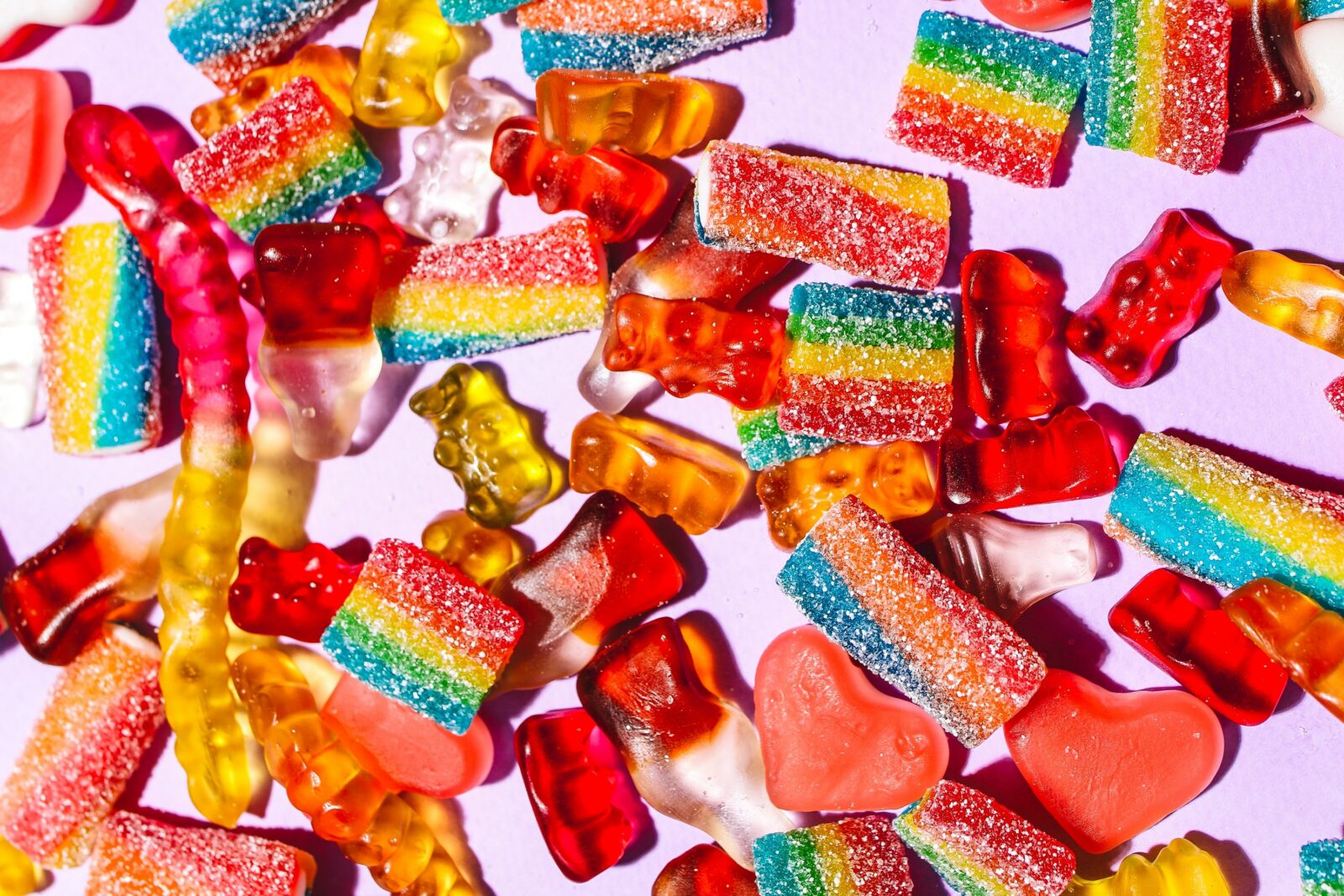
They all contain Red Dye 40, which is a petroleum-based substance. The processed food industry uses over 15 million pounds of artificial food dyes into our food annually, and Red Dye accounts for 40% of that total. According to a 2010 article by the Center for Science in the Public Interest (CSPI), consumption of artificial dyes has increased five-fold since 1955.
There are 9 artificial dyes used in our food supply that are certified by the Food and Drug Administration (FDA). The amount certified has risen from 12 mg/capita/d in 1950 to 62 mg/capita/d in 2010.
While food manufacturers have a wide array of safe, natural alternatives to choose from, artificial food dyes are inexpensive and make foods brighter and more appealing. In addition, they provide more uniform coloring as opposed to natural food coloring.
Artificial dyes make processed foods look more natural. For instance, chocolate pudding would be closer to green in color without Red Dye 40 because it contains very little real chocolate.
Although Red Dye 40 has been approved by the FDA for use in food products and must be listed as an ingredient on labels, it has been banned at one time or another in Australia and most of Europe due to health concerns.
Food Categories with Red Dye 40
Many foods that contain Red Dye 40 are not red. They may be orange, green, blue, brown, and sometimes white.
You can find Red Dye 40 in a wide range of foods and beverages, including:
- Salad dressings
- Dairy products
- Frozen desserts
- Breakfast cereals
- Fruit bars
- Sauces
- Candy
- Condiments
- Snack foods
- Baked goods
- Beverages
Many personal care products contain artificial dyes. And some prescription medications also contain dyes.
Is Red Dye 40 associated with ADD/ADHD?
Many studies published in journals like The Lancet, Pediatrics, and the Journal of Pediatrics show that some children with ADD/ADHD may be adversely affected by artificial food dyes. Some research indicates that artificial flavors and the preservative sodium benzoate may make non-ADD/ADHD children hyperactive.
Some children who have been diagnosed with ADD/ADHD and are taking medications for the condition make such an improvement after eliminating Red Dye 40 from their diet that they are able to stop taking their prescription drugs. Some parents mistakenly attribute hyperactive behavior after snack time to be a “sugar rush” when it’s really the artificial food coloring.
Both children and adults have reported nervousness, jitteriness, migraines, upset stomach, and an inability to concentrate after consuming large amounts of Red Dye 40. The Center for Science in the Public Interest reported that artificial food dyes have a constellation of risks from allergies to cancer.
Artificial dyes may also trigger “mind-storms,” which are interruptions in your brain’s electrochemical workings. Mind-storms are associated with temper outbursts, depression, suicidal thoughts, panic attacks, distractibility, and confusion.
Read your food labels
A new field called nutritional psychiatry shows how important food is for mental health, emotional well-being, cognitive function, and behavioral stability.
To eliminate Red Dye 40 from your diet, you need to learn how to read nutrition labels. Red Dye 40 goes by many names. Look for any of these ingredients on labels:
- Allura Red
- Allura Red AC
- C.I. 16035
- C.I. Food Red 17
- FD&C Red No. 40
- Red 40
- Red No. 40
Be aware that even though food manufacturers are required to list the dye on nutrition labels, they don’t have to specify how much is included. Your best strategy is to avoid it completely.
An elimination diet can help you determine if artificial dyes may be contributing to bothersome symptoms. For one month, cut out sugar, gluten, dairy, corn, and soy, as well as artificial colors, additives, and preservatives to see if you feel better. Then add these substances back one at a time and be alert for reactions to them, which would indicate that you should permanently avoid that food.
Children (and adults) with ADD/ADHD, behavioral problems, or other issues may be experiencing sensitivity to artificial dyes like Red Dye 40 in their diet. Eliminating Red Dye 40 is a good start to helping address symptoms.