
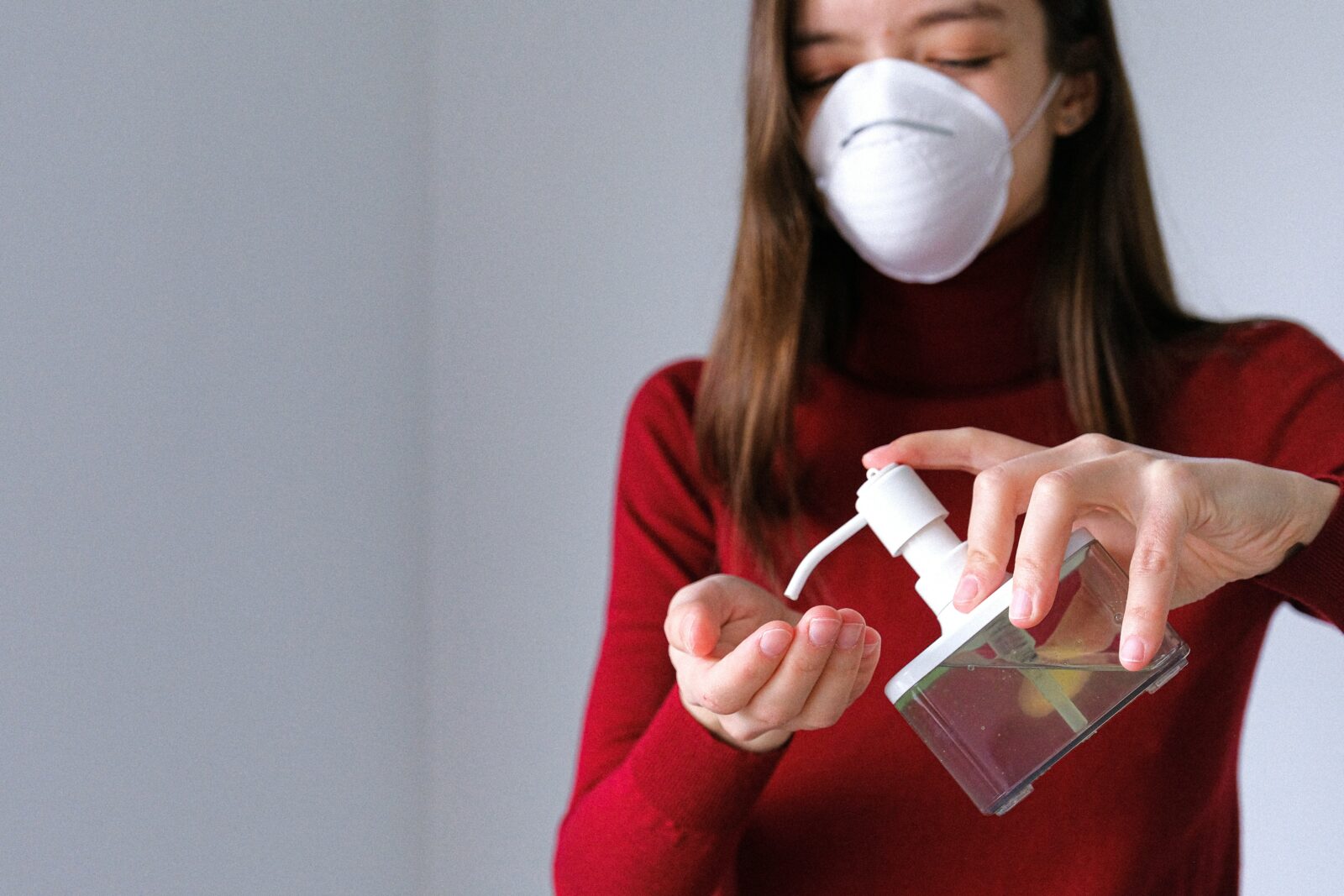
An entire year has passed since the first official responses to COVID-19 began. You may remember the term “flattening the curve.” You may remember photos of ICUs in Italy being overwhelmed. Most likely, you have a clear memory of the dire concerns at the onset of the pandemic.
One of those concerns was whether the virus spreads via surfaces and not just airborne transmission.
Many epidemiologists spent considerable time answering questions about washing the outside of food cans, wiping down public benches, and even disinfecting the mail.
Does the evidence support these actions especially now that we have 12 months of history with this COVID-19 pandemic?
What question is the right one to ask? Is it whether the virus can spread via surface transmission? Most likely, it can. However, the right question is to ask the extent of the role of surface contact has. What is the likelihood of catching COVID-19 through surface transmission? This is the crucial question.
Minimal evidence
There is very little evidence that surface transmission of COVID-19 is a common method that the virus spreads. The primary method of transmission is by air by small droplets called aerosols, or by larger droplets through close contact.
In July 2020, the journal Lancet Infectious Diseases published an excellent discussion about the topic. It was written by Emanuel Goldman, a professor of microbiology from the United States.
As he noted, one of the main drivers for the exaggerated perception of the risk of surface transmission was due to several studies that showed SARS-CoV-2 viral particles could be detected for long periods of time on various surfaces.
These studies drew exceptional interest and were published widely around the globe. However, their findings were not fully understood or reported on in the press.
The studies could not be applied in real world situations. In some instances, the press releases about the studies had a tendency to overstate the significance of the findings.
The most important issue to consider is this: in general, the time necessary for an entire population of microorganisms to die is directly proportional to the size of the population. Thus, the larger the amount of virus deposited on a surface, the longer a researcher has to identify a live viral particle on that surface.
These experiments would have been more relevant to public health had they been designed differently. A study would need to consider the many variables in the real world that would impact the amount of the virus deposited on a surface.
These studies deposited large amounts of the virus on surfaces that exceeded what would reasonably be found in the real world. In addition, some of the studies created conditions that extended the life of the viral particles like excluding natural light and adjusting the humidity.
There is nothing wrong with the science or with the findings. However, the media failed to cover these issues. It is notable that other studies created conditions much more closely related to real-world scenarios. They found far less significant survival times for three human coronaviruses including SARS.
Therefore, it is crucial to note that 12 months into the pandemic, we are relying on indirect evidence regarding the role of surface transmission in COVID-19. It is not possible to conduct an ethical scientific experiment to confirm the role of surface transmission because researchers would need to deliberately infect individuals.
Although the question about surface transmission seems straightforward, it is actually quite difficult to determine the relative importance of the various transmission methods for this virus. What we can look at is the totality of the current evidence and recognize the findings. This includes case studies that describe actual transmission events. The result is very little evidence that supports surface transmission being of major importance in the spread of COVID-19.
The right focus saves time, money, and lives
Not every pathway of exposure to SARS-CoV-2 has the same risks to individuals. Focusing limited resources and time on the pathways with the highest risks of transmission would save time, money, and lives.
Surface transmission may be possible. It may pose some risks in certain situations. But we should acknowledge that the threat surface transmission poses is relatively small.
We can mitigate this relatively small risk by continuing to focus on hand hygiene and ensuring cleaning protocols are more in keeping with the risk of surface transmission.
In doing this, we can potentially save millions of dollars being spent on obsessive cleaning practices. These are probably providing little or no benefit other than providing some reassurance that we are at least doing something thus relieving some anxieties.