

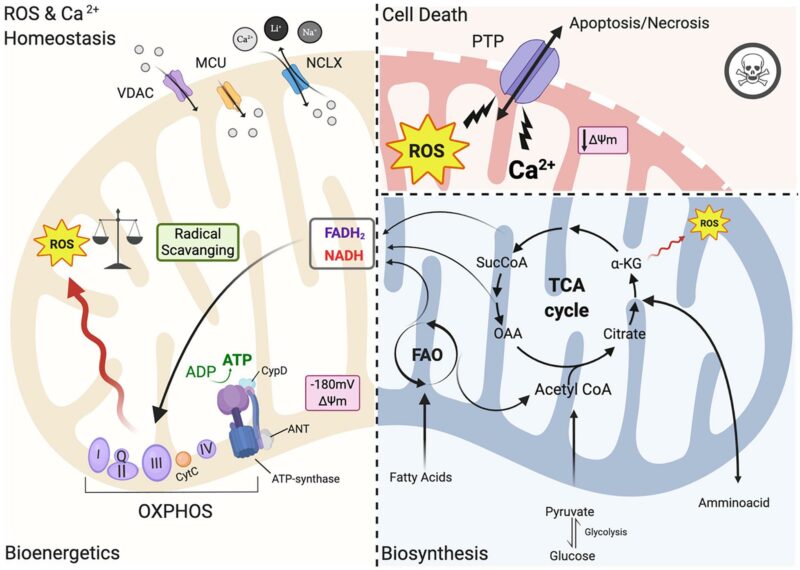
Mitochondrial function is such an important topic when discussing longevity, chronic fatigue, cancer prevention, neurological health and more. So to review mitochondria are the key intracellular organelles responsible for cellular energy production as discovered by modern biological science. There are several essential pathways to feed into the mitochondria, most commonly Glycolysis, which is the breakdown of sugars into molecules that are then transported into cytoplasm of the Mitochondria. This is then further processed in the Citric Acid Cycle, and then is again transported, this time into the inner membrane. Here, the Electron Transport Chain via a process called Oxidative Phosphorylation, creates significant amounts of ATP, which is the molecule that is needed to power most of our enzymatic reactions/functions in the body. Other metabolic pathways such as Beta-Oxidation of Fatty Acids also occur within the Mitochondria.
Mitochondria also play a huge role in regulating normal cellular apoptosis (cell death and recycling). They also play a key role in maintaining homeostasis of calcium, copper and iron levels, heme (blood cell iron complexes) and iron/sulfur cluster assembly. These iron/sulfur clusters are involved in electron transport and DNA repair: another mechanism behind the fatigue and systemic issues in iron deficient patients, as iron is required for both Complex I (NADH-CoQ reductase) and Complex II (succinate-CoQ reductase) of the last and most efficient phase in cellular energy production. Additionally mitochondria play a role in thermogenesis and fever response, which again can at least partially explain why aged or chronically ill patients have difficulty mounting a fever, and is one way we see the relationship between healthy mitochondria and healthy immune function.
Reduction in function of individual mitochondrial function is a results of one or more of the following changes: (1) a loss of maintenance of the electric and chemical gradients or charge across the inner mitochondrial membrane, (2) alterations in the function of the electron transport chain (3) a reduction in the transport of critical metabolites into mitochondria. In turn, these changes result in a reduced efficiency of oxidative phosphorylation and a reduction in production of adenosine-5′-triphosphate (ATP). Overall (whole body) mitochondrial dysfunction arises from an inadequate number of mitochondria, an inability to provide necessary substrates to mitochondria, or a dysfunction in their electron transport and ATP-synthesis machinery.
Another factor to consider is that through the process of energy production, mitochondria produce significant amounts of Reactive Oxygen Species, or free radicals, which require antioxidants to quench or else they can cause significant issues. This oxidative damage is particularly prevalent in patients presenting with chronic fatigue syndrome. So consider also that low antioxidant status whether due to nutritional intake or absorption issues, methylation defects and/or high toxic burden, can also very much effect mitochondrial health. There are two branches of antioxidant defense as it pertains to mitochondria: 1) enzymatic antioxidants such as glutathione peroxidase, superoxide dismutase, catalase which transform reactive oxygen species into their non-oxidative forms or reduced forms and 2) non enzymatic antioxidants such as vitamin C, Vitamin E and B-carotene, these essentially neutralize free radicals by interacting with them. Both branches are required, as they work together to protect the mitochondrial and other cellular components from damage.
So what Damages Mitochondria
Environmental Toxins (Metals, Pollutants, Pesticides), Biotoxins (Lyme, Mold, etc) as well as nutrient deficiencies and low antioxidant status (Often due to Malabsorption/Dysbiosis/Digestive Insufficiency). So it’s important to consider all of these areas when understanding how to best enhance mitochondrial health. Mitochondria seem to be particularly sensitive to environmental and biotoxin accumulation. For instance, the high lipid content on mitochondrial membranes increases the accumulation of lipophilic (fat loving) compounds such as polycyclic aromatic hydrocarbons. Heavy metals such as lead, cadmium, mercury, arsenic are also shown to accumulate preferentially in mitochondria. Metals can actually directly enter the cell via transporters usually meant for calcium, they also affect charge across membranes which as discussed above is essential for proper functioning. Furthermore, mitochondria contain the cytochrome P450 complexes, which can increase the toxic effects of compounds such as PAH pollutants and mycotoxins.
So now we will go into some of the ways to support mitochondrial health, including specific product recommendations. The basic areas of support are as follows: Antioxidant Support, Enhance Transport Across Membranes, Provide CoFactors for Reactions, Upregulate ATP Production, and Assist in Removal of Harmful/Disruptive Substances. It can be helpful to make sure all of the categories are covered as you work to enhance and heal your mitochondrial function and overall health. Here is a review of some of the nutrients that are often included in mitochondrial support formulas and protocols.
- Alpha Lipoic Acid: Antioxidant, Metal Chelator, Regulates transcription of DNA into RNA/Proteins, and has Anti-inflammatory effects. It also acts as a co-factor in energy producing reactions within the mitochondria. It reduces accumulation of certain molecules (ceramides) that are known to negatively affect mitochondrial function, which helps to restore both mitochondrial glutathione levels and production of ATP. Its ability to increase cellular glutathione levels is one of its most important functions, as this reduces overall oxidative stress. It helps to remove excess metals (copper, iron, heavy metals) that can both block energy production and increase oxidative stress within mitochondria.
- L-Carnitine: This nutrient is involved in the transport of fatty acids into the mitochondrial matrix, as well as helps to remove excess compounds created through the process of B-oxidation (processing of fats). It has been shown to increase the rate of ATP production that naturally tends to slow as we age. It also has been shown to reverse age-related decline in glutathione levels.
- CoQ10 (Ubiquinol/Ubiquinone): Key Cofactor and component of the Electron Transport Chain. It is a strong antioxidant as well. The main role is the transfer of electrons through the multiple complexes of the Electron Transport Chain. It has been shown to increase energy production, as well as reduce symptoms and progression of neurodegenerative disorders. Important to note that at this time, it seems that the best form is Kaneka-QH (Ubiquinol), it is the best absorbed and is in its reduced/active form.
- NADH: Key cofactor in over 200 cellular reactions. In the mitochondrial, NADH delivers electrons created from the breakdown of water along the electron transport chain. It also acts as a strong antioxidant in its reduced form (NADH is reduced, NAD+ is oxidized). Stabilized NADH has been shown to reduce fatigue in individuals with chronic fatigue syndrome.
- Membrane Phospholipids: Enhance the transport across mitochondrial membranes. The purpose is to remove damaged membrane lipids, and has been shown to be quite effective at enhancing mitochondrial function, especially when combined with antioxidants. Phosphatidyl Serine and Phosphatidyl Choline are two useful and easy to find in supplements.
- PQQ (Pyrroloquinoline quinone): Is a natural antioxidant that is found in breastmilk and soil, and is essential for the development of mammals. It is involved with the formation of mitochondria, growth and aging. It has shown positive effects related to: metabolic flexibility (ability to shift back and forth from using fat or sugars as fuel), reducing oxidative stress, reducing the expression of proinflammatory genes and increased fatty acid oxidation. Interestingly, PQQ has also been shown to increase expression of tight junction proteins related to gut barrier function, as well as causing shifts in the microbiome.
- Fulvic/Humic Acid (Such as in MitoATP): the substance that contains these compounds has been in ancient systems of medicine such as Ayurveda. It was said to have immuno-modulatory effects, antioxidant properties as well as supporting detoxification, blood sugar balance and heart health. Research has shown that Fulvic acid reduces inflammatory cytokine production, reduces histamine flairs and eczema conditions. It also has pro-inflammatory effects such as increasing Nitric Oxide and Reactive Oxygen Species production, complement fixation, related to reducing wound sizes and enhancing immune response against pathogens. So again, it is interesting how one substance can be both inhibitory and stimulating to different branches of immunity. It has a similar action within the realm of oxidative stress, where it reduces oxidation in certain ways and increases in others. It has been shown to help sequester free radicals, and increase the enzyme concentrations of GSH (Glutathione Synthase), SOD (Superoxide Dismutase) and CAT (Catalase). In relation to mitochondrial function, it seems to increase the rate of ATP production, which does increase the amount of Free Radicals produced, which is why in some studies it can increase levels of ROS. However, it was shown to increase certain oxidative markers such as hydrogen peroxide and nitric oxide, as well as inducing cell death in hepatic cancer cell lines. Another mechanism that is likely related to its ability to support mitochondrial health is its ability to bind and reduce the toxicity of heavy metals.
- Other important Nutrients:
- Vitamin C, D, A, E, Niacin, Riboflavin, B12, B6, Thiamin
- Magnesium, Zinc, Calcium, Phosphate
- Essential Fatty Acids: EPA/DHA
- Other Antioxidants such as Glutathione, NAC
- Botanical Medicine: Adaptogenic Herbs There are many in this category that show Mitochondrial Enhancing effects
- Schisandra Berry for instance shows antioxidant, anti inflammatory, is protective against cancer and liver disease. It also has shown benefits for blood sugar balance, wound healing, lung and kidney issues, as well as cardiovascular disease. One mechanism is that it increases concentration of glutathione, as well as increasing the activity of antioxidant enzyme pathways, while also enhancing energy production in the mitochondria.
- Some Adaptogens are stimulating (red ginseng, white Asian ginseng, rhodiola), some are calming (schisandra, ashwagandha, reishi, cordyceps). Some are moistening (American ginseng, codonopsis, shatavari); some are drying (rhodiola, schisandra). If you have dry skin or a dry cough, for instance, the drying adaptogens would be inappropriate for you. Similarly, if you are easily overstimulated, the stimulating adaptogens may cause insomnia or anxiety. Some adaptogens are best for younger, healthy people (Eleuthero, Rhodiola, Holy basil), while others are more appropriate for older, more depleted people (American and Asian Ginseng, Cordyceps, Shilajit). What’s so great about plants is that they tend to support via multiple mechanisms, and in a balanced way so as to not push one too far in one direction or another. That being said, make sure you get your herbs from reputable sources as they can be contaminated or even not the correct species.
- Other (Non Supplement) Related Ways to Support Mitochondrial Function
- Avoidance of Toxic Environmental Chemicals: Pesticides, Solvents, Parabens, Phthalates, Heavy Metals
- Check Water, Cleaning, Beauty Supplies, Yard Supplies
- Organic Produce, Wash Produce Well
- High Quality Meat Sources: Grass Fed Grass finished, Organic, Pasture Raised. Check EWG.org for safest Fish.
- Choose to live closer to nature, surrounded by trees and nature, less EMFs, less pollution etc.
- BreathWork: Through enhancing oxygenation and vagal tone.
- Cold Immersion and Sauna Therapies: Increase Mitochondrial numbers and efficiency. As well as increasing adaptability to stress, and reducing toxin load.
- Morning Sunlight: Activates cells and enhances mitochondrial function.
- Grounding/Earthing: Quenches free radicals, activates vagal tone, which indirectly is going to support energy production in the body.
- Acknowledge and Process Ancestral Trauma: Mitochondrial DNA is directly inherited from our mothers, thus it is a likely vector for generational trauma and the way it affects expression of said DNA, ie epigenetics.
- Avoidance of Toxic Environmental Chemicals: Pesticides, Solvents, Parabens, Phthalates, Heavy Metals
As you can see, there are so many ways to support your health, and particularly your oh so important mitochondria. I hope you have learned something about your own miraculous body, and feel empowered as you seek healing and wellbeing.
REFERENCES
Nicolson GL. Mitochondrial Dysfunction and Chronic Disease: Treatment With Natural Supplements. Integr Med (Encinitas). 2014;13(4):35-43.
Jonscher KR, Chowanadisai W, Rucker RB. Pyrroloquinoline-Quinone Is More Than an Antioxidant: A Vitamin-like Accessory Factor Important in Health and Disease Prevention. Biomolecules. 2021;11(10):1441. Published 2021 Sep 30. doi:10.3390/biom11101441
Winkler J, Ghosh S. Therapeutic Potential of Fulvic Acid in Chronic Inflammatory Diseases and Diabetes. J Diabetes Res. 2018;2018:5391014. Published 2018 Sep 10. doi:10.1155/2018/5391014
Meyer JN, Leung MC, Rooney JP, et al. Mitochondria as a target of environmental toxicants. Toxicol Sci. 2013;134(1):1-17. doi:10.1093/toxsci/kft102
Panossian A, Wikman G. Effects of Adaptogens on the Central Nervous System and the Molecular Mechanisms Associated with Their Stress-Protective Activity. Pharmaceuticals (Basel). 2010;3(1):188-224. Published 2010 Jan 19. doi:10.3390/ph3010188
Chen, Y. , Feng, Q. , Li, M. , Cai, Z. , Chen, Y. , Wang, L. , Teng, J. , Chen, Y. , Wang, W. , Rein, G. , Tang, B. and Bai, X. (2020) The Effect of TCM Herbs on Mitochondrial Functions: The Linkage between Qi and Mitochondria. Chinese Medicine, 11, 127-141. doi: 10.4236/cm.2020.114008.
Chen J, Wong HS, Leong PK, Leung HY, Chan WM, Ko KM. New insights into the chemical and biochemical basis of the “yang-invigorating” action of chinese yang-tonic herbs. Evid Based Complement Alternat Med. 2014;2014:856273. doi:10.1155/2014/856273