
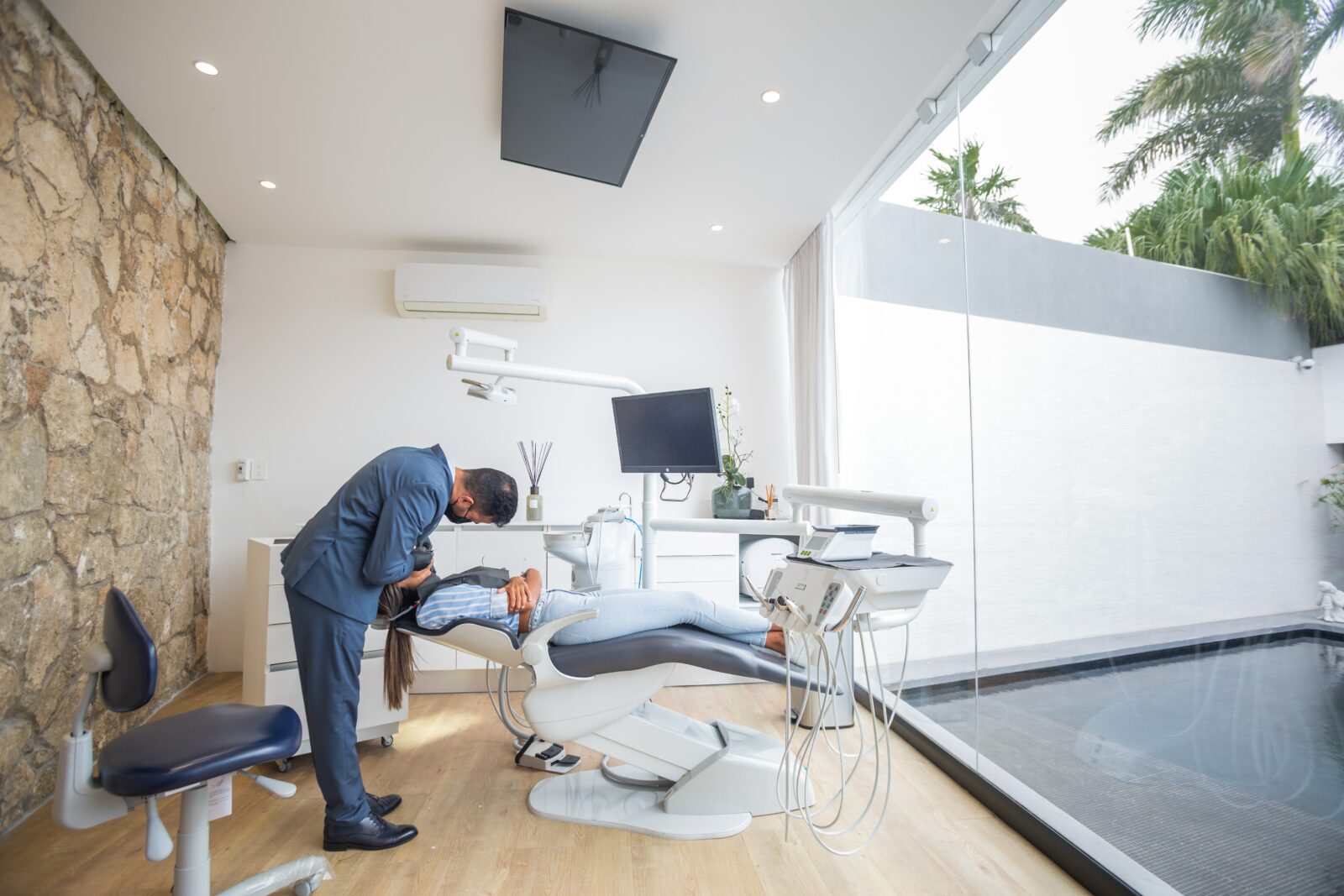
Your teeth, gums, tongue, and mouth have a huge impact on your overall health. Increasingly, biological dentistry is gaining followers for good reasons. Problems with your oral health can result in chronic health problems such as chronic inflammation.
The problem with conventional dentistry
Conventional dentistry focuses on the repair and maintenance of your teeth. This makes sense in some ways. Your fully developed, adult teeth don’t change much over time. Thus, it is logical to maintain their state and your ability to chew fully throughout your life.
Still, dentists are not medical doctors, thus their point of view is about maintenance of a proper bite, repairing teeth, and treating pain locally. This approach can cause many problems.
For instance, a cyst on the tip of a root canal treated tooth is somewhat common. A conventional dentist may ask if it hurts. If the answer is no, the course of action is to monitor the situation rather than seeking the cause, which is chronic inflammation.
Thus, the connection between painless inflammation in the mouth and chronic inflammation throughout the entire body is rarely made. Biological dentists have a different viewpoint. They see the mouth as the mirror of overall health.
Oral health issues can cause chronic inflammation
Untreated health problems can become chronic stressors that put a strain on your immune system, hormones, overall health, and performance, and you may never be aware of the situation. Often, these stressors begin in the mouth. If treated early, you can boost your well-being rather quickly.
Your mouth is the gateway to the rest of your systems. Whatever you put into it gets delivered throughout your body. This includes food, metals, toxins, cosmetics, and more. Biological dentistry takes this reality into account. It is more than repairing a broken tooth. Biological dentistry aims to make your body as healthy as possible by removing those things that can cause a disturbance to your health like inflammation. This is referred to as removing interference.
Once chronic inflammation, metals, and other interferences are removed, the overactive immune system is relieved. Typically, it will switch from the sympathetic mode (fight or flight) to the parasympathetic mode (rest, repair, digest). The parasympathetic mode is the only program in which the immune system is able to function properly, and where regeneration and restoration can take place.
Your immune system naturally fights off bacteria, viruses, fungi, and other microorganisms. In the industrialized world, your immune system is triggered into hyper-reactivity by pro-inflammatory cytokines like TNFalpha, IL-1beta, IL-6, and NF-kappaB.
Your teeth are organs with their own blood supply and nerves. They are attached to a very important cranial nerve, the trigeminal nerve. In addition, your teeth are directly connected to the vagus nerve and therefore connected with the autonomic nervous system.
Thus, highly toxic materials used in conventional dentistry, such as mercury, can result in serious consequences for your health. According to world-renowned integrative medical specialists like Dr. Dietrich Klinghardt, Dr. Thomas Rau, or Dr. Thomas Levy, about 70% of all interference fields in the body are in the oral cavity. Biological dentistry recognizes 5 primary interferences:
- Metals
- Root Canal Treatments
- Cavitations
- Biting problems
- Imbalanced oral microbiome
Let’s take an in-depth look at 3 of these: metals, root canal treatments, and imbalanced oral microbiome.
Metals
Use of metals in dentistry developed in the previous century. However, the effects of mercury, platinum, gold, copper, aluminum, cobalt, chrome, and iron on neurological disease, autoimmune disorders, and cancer are scientifically well documented. Metal components can usually be detected throughout the entire body just a few days after installation in the mouth.
The most appropriate method to determine heavy metals presence is the urinary heavy metal challenge, typically supervised by a medical or naturopathic doctor by using a chelator like ethylenediaminetetraacetic acid (EDTA), dimercaptosuccinic acid (DMSA), or 2,3-Dimercapto-1-propane sulfonic acid (DMPS). This must be done after removing heavy metals from the mouth.
Amalgam (otherwise known as highly toxic hazardous waste) is an alloy of mercury with various other heavy metals like silver, copper, or tin that is solid or liquid at room temperature according to the proportion of mercury present and is used in making tooth cement. Amalgam is routinely used in most dental practices today. This is because the material is easily processed and lasts for a long time. It is also subsidized by health insurance companies making it less expensive.
Mercury is considered the most toxic non-radioactive element, and thus exceeds all other known elements such as lead, cadmium, and arsenic. Norway and Sweden have banned its use in fillings. Russia banned amalgam in the 1970s.
In U.S. dental offices, amalgam must be disposed of using practices for highly toxic, hazardous waste. Amalgam is 50% mercury, and it is not firmly set in the filling after mixing.
You need to be informed about 3 metal-related problems for your body.
1. The toxicity of the metal. The highly toxic amalgam has a key role. All heavy metals like mercury, lead, tin, aluminum, and cadmium are able to bind to sulfur-containing proteins, enzymes, cofactors, and cell membranes. This covalent bonding can completely block the function of important enzymes. Your body uses enzymes for nutrient absorption, bone building, protein synthesis, detoxification, and more. They are a key factor in receptors such as insulin. Over time, your body becomes depleted in crucial nutrients like glutathione or methyl donors.
Metal ions dissolve in saliva, which increases the toxic burden on your systems. It also causes a flow in a current called the galvanic element. The result can be memory loss, lack of concentration, sleeplessness, unexplained tachycardia, tinnitus, and hearing loss.
Any action in your mouth can release mercury vapor. Only one molecule of mercury can destroy nerve cells. A study by Leong and Lorscheider showed that inorganic mercury quantities of 0.02 ng Hg/g led to the complete destruction of the intracellular microtubules and to a degeneration of nerve axons. In animal studies, after 14 days of amalgam wearing time, pathological changes could already be detected in the brain.
Since amalgam fillings are the main source of mercury poisoning, they should be removed either in the event of chronic illness or for preventive reasons.
2. The immunological component. Your immune system sees every dental metal as a foreign body, which can trigger an allergic reaction. This is independent of the number of metal crowns, metal implants, or inlays. The cell forms antibodies to the metal or the compound resulting from the metal and cell (Hapten effect), which plays an important role in the development of autoimmune diseases such as MS, Hashimoto Thyroiditis, etc. Your body wages war against that foreign object.
3. The electrical component. We live with mobile phones, radar, WIFI, and wireless networks that are bombarding us 24/7 with various frequencies and forms of electromagnetic radiation. Metals in your mouth can act as tiny antennae with transmitter and receiver effects that can interfere with your nervous system. The radiation is increased uncontrollably and heats up the surrounding tissues. We’re electrical in nature, and this intensified EMF messes with electrical signals that make our bodies function properly. The effects on the body are therefore uncontrollable, and unmeasurable.
Root canals
Biological dentists do not accept leaving dead body parts, like dead teeth or teeth that have had a root canal, in the body. No other medical discipline would do this.
In medicine, dead body parts are removed as quickly as possible to prevent inflammation elsewhere and stop the spread of toxicity throughout the body. A root canal essentially renders the tooth dead. As a procedure, it offers relief from pain. It clears out the decay and infection. However, the dead tooth will eventually be repopulated with bacteria leading to chronic problems. Root canal treatments do have their place though, and should only ever be used for short-term, acute pain treatment.
Root-canal-treated teeth are chronic inflammatory sites that can lead to chronic problems locally, but more often in other areas of the body as well. Without a blood, nerve, and lymph supply, the tooth is dead organic tissue with no immune function that can hold pathogenic microorganisms. These form highly toxic sulfur compounds that block vital enzymes. And the dead tissue can decompose over time causing more toxicity. It’s important to remove all possibilities of infection because the immune system won’t be able to reach, nor recognize it.
The nonspecific innate immune system reacts to this infectious site with the increased production of pro-inflammatory cytokines (TNF-alpha, IL-1beta, IL-6, Nf Kappab). This leads to chronic inflammation systemically, as well as of the surrounding tissue locally.
It is also common for a patient to have an allergic reaction to root filling materials which typically contain classic allergens like epoxy resin, Peru balsam, or rosin.
A biological dentist will take into account the patient’s overall health and health goals. One study showed that local pathologies resulting from endodontically treated teeth can increase systemic and immunological dysfunction. Finding an experienced biological dentist to remove the diseased tooth, clean and disinfect the surrounding areas, and replace the tooth with a ceramic implant is crucial.
Imbalanced oral microbiome
Most people identify good oral hygiene with a clean mouth or one that is low in bacteria. However, just as there are good bacteria in our gut, the mouth has good bacteria as well. Stability and balance among the different types of microorganisms are far more important than sterility.
Anatomically, the mouth and gastrointestinal tracts are one and the same. The distinction between mouth and intestine is made only in anatomy books. In reality, the two are one inseparable unit.
Every species of bacteria in our gut arrived via the mouth. The microbial populations of oral and intestinal flora are strongly connected throughout our lives. In fact, our saliva contains up to 109 microorganisms per milliliter. They end up in our intestines when we swallow.
Occasionally, we know that a mouth has an unhealthy balance of microorganisms by smell. Halitosis can be a clear indication of an unbalanced microbial community. An imbalance in the oral flora might smell acrid, sour, sulfurous, or—in the case of severe inflammation—like a festering open wound.
Our mouths offer an indication of our overall health. If there is an unfavorable bacterial climate because the gums or tooth roots are chronically inflamed, or because bad tooth fillings are constantly releasing toxic substances, then this problem can be transmitted throughout the body. If the ecology of the mouth becomes imbalanced, this usually affects the remaining gastrointestinal apparatus as well. And what you see in the mouth usually continues into the gut.
Recently researchers discovered that inflammatory bowel diseases such as Crohn’s or ulcerative colitis may originate in the oral microbiome. Scientists have found increased numbers of bacteria types that are usually found in the mouth in the intestinal microbiome of people with chronic diseases. It would appear that a particular genus of these bacteria can cause intestinal
Final thoughts
Biological dentistry combines functional medicine, high-tech dentistry, and biohacking to improve a patient’s overall well-being. It focuses on promoting optimal health that starts in the oral cavity and addresses toxicity, chronic inflammation, dysbiosis, the microbiome, electrosensitivity, chronic stress, and leaky gut.
A biological dentist may help you prepare for treatment by making changes to your diet and avoiding food intolerances like grains, sugar, dairy, and highly refined omega-6 supplements. The objective is to prompt your system out of a sympathetic mode, have a strong immune and nervous system, become more anabolic, and detoxify.
Then the biological dentist is likely to look at all dental issues like metals, osteonecrosis in the jaw bone (FDOJ/CIBD/NICOs/cavitations), root canals, and other interference fields. The goal is optimal health overall, and that begins with a healthy mouth.