
For decades, the dominant narrative around heart disease has been one of inevitability. Aging hearts clog. Genetics load the gun. Pills are for life. Procedures are unavoidable. Yet this storyline collapses under the weight of modern evidence. The #1 killer in the developed world—cardiovascular disease—is not only preventable in the vast majority of cases, but in many people it can be halted and even reversed.
That statement isn’t aspirational. It’s scientific.
Heart disease, particularly coronary artery disease, is driven primarily by atherosclerosis: a chronic immune-inflammatory process involving lipid deposition, oxidative stress, endothelial dysfunction, and maladaptive immune signaling inside arterial walls. When left unchecked, plaques narrow vessels, reduce blood flow, and eventually rupture—triggering heart attacks and strokes.
In 2022 alone, cardiovascular disease claimed nearly 19.8 million lives worldwide, accounting for roughly one-third of all deaths. About 85% of those deaths were due to heart attacks and strokes directly tied to plaque-induced vessel damage. And yet, the overwhelming majority of this burden traces back to modifiable factors: diet, smoking, hypertension, metabolic dysfunction, inflammation, and environmental exposures.
This matters because atherosclerosis is not a passive accumulation of “cholesterol debris.” It is an active, biologically responsive process. And what responds to biology can be changed by biology—especially nutrition.
Atherosclerosis: A Lifestyle-Responsive Disease
At its core, atherosclerosis reflects a mismatch between our evolutionary biology and modern living. Highly processed foods, refined sugars, seed oils damaged by heat, chronic stress, sedentary habits, and micronutrient deficiencies create the perfect storm for endothelial injury. Once the delicate inner lining of blood vessels is damaged, immune cells rush in, oxidized lipids accumulate, smooth muscle proliferates, and plaques form.
But here’s the crucial point: plaques are dynamic, not static.
Under the right conditions—lower inflammation, improved nitric oxide signaling, reduced oxidative stress, and better lipid handling—arterial walls can stabilize, remodel, and in many cases regress. This has been demonstrated repeatedly using objective measures such as carotid intima-media thickness (IMT), coronary angiography, and flow-mediated dilation.
Lifestyle intervention isn’t a “soft” alternative to medicine. In many cases, it is the most potent therapy available.
Foods and Nutrients Shown to Protect—and Reverse—Arterial Disease
Below is a snapshot of nature’s cardiovascular toolkit. These are not folk remedies or fringe ideas. Each has been studied in peer-reviewed, published research demonstrating measurable effects on arterial health, inflammation, endothelial function, and plaque burden.
Key food- and nutrient-based interventions supported by research include:
- B-complex vitamins (especially folate, B6, and B12):
Elevated homocysteine is a well-established independent risk factor for cardiovascular disease, contributing to endothelial damage and oxidative stress. A double-blind, randomized study published in Atherosclerosis (2005) demonstrated that supplementation with folic acid, vitamin B6, and vitamin B12 for one year resulted in significant reductions in arterial thickness as measured by intima-media thickness. Even individual components—such as niacin or folic acid alone—have shown similar vascular benefits in clinical studies. Importantly, whole-food sources, fermented foods, and probiotic-supported B-vitamin production appear to offer advantages over synthetic isolates. - Garlic:
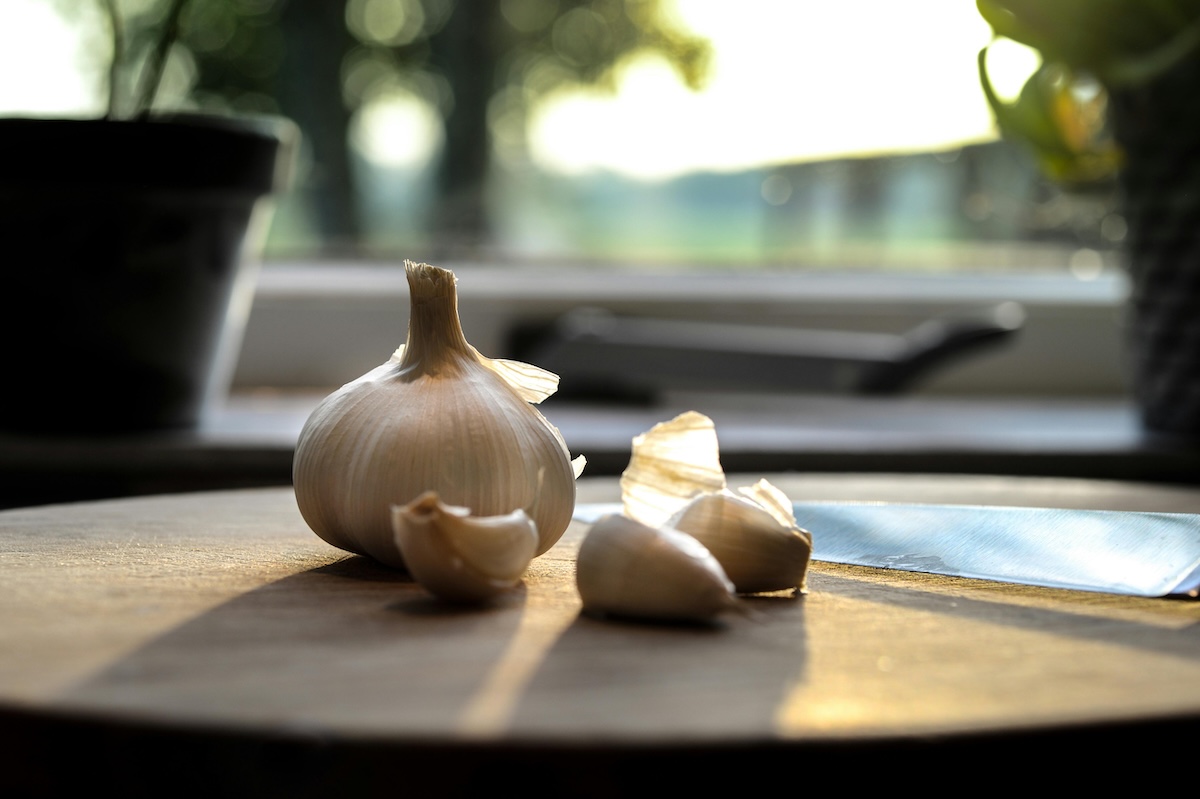
Garlic is one of the most extensively studied cardioprotective foods in the world. Research has shown it can reduce arterial plaque burden, improve lipid profiles, lower blood pressure, inhibit platelet aggregation, and reduce oxidative stress. Several trials have demonstrated actual regression of atherosclerotic plaque with aged garlic extract, making it one of the most powerful dietary allies for heart health. - Pomegranate:
Rich in polyphenols with potent antioxidant and anti-inflammatory activity, pomegranate has been shown to reduce carotid artery thickness and slow—or reverse—atherosclerosis progression. Studies demonstrate improvements in endothelial function, reductions in LDL oxidation, and favorable effects on blood pressure. Beyond cardiovascular benefits, pomegranate has demonstrated a wide range of systemic effects, underscoring its role as a true functional food. - Fermented cabbage (such as kimchi):
Traditional fermented foods provide more than probiotics; they deliver bioactive compounds that modulate immune signaling and lipid metabolism. In animal models, fermented cabbage preparations have been shown to stall atherosclerotic progression. Additionally, certain bacterial strains found in kimchi can degrade environmental toxins and reduce systemic inflammatory burden—an underappreciated factor in vascular disease. - L-arginine:
L-arginine is a precursor to nitric oxide, the molecule responsible for vasodilation and vascular flexibility. Impaired nitric oxide signaling is a hallmark of endothelial dysfunction and early atherosclerosis. Animal studies have demonstrated reductions in arterial thickening of up to 24% with arginine supplementation. A large body of human research shows improvements in endothelial function, blood flow, and inflammatory markers—addressing the root dysfunction that precedes plaque formation. - Turmeric (curcumin):
Curcumin, the primary polyphenol in turmeric, has been investigated in more than 80 studies for its cardioprotective effects. It modulates inflammatory pathways, inhibits oxidative damage, improves endothelial health, and prevents abnormal smooth-muscle proliferation within arteries. One study demonstrated that curcumin prevented neointima formation—the pathological thickening that follows vascular injury or blockage. - Sesame seeds:
Often overlooked, sesame seeds are rich in lignans such as sesamin, which exert antioxidant, anti-inflammatory, and lipid-lowering effects. Animal studies show prevention of atherosclerotic lesion formation, while human studies demonstrate improvements in blood markers associated with cardiovascular risk. As a whole food, sesame offers gentle, cumulative protection well-suited for long-term prevention.
A Snapshot of Nature’s Cardiovascular Toolkit
Taken together, these foods and nutrients don’t work in isolation. They converge on the same biological targets: inflammation reduction, oxidative stress control, improved endothelial signaling, healthier lipid metabolism, and immune modulation. This is precisely why whole-food, plant-forward dietary patterns consistently outperform drug-only approaches in long-term outcomes.
At a broader level, the science supports three foundational principles for arterial health:
- Lower chronic inflammation through nutrient-dense, polyphenol-rich foods
- Restore endothelial function by supporting nitric oxide and antioxidant defenses
- Reduce immune-lipid dysregulation by addressing metabolic and micronutrient imbalances
These principles explain why intensive lifestyle interventions have demonstrated plaque regression comparable to—or exceeding—that of pharmaceutical therapy in selected populations.
Beyond Genetics: Reclaiming Agency Over Heart Health
Cardiovascular disease is often framed as a genetic destiny. While genetics influence susceptibility, they do not dictate outcome. Gene expression is profoundly shaped by diet, lifestyle, and environmental inputs. What we eat daily sends biochemical instructions to our arteries—either fueling inflammation or promoting repair.
This reframes prevention as something far more empowering than “risk reduction.” It becomes active healing.
Importantly, this does not require perfection. It requires consistency. The body responds to cumulative signals over time. Each meal rich in whole, anti-inflammatory foods nudges arterial biology toward stability. Each reduction in processed food load lowers oxidative stress. Each micronutrient repletion restores enzymatic pathways critical to vascular integrity.
Food as First-Line Therapy
Modern medicine excels at crisis intervention. But heart disease develops slowly—often over decades. That timeline is precisely where nutrition and lifestyle exert their greatest power.
The idea that cardiovascular disease is an unavoidable consequence of aging is no longer defensible. It is a chronic, immune-inflammatory condition that responds directly to what we eat, how we move, how we sleep, and how we manage stress. When those inputs change, biology changes.
Food is not merely fuel. It is information. It is instruction. And when chosen wisely, it is medicine—capable of protecting, repairing, and in many cases reversing the damage once thought permanent.
The evidence is clear. The tools are accessible. And the responsibility—once obscured by decades of willful ignorance—now rests squarely in our hands.