
Our modern lifestyle presents us with many opportunities to over-stress and worry. Many of us operate our daily lives in a state of chronic stress without even being aware of this and the harm it can do to our health.
How and why does stress cause so much damage to our overall well-being? Cortisol.
Cortisol is the primary stress hormone, which increases glucose in the bloodstream and enhances your brain’s use of glucose and the availability of substances to repair tissues. Cortisol plays a critical role in the functioning of your metabolism by helping to modulate blood pressure and blood sugar levels.
Fortunately, we have many natural and holistic options to help alleviate stress, including an herb that has been successfully used in Ayurveda for thousands of years: ashwagandha.
What is cortisol?
Prolonged, chronic stress typically results in chronically elevated levels of the stress hormone cortisol. Long-term cortisol levels are strongly correlated with abdominal obesity. Normal levels of cortisol are necessary to our health, but too much cortisol for extended periods can have negative consequences.
High cortisol levels may lead to reduced glucose utilization, weakened muscles, less muscle mass, abdominal fat, and osteoporosis. If your objective is to lose some weight and build up muscle, it’s crucial to understand how cortisol works and get your stress under control.
What is ashwagandha?
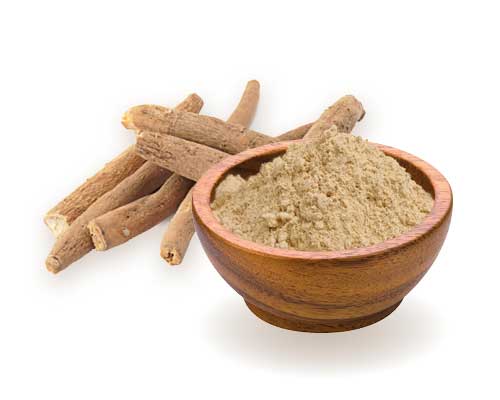
Ashwagandha is an evergreen shrub that is commonly found throughout the continents of India, Africa, and certain areas of the Middle East. This herb has been used for years in Ayurvedic medicine for its many beneficial properties, including but not limited to:
- Increasing energy
- Balancing health between mind, body, and spirit
- Reducing anxiety
- Reducing inflammation
- Reducing pain
Ashwagandha works well to naturally reduce the stress and anxiety that is associated with everyday life. It is also common to use ashwagandha in conjunction with prescription medications to help alleviate anxiety or depression. However, if you are taking a prescription anti-depressant, talk to your doctor. Don’t simply replace your prescription with ashwagandha. Always consult with your doctor or healthcare provider to learn about the benefits it may have for you and the proper dosage to begin with.
The immediate effects of ashwagandha
When cortisol levels are too high and chronic in the body, our bodies can remain in the fight-flight-freeze mode. This chronic stress can lead to problems such as inflammation, heart disease, stroke, acne, and more. Many studies have investigated the effects of ashwagandha and its benefits. One study on adults found that ashwagandha’s stress-relieving effects may occur via its moderating effect on the hypothalamus-pituitary-adrenal axis.
Some of the benefits of ashwagandha are realized over time. The immediate effects may be an upset stomach or drowsiness. This goes away soon when you take the supplement consistently and over a longer period.
Long-term effects of ashwagandha
The long-term benefits associated with taking the supplement of ashwagandha are primarily the regulated stress response within the body. Several studies have proven its efficacy.
One study found that ashwagandha lowered serum (blood) cortisol levels by 23% in adults. Women responded slightly better than men. Comparisons revealed there was a statistically significant 25% reduction in cortisol in females in the ashwagandha group, and 22% in the male group.
Another study looked at an adult group with chronic stress who consumed ashwagandha root for a 60-day period.
The study looked at the participants using the Perceived Stress Scale” in addition to measuring their serum cortisol levels. The study found that there was only a 5.5% reduction in baseline PSS scores in the placebo group, compared to 44.0% in the Ashwagandha group. In addition, a reduction of 27.9% from baseline cortisol level was measured in the Ashwagandha group.
This study suggests that a high-concentration, full-spectrum Ashwagandha root extract safely and effectively improves an individual’s resistance to stress and improves self-assessed quality of life.
A similar study compared a low-dose ashwagandha group (250mg/day) to a higher-dose ashwagandha group (600 mg/day). After 60 days of trial, both groups saw a statistically significant reduction in both PSS scores and serum cortisol levels. The difference in scores indicated that while Ashwagandha 250 mg/day treatment is effective in reducing the cortisol level, it is not as effective as Ashwagandha 600 mg/day.
Final thoughts
Many studies show that ashwagandha has health benefits. It can play a significant role in enhancing your body’s ability to cope with stress in a healthy way. Lowering stress in the body can have significant secondary long-term effects including improved quality of life, weight changes, improvement in conditions related to chronic stress such as high blood pressure, better self-control and focus, and better relationships.
Other benefits of taking ashwagandha include improved athletic capabilities, improved sleep, assistance in alleviating symptoms associated with anxiety and depression, and more. Check with your health care provider to learn if ashwagandha is good for you and what dosage to begin at.