
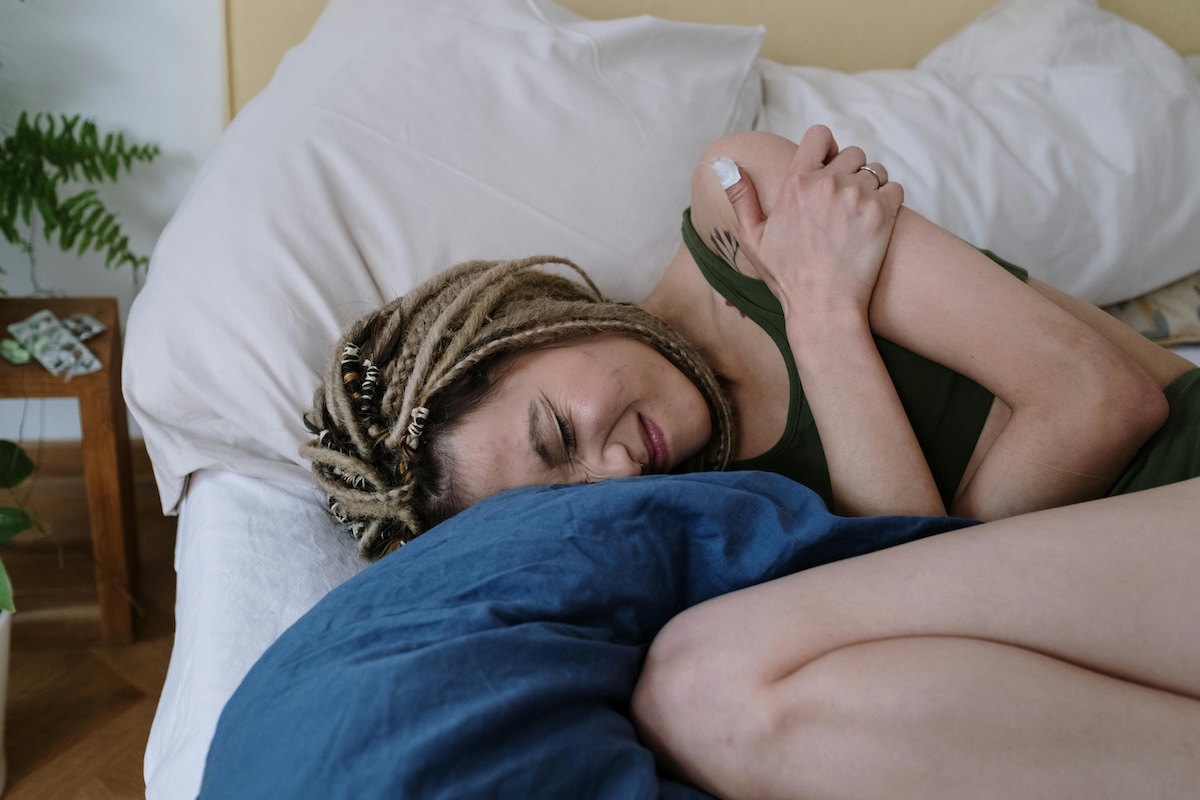
This series of articles will show you several tips that, at first glance, may seem simple, but I assure you they can be life-changing and tremendously improve the pain you feel during your period. So join me on the journey to discover what you can do to ease your pain!
Reducing pain ultimately is a matter of reducing inflammation. Sometimes things seem very complicated, and other times they are super simple and help more than we can imagine.
Let me show you my first tip!
First: A Good Diet
For breakfast, I had three eggs with mushrooms and avocado with a digestive tea. For lunch, I had grilled chicken with a bit of white rice and sautéed veggies. And for dinner, I’ll have zucchini soup and grilled sardines. Ultimately nothing too complicated!
Here are a few small tips to optimize blood sugar regulation when you eat:
First, you eat the vegetables, then the healthy fats and protein (meat, fish, eggs, oil, nuts, avocado), and finally, the carbohydrates (pasta, rice, tubers, fruit, etc.). For example, at lunch, I ate the veggies with the chicken first and then finished with the rice. Another important consideration is to do your best to eat around 30g of protein in each meal to stabilize your blood sugar throughout the day. You’ll feel more energetic and experience fewer energy crashes!
Experiment with eliminating certain foods if you have painful periods.
These are some food groups that I recommend cutting out if you have painful periods: legumes, tubers, dairy (cow, goat, and sheep), added sugars, alcohol, grains, processed foods, sodas, cold cuts, pre-cooked meals, tuna (too much mercury), and if you eat a lot of fruit, reduce it to just one piece per day.
Second: Try to follow your circadian rhythm as closely as possible.
This means that when I woke up, I sat with my feet on the ground (remember, concrete works too), and hey, if there’s no soil, I just sit wherever I can, no big deal. And remember, no glasses or contact lenses, watch the sunrise for 5-10 minutes. That’s all you need.
Then repeat at noon (obviously don’t look directly at the sun, more taking a moment and gazing upwards in the direction of the sun, and again in the evening when sunset approaches. After the sun goes down, I at least sometimes will use orange-tinted glasses and try to only use red light bulbs in the house.
At 10 pm, I’m already in bed.
So, I encourage you to start making these small changes, which may seem superficial at first, but as you integrate them into your daily life, they end up really supporting optimizing your health.
Three: Focus on Regular Bowel Movements.
Go to the bathroom every day, yes, that’s right, poop every day to improve your menstrual pain! Going to the bathroom regularly helps us not only detoxify the estrogens we need to get rid of (otherwise, we reabsorb them, and we end up with a textbook case of hyperestrogenism). As we talk about all the time here on Wellness Plus proper elimination of stool is essential to eliminate other toxins. Additionally, when there are inflammatory endometriosis lesions in or near the intestines, if stool gets stuck there, the menstrual pain increases. When there is endometriosis in or near the intestines, they become so inflamed it’s like a bottleneck, and going to the bathroom can feel impossible.
How can you achieve this? By moving! The 10,000 steps a day are great, but basically, make sure you get up every half hour and walk up and down a hallway. And, stay hydrated! We will go over this in more detail in Part 2 of this article series.
Eat fiber, which means a wide variety of vegetables. Don’t eat the same thing all the time, please, and include fruits too. I always recommend one fruit per day if you’re not very physically active, and it’s better to have it in the morning. You can also eat ground seeds like chia, flax, sesame and such which can help too. Be mindful to not overdo it with vegetables if they make your stomach bloat. Keep a quantity that you tolerate well, and try to make simple plates—don’t mix more than two vegetables, and cooked vegetables are often better if you have these issues.
Taking Magnesium Chloride and Carbonate can also help. I recommend a pill form for more accurate dosing, with the powder its easy to take too much and cause loose stools. You can start with 300 mg before bed and increase to 300 mg more in the morning with breakfast if needed.
Start here and then check out Part II and III of this series for more tips!