
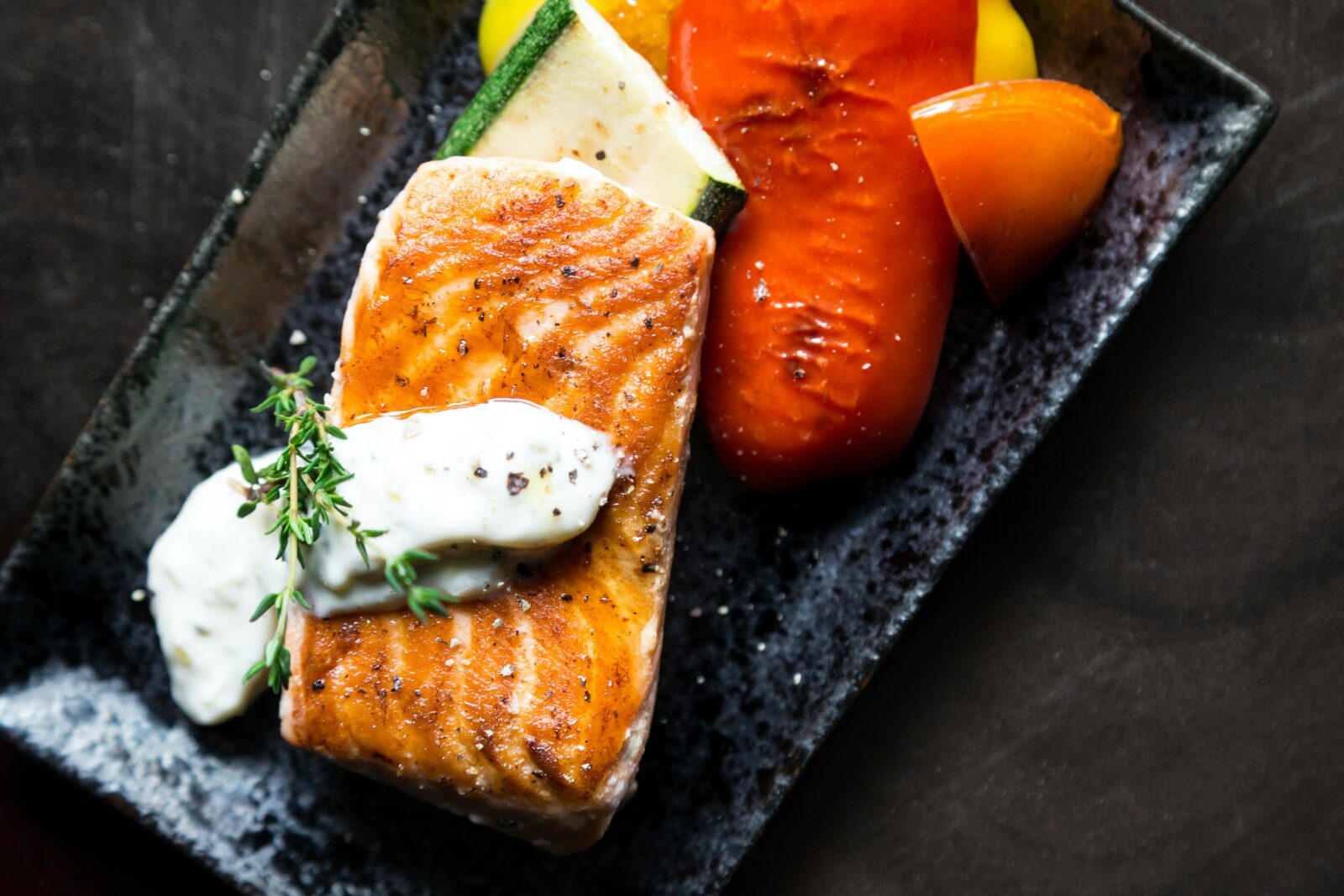
Fish play a crucial role in our ecosystem and our diets. However, overfishing has depleted the overall fishing stock especially in popular fish like salmon. Fish farming promises to be a win/win solution, but it creates more problems than it solves. Fish farms pollute the aquatic environment and spread disease to wild stock. In addition, farmed fish have fewer nutrients and contain more toxins, which accumulate in our bodies.
Farmed salmon is the most toxic food source globally
Testing has shown that farmed salmon is one of the most toxic foods in the world and ranks alongside junk food for that reason. Studies dating back for over a decade highlight the problems. A study published in 2004 found 13 persistent organic pollutants in the flesh of the fish. On average, polychlorinated biphenyl (PCB) concentrations in farmed salmon were eight times higher than in wild salmon. The researchers concluded that “Risk analysis indicates that consumption of farmed Atlantic salmon may pose health risks that detract from the beneficial effects of fish consumption.”
The International Agency for Research on Cancer and the Environmental Protection Agency classify PCBs as probably carcinogenic. In addition, the CDC states that PCBs are involved in critical health conditions in animal studies including immunosuppression, cancer, neurotoxicity, and reproductive and developmental toxicity. Research suggests that contaminated fish is the most common source of PCBs because they accumulate in fat tissue.
A 2011 study published in PLOS ONE showed that continued consumption of farmed salmon resulted in glucose intolerance, insulin resistance, and obesity in mice due to PCBs found in the fish. The researchers stated that “Our data indicate that intake of farmed salmon filet contributes to several metabolic disorders linked to Type 2 diabetes and obesity, and suggest a role of POPs in these deleterious effects. Overall, these findings may participate to improve nutritional strategies for the prevention and therapy of insulin resistance.”
Farmed salmon may contain fire retardants
Farmed Atlantic salmon sold in the U.S. and U.K. may also contain polybrominated diphenyl ethers (PBDEs), which are toxic POPs that have been restricted or banned in the U.S. and many European countries due to their toxic influence on child development. The 2018 study by the University of Pittsburgh found evidence of PBDEs in the food fed to farmed salmon.
PBDEs are a class of chemicals that for years were used as flame retardants. Although they have been controlled substances since 2004, they can still be found in older products. China, Vietnam, and Thailand have higher levels of PBDEs in their environments due to the amount of electronic waste they process.
In more recent years, flame retardant pollution has raised serious concern, as these chemicals build up in the environment over time and are in many areas now found in both groundwater and open waters.
Health risks associated with these chemicals, including PBDEs, include neurodevelopmental delays, birth defects, infertility, cancer, lower IQ, and hormone disruptions. Flame retardant chemicals have been pinpointed as high priority chemicals that should be avoided to reduce breast cancer.
Is toxic fish food responsible for farmed salmon toxicity?
When an animal ends up on your plate for you to eat, you eat what it consumed. It is crucial to know the source of the animal’s feed. In farmed salmon, toxins in fish feed and the environment have been identified as the two primary sources.
When fish are raised in areas with high PBDE concentrations in the water, the feed becomes a relatively minor contributor. However, in PBDE-free waters elevated levels of these toxins in the feed may be high enough to find its way to your dinner plate.
Fish farming operations may import their feed or feed ingredients from a number of countries, including those without advanced food safety regulations. The United States and much of Europe banned several PBDEs in 2004 because of environmental and public health concerns. PBDEs can act as endocrine disruptors and cause developmental effects. Children are particularly vulnerable.”
How does fish feed become so toxic?
One of the main ingredients in farmed salmon feed is fatty fish for its high protein and fat content. However, the fish feed industry uses fish labeled unfit for human consumption due to high levels of toxicity. When the fish used in fish feed contain toxic levels of pollutants, they get incorporated into the feed pellets.
One significant source of fish for farmed salmon feed is the Baltic Sea, which is well-known for its elevated pollution levels. Nine industrialized countries dump their toxic waste into this closed body of water, which has rendered many Baltic Sea fish inedible. In Sweden, fish dealers are required to warn consumers about the potential toxicity of Baltic fish.
According to government recommendations, you should not eat fatty fish like herring more than once a week, and if you’re pregnant, fish from the Baltic should be avoided altogether. Fish farms may also import their feed, or individual ingredients from other countries with few regulations and high levels of pollution.
Toxic manufacturing processes
Some of the toxicity results from the manufacturing process of the feed pellets. The fatty fish are first cooked into a protein meal and oil. While the oil has high levels of dioxins and PCBs, a chemical called ethoxyquin is added to the protein powder as an “antioxidant,” which further adds to the toxicity of the final product. Ethoxyquin, developed as a pesticide by Monsanto in the 1950s, is virtually unknown to consumers even though it is highly toxic.
The use of ethoxyquin is strictly regulated in meat, fruit, and vegetables. However, it is not regulated for use in fish because it was never intended for this use. Fish feed manufacturers added it to the process without informing government authorities. Thus, the pesticide is now present in fish feed. Tests have shown that farmed fish may contain levels of ethoxyquin that are 20 times higher than allowed in meat, fruit, and vegetables.
Currently, only one study on ethoxyquin has been conducted on its effects on human health. This was done by Victoria Bohne, a former researcher in Norway who discovered ethoxyquin can cross the blood-brain barrier and may have carcinogenic effects. Some controversy exists as Bohne believes she was pressured to leave her research job after attempts were made to falsify and downplay her findings.
Environmental pollution affects some salmon
Salmon acts as an indicator of environmental conditions, and salmon have become increasingly toxic. While farmed salmon is the worst; wild salmon can contain high levels of pollutants. In a study of salmon from Puget Sound, researchers found 40 contaminants in the flesh of the fish. This included legal and illegal drugs. Some of the drugs were found at levels known to interfere with reproduction, growth, and behavior.
In addition to the toxins listed above, researchers have found many pesticides at high levels in fish in the Pacific Ocean off the coast of California. This includes DDT, which was banned in 1972. In addition, some water in the United States continues to be contaminated with mercury at levels so high that residents are warned not to eat the local fish.
Nutritional differences between farmed and wild salmon
Farmed salmon is nutritionally deficient when compared to wild salmon, which is also linked to its toxicity. One significant nutritional difference is the fat content. Wild salmon contains about 5 to 7 percent fat, whereas the farmed variety can contain anywhere from 14.5 to 34 percent.
This elevated fat content is a direct result of the processed high-fat feed that farmed salmon are fed. Their higher fat levels mean the fish accumulate higher toxins.
In addition, farmed salmon is radically different in the ratio of omega-3 to omega-6 fats. Half a filet of wild Atlantic salmon contains about 3,996 mg of omega-3 and 341 mg of omega-6.
Half a filet of farmed salmon from the Atlantic contains just a bit more omega-3 — 4,961 mg — but an astounding 1,944 mg of omega-6. This is over 5.5 times more than wild salmon.
The ratio is crucial. We all need both types of fats. The ratio should be closer to 1:1. However, a diet with a higher amount of omega-6 is unhealthy, and the American diet is already overloaded with omega-6 fats.
Some of the most common ingredients in farmed fish feed include wheat gluten, corn meal, soybeans, rapeseed/canola oil, sunflower meal and oil, palm oil, peanut meal, and oil, and pulses made from peas and fava beans. None of these are natural wild salmon foods.
In addition, Atlantic farmed salmon feed may contain animal by-products from poultry, meat meal, blood and hydrolyzed feathers. Additives such as enzymes, crustacean products (to color the salmon flesh), vitamins and selenium are also added. All of these are unnatural additives and inappropriate as feed for salmon.
Salmon farming is not a green solution
A salmon farm can contain up to 2 million salmon in a relatively small amount of space. As with land-based factory farms where animals are kept in crowded conditions, fish farms are plagued with diseases that spread rapidly among the stressed fish. Sea lice, pancreas disease and infectious salmon anemia virus have spread all across Norway. However, consumers remain unaware of this and continue to purchase diseased fish that is available for sale.
Fish farm manufacturers respond to diseases by using dangerous pesticides including one that has been shown to have neurotoxic effects. Workers who apply this pesticide must wear full protective clothing, yet these chemicals are dumped right into open water, where it spreads with local currents.
The pesticides affect fish DNA causing genetic effects. Estimates suggest about half of all farmed cod are deformed due to genetic mutations. The female cod that escape from farms mate with wild cod, spreading the genetic mutations and deformities into the wild population.
Genetically engineered salmon is now common
Fish farms are not necessarily a good solution to overfishing. Instead, they can contribute to the destruction of the marine ecosystem more quickly. And, farmed salmon is increasingly genetically engineered.
For instance, AquaBounty salmon is engineered to grow twice as fast as typical farm-raised salmon. It received approval from the FDA in 2015 and began distribution in 2021. Oddly, the FDA reviewed the salmon not as food but as a drug. This is in compliance with the new animal drug provisions of the Federal Food, Drug and Cosmetic Act, “because the recombinant DNA (rDNA) construct introduced into the animal meets the definition of a drug.”
When AquaBounty announced that the GE fish was coming to market, The Associated Press reported that the company would market the fish to “restaurants and away-from-dining services where labeling as genetically engineered is not required.”
The FDA stated that they do not require the fish to have a GE label because it is nutritionally equivalent to conventional farm-raised Atlantic salmon.
The higher growth rate was achieved by inserting the DNA from two other fish, a growth-promoting gene from a Chinook salmon and a “promoter” gene from the eel-like ocean pout. This genetic alteration created a fish with a continuous release of growth hormone. A typical salmon takes around 3 years to reach market size whereas the AquaAdvantage GE salmon reach that size in about 1 ½ years.
What are the healthiest options?
Unfortunately, much of the world’s fish supply, even wild fish, is too contaminated to be consumed frequently. Most major waterways are contaminated with heavy metals, mercury, agricultural chemicals, and POPs.
You should restrict your consumption of contaminated fish. Some options for healthier fish do exist such as authentic, wild-caught Alaskan salmon. The risk of wild Alaskan salmon accumulating high amounts of mercury and other toxins is reduced because of its short life cycle, which is only about three years.
Alaskan salmon is not allowed to be farmed, and is therefore always wild-caught. Canned salmon labeled “Alaskan salmon” is a less expensive alternative to salmon filets. Wild salmon is quite lean, so the fat marks are on the thin side. If a fish is pale pink with wide fat marks, the salmon is likely farmed. Avoid Atlantic salmon, as salmon bearing this label are almost always farmed.
Other exceptions include smaller fish with short life cycles such as anchovies and sardines. They have a lower contamination risk and higher nutritional value. You can also include herring and roe, which contain phospholipids that support your mitochondrial membranes.