
As a functional-medicine physician who views the body as an interconnected system, I’m always on the lookout for overlooked nutrients and mechanisms that support the body’s innate ability to heal, regenerate and maintain balance. One fascinating example is the nutrient Vitamin C (ascorbic acid) and emerging research suggesting it may play a role far beyond immune support — namely in repairing damaged steroid hormones, supporting natural hormone balance, and offering a novel complement (or even alternative) to conventional hormone-replacement therapy (HRT). In this article I’ll walk you through the surprising 1993/2011 research on hormone regeneration, explore the molecular mechanism through the lens of functional medicine, and then tie in how vitamin C’s anti-aging/surface benefits (especially for skin) dovetail with its deeper hormonal role.
A landmark discovery: Hormone Regeneration by Vitamin C
The story begins with the paper titled “Photo-induced regeneration of hormones by electron-transfer processes: Potential biological and medical consequences” published in the journal Radiation Physics and Chemistry.
In brief: the researchers exposed three steroid hormones — Progesterone (PRG), Testosterone (TES) and Estrone (E1, a form of estrogen) — to ultraviolet (UV) light (254 nm) in a polar mixture (40% water / 60% ethanol). This UV exposure induced electron emission from the hormones, creating “transient” damaged hormone molecules (so-called hormone transients) which have the potential to break down into undesirable metabolites. The key question: can a strong electron donor (vitamin C) reverse that damage by donating electrons and restoring the original hormone molecule?
Their results:
- Progesterone: ~52.7 % regeneration via vitamin C electron donation.
- Testosterone: ~58.6 % regeneration.
- Estrone: ~90.9 % regeneration.
Importantly, the authors concluded:
“The hormone transients … can be regenerated to their original structure by the transfer of electrons from an efficient donor like VitC… As a consequence of the regeneration of hormones, a decreased formation of carcinogenic metabolites is expected.”
From a functional-medicine vantage point, this is compelling: it suggests that internal hormone molecules damaged by environmental stress (in this experiment UV light) might be repaired by nutrient-mediated electron donation. Rather than simply replacing hormones, perhaps we can preserve/restore what’s already present — a truly regenerative paradigm.
What this means for Hormone Replacement Therapy (HRT) and Natural Hormone Balance
In conventional endocrinology, when hormone levels fall (due to aging, ovarian/menopausal transition, andropause, or other causes), the go-to is hormone replacement: prescribing exogenous estrogen/progesterone/testosterone. Functional medicine often uses HRT as well, but we also emphasise optimizing endogenous hormone production, reducing stressors, improving nutrition and detoxification, and enhancing resilience.
Here’s where the vitamin C regeneration mechanism adds a new layer:
- Preserving endogenous hormones: Rather than simply adding external hormones, vitamin C may help protect and restore your body’s own hormones. If hormones are being damaged (by oxidative stress, environmental pollutants, UV, radiation, metabolic stress) and those damaged molecules are diverted into unwanted metabolites, then repairing them supports natural hormone balance.
- Minimizing metabolite-mediated risks: The authors of the 1993/2011 paper hypothesised that damaged hormone intermediates — if not restored — may convert into metabolites with carcinogenic or disruptive potential. If vitamin C regenerates the parent hormone molecule, we may reduce formation of potentially harmful breakdown products.
This is notable in hormone-sensitive tissues like breast, prostate, endometrium. - Safer profile and synergy: Vitamin C has an exceptional safety profile. Even high doses (several grams/day) in healthy individuals show minimal toxicity.
In a functional-medicine hormone strategy, vitamin C could act as a complement: e.g., alongside lifestyle, nutrition, stress reduction and selective HRT when needed — perhaps allowing lower HRT doses or better endogenous support. - A paradigm shift: Regenerate rather than replace: Think of it this way: instead of replacing the hormone (adding external molecules), we are repairing the existing molecules so they function optimally. That’s more aligned with a regenerative medicine view. It shifts from “I need hormone because my levels are low” to “Let’s protect and restore what I naturally have, reduce the damage burden, and support the system that makes and uses hormones.”
Of course, we must temper expectations: that paper was an in vitro (lab) study, using UV damage in an artificial mixture. It does not directly prove in-vivo hormone regeneration in humans via vitamin C supplementation. But it opens a plausible mechanism and points to a relatively low-risk strategy that deserves more investigation.
The molecular mechanism: Vitamin C as an Electron Donor
Why does vitamin C have this capacity? The key lies in its redox chemistry and functional medicine lens.
In mainstream biochemistry, vitamin C is described as a “water-soluble antioxidant” that donates electrons (reducing equivalents) to reactive species and regenerates other antioxidants (such as vitamin E). What the hormone regeneration paper reveals: steroid hormones can become “transients” when excited (e.g., by UV), meaning they may emit an electron (or otherwise become oxidised, degraded, or changed structurally). In the damaged state, these transients can form unwanted metabolites or simply be lost. The researchers propose that if you supply a strong electron donor (vitamin C), you can reverse that electron loss: the hormone receives the electron(s) back, restores the original chemical structure (to a large degree), and thus avoids the formation of degradative by-products.
Think of vitamin C like a “molecular repairman” supplying electrons to fix the damaged hormone molecule. In functional medicine terms:
- Oxidative stress, radiation, environmental toxins, UV light, metabolic by-products all place load on steroid hormone stability (just like they damage collagen, DNA, lipids).
- The body’s capacity to regenerate or repair those hormone molecules depends on nutrient supply (vitamin C, other antioxidants), detoxification capacity, redox balance, and cellular resilience.
- Supporting vitamin C levels helps maintain redox buffer capacity and supports the integrity of key biomolecules — including, potentially, our own hormones.
It’s also notable that vitamin C is involved as a co-factor in numerous enzyme reactions (e.g., collagen hydroxylation) — showing its centrality in molecular repair and maintenance.
From a functional-medicine perspective, this reinforces why I emphasise ensuring optimal vitamin C status in patients dealing with hormone decline, peri-menopause/menopause, male hormone support, or those exposed to high oxidative load (smokers, polluted environments, heavy UV exposure).
Anti-Aging, Skin & Collagen Benefits — The “Outer” Reflection of Inner Repair
While the hormone regeneration mechanism is deeply compelling, vitamin C’s other well-documented roles offer a kind of synergy: what heals internally often shows up externally. In particular, vitamin C supports skin health and anti-aging — which intersects beautifully with hormone balance and functional medicine goals.
Key skin-related effects of vitamin C:
- Collagen synthesis: Vitamin C is essential for proline and lysine hydroxylation during collagen formation — without it, connective tissue is weak, wound healing is impaired.
- Wound healing: Functional medicine practitioners routinely use vitamin C in support of tissue repair and skin recovery.
- Even skin tone and anti-pigmentation: Some research shows vitamin C derivatives inhibit melanin synthesis in melanocytes, resulting in more even skin tone.
- UV protection: Although it’s not a substitute for sunscreen, vitamin C acts as an antioxidant and can reduce oxidative damage from UV exposure.
- Anti-aging: Because skin aging is accelerated by collagen breakdown, oxidative stress, hormonal decline (particularly estrogen/progesterone) and glycation — vitamin C addresses several of these pathways.
From a functional-medicine angle, supporting vitamin C doesn’t just help hormones behind the scenes — it shows up in the mirror. A patient may improve hormone balance, internal redox status and detoxification, and simultaneously notice firmer skin, fewer age spots, better wound repair, and a more youthful texture. That visible change tends to reinforce adherence to the functional-medicine approach.
Practical Considerations: How I Use Vitamin C in My Practice
Here are some practical guidelines (always customised per patient) from my functional-medicine perspective:
1. Assess baseline vitamin C status
While routine clinical tests for vitamin C are not standard, I look for indirect clues: dietary intake (low fruit/veg), smoking history, environmental exposures (pollution, UV heavy lifestyle), chronic illness, wound-healing issues, high oxidative load. As the Linus Pauling Institute notes, plasma vitamin C saturates at around 60–80 µmol/L, and higher intakes beyond 200 mg/day lead to diminishing absorption.
In aging populations or those with hormone decline, I often assume a higher requirement.
2. Supplementation strategy
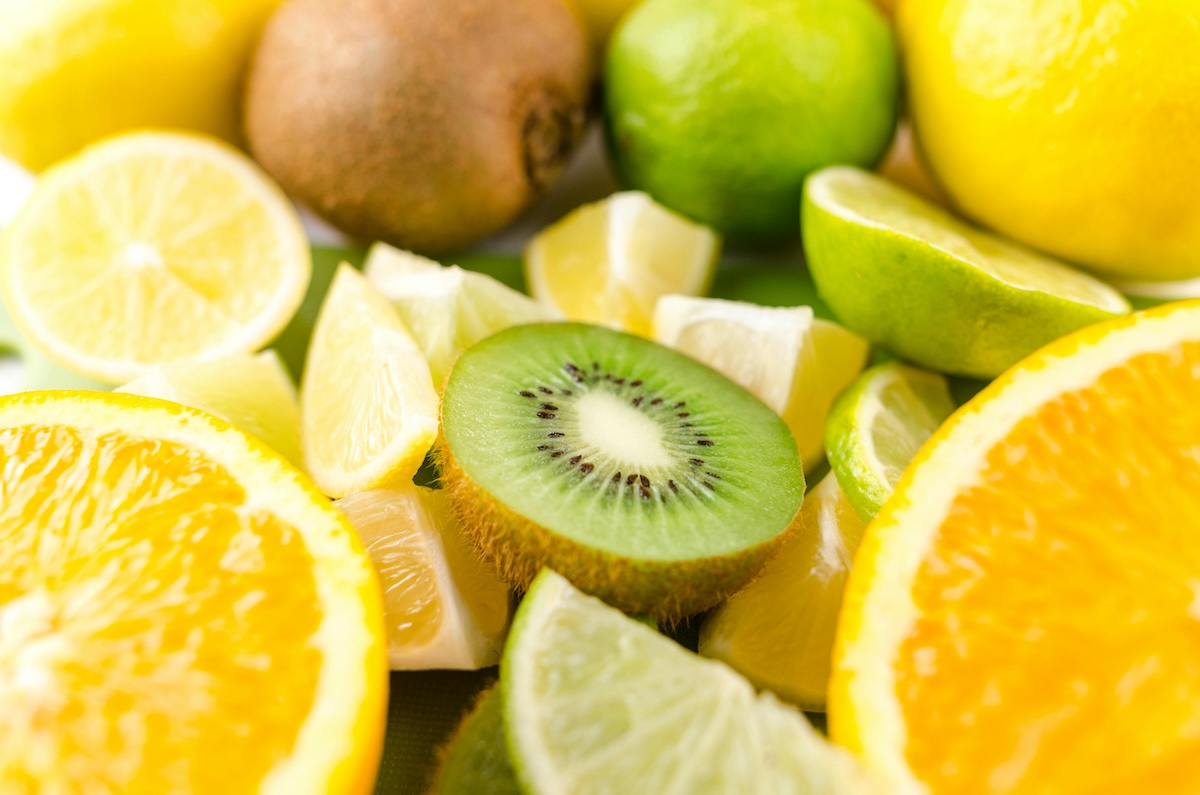
- Food first: Encourage high-vitamin-C foods (citrus, berries, kiwi, peppers, broccoli, Brussels sprouts).
- Supplementation: Depending on risk/exposure, I may use 500 mg to 2 g/day of vitamin C (ascorbic acid or buffered form) divided doses. Because the upper intake level (UL) for adults is set at 2 g/day largely because of osmotic diarrhea, I remain cautious with >2 g.
- Timing: I often pair with meals, and ensure other supporting nutrients (bioflavonoids, zinc, magnesium, glutathione support) so that the overall antioxidant/redox system is optimised.
- Special situations: For high oxidative stress (heavy UV, smokers, radiation exposure, hormone-sensitive cancer history) consider higher doses under supervision.
3. Integrate into hormone-support regimen
- For a patient peri-menopausal or post-menopausal: Alongside lifestyle (sleep, stress reduction, exercise, phytoestrogens, detox support), I emphasise vitamin C as a foundational nutrient that may protect existing estrogen/progesterone molecules from damage.
- For men experiencing declining testosterone: Combined with resistance training, sleep and other key interventions, vitamin C may help preserve endogenous testosterone integrity (again, extrapolating from the in-vitro data).
- When using HRT: I see vitamin C as adjunctive — potentially enabling lower hormone doses and mitigating damage/metabolite formation.
4. Monitor and adjust
- Clinical outcomes: improved symptom relief (hot flashes, libido, recovery), better skin/wound healing, fewer age-spots, improved resilience.
- Biochemical labs: hormone panels (free/total testosterone, estradiol, progesterone, SHBG, DHEA), oxidative-stress markers (if available), vitamin C status (rare).
- Safety: Ensure no GI upset, monitor kidney stone history if high dose vitamin C used (the LPI mentions potential increase in urinary oxalate with large doses).
5. Manage expectations
- The hormone-regeneration study was in vitro; we do not yet have large human trials showing that vitamin C repairs hormone molecules in vivo and restores hormonal levels. It’s a mechanism-based hypothesis with promise.
- Vitamin C is not a replacement for HRT in all cases — patients with significant hormone deficiency may still need exogenous support. The goal is to use the least invasive effective strategy, support the body’s own systems, and only supplement externally when necessary.
- Endocrine health is multifactorial: vitamin C is one piece of the puzzle. Nutrition, sleep, stress, environmental toxin load, liver detoxification, gut health, physical activity all matter.
Why this matters in modern practice
From a functional-medicine vantage, several trends make this topic particularly relevant:
- Environmental load is rising: UV exposure, radiation, chemical pollutants, endocrine disruptors — all increase oxidative/hormonal stress and may accelerate hormone molecule damage. If vitamin C can repair damage, we are responding to a deeper layer of stress.
- Aging population: As people live longer, hormone declines become more prominent. Instead of simply “replacing” hormones, we want to preserve what remains, restore function, and delay decline.
- Patient preference for natural/safer alternatives: Many patients hesitate about HRT due to fear of side-effects. Having a nutrient-based adjunct gives us more options and more personalised strategies.
- Integration of skin & aesthetics with internal health: Patients increasingly care about skin health, aging, vitality, not just lab numbers. A nutrient like vitamin C touches both internal hormonal integrity and external visible wellness.
- Systems-based medicine: Functional medicine emphasises upstream interventions (reduce damage, support repair) rather than downstream replacement. Repairing the hormone molecule is exactly the kind of upstream strategy we favour.
Final thoughts
In summary: the 1993 (and later-published summary) paper showing that vitamin C can regenerate damaged steroid hormones opens a fascinating window into how a foundational nutrient might impact hormone health in a regenerative way. While we must proceed with caution (the evidence in humans is not yet robust), as a functional-medicine doctor I see this mechanism as highly congruent with our model: reduce damage, support repair, optimise system resilience, restore function.
For patients concerned with hormone decline, aging, skin health, or environmental/hormonal stressors — ensuring optimal vitamin C status is a foundational step. It may not replace conventional hormone therapies, but it offers a low-risk, high-return adjunct that aligns with regenerative medicine principles.
Vitamin C Hormone Integrity Protocol
A Functional Medicine Framework for Natural Hormone Preservation and Repair
1. Foundational Goals
- Preserve existing hormones (progesterone, testosterone, estrogen) by reducing oxidative and environmental damage.
- Support natural hormone synthesis through nutrient cofactors.
- Reduce formation of carcinogenic or inflammatory metabolites.
- Enhance collagen, tissue, and skin repair for visible and internal anti-aging benefits.
- Complement, not replace, appropriate hormone replacement therapy (HRT) when clinically indicated.
2. Core Strategy: Vitamin C as the Molecular Repair Nutrient
Mechanism Recap
Vitamin C donates electrons to oxidized or “damaged” steroid hormones, potentially restoring their structure and function.
It also regenerates other antioxidants (vitamin E, glutathione), reduces oxidative load, and supports adrenal and gonadal hormone synthesis.
3. Dietary Foundations
Prioritize whole-food sources of vitamin C and antioxidant-rich plant foods to maintain high intracellular ascorbate levels.
High-Vitamin C Foods
| Category | Example Foods | Notes |
| Citrus | Oranges, lemons, grapefruit | Eat fresh; avoid sugary juices. |
| Berries | Strawberries, blackcurrants, blueberries, acerola cherries | Provide polyphenols that extend vitamin C’s antioxidant life. |
| Tropical Fruits | Kiwi, guava, papaya, mango | Excellent absorption synergy with carotenoids. |
| Vegetables | Bell peppers, broccoli, kale, Brussels sprouts, parsley, spinach | Gentle steaming preserves vitamin C. |
| Herbs | Cilantro, thyme, chives | Add fresh post-cooking. |
Daily target: 5–9 servings of fruits/vegetables, ideally 2+ rich in vitamin C.
Pair with healthy fats (avocado, olive oil) to aid absorption of fat-soluble antioxidants that synergize with vitamin C.
4. Supplementation Guidelines
Baseline Dose (maintenance)
- 500–1,000 mg/day, split into 2 doses (morning + afternoon).
- Choose buffered ascorbate (e.g., calcium or magnesium ascorbate) if sensitive to acidity.
Therapeutic Dose (oxidative stress, aging, environmental toxin exposure, peri/menopause, low hormone resilience)
- 2,000–4,000 mg/day divided doses.
- Start low and titrate upward until bowel tolerance (loose stools) then back down slightly.
Forms
- L-Ascorbic acid: Most researched and economical.
- Buffered mineral ascorbates: Gentler on digestion, provide electrolytes.
- Liposomal vitamin C: Enhanced absorption; ideal for older adults or those with GI sensitivity.
- IV vitamin C (under clinical supervision): For severe oxidative stress, fatigue, or recovery settings.
Caution: Those with kidney stones or G6PD deficiency should use under physician guidance.
5. Synergistic Nutrients for Hormone and Redox Health
| Nutrient | Role | Food Sources | Typical Oral Dose (as supplement) |
| Vitamin E (mixed tocopherols/tocotrienols) | Regenerates alongside vitamin C; protects lipid membranes and hormone receptors | Nuts, seeds, avocado | 200–400 IU/day |
| Glutathione / NAC (N-acetyl-cysteine) | Supports detox pathways and regenerates oxidized hormones; maintains redox balance | Garlic, onions, crucifers | 500–1,000 mg NAC/day |
| B-Complex (esp. B5, B6, B12, folate) | Required for adrenal and gonadal steroidogenesis | Eggs, leafy greens, legumes | 1 capsule/day (activated form) |
| Magnesium | Cofactor in >300 enzymes, including hormone metabolism | Pumpkin seeds, dark chocolate, spinach | 200–400 mg/day |
| Zinc | Essential for testosterone production and antioxidant enzymes | Oysters, beef, chickpeas | 15–30 mg/day |
| Selenium | Supports thyroid and hormone metabolism | Brazil nuts, seafood | 100–200 µg/day |
| Collagen / Glycine | Synergistic with vitamin C in tissue and skin repair | Bone broth, gelatin, fish collagen | 5–10 g/day |
6. Lifestyle & Environmental Factors
Reduce Hormone Damage Sources
- Avoid endocrine disruptors: BPA, phthalates (plastic containers, receipts, fragrances).
- Limit UV and radiation exposure: Use zinc-based sunscreen, protective clothing.
- Reduce alcohol and refined sugar: Both increase oxidative load and hormone clearance rate.
- Sleep 7–9 hrs/night: Hormone regeneration peaks during slow-wave sleep.
- Exercise: Resistance training maintains testosterone, estrogen balance, and collagen synthesis.
Stress and Adrenal Support
- Chronic cortisol elevation depletes vitamin C stores (especially in adrenal tissue).
- Use breathing techniques, adaptogenic herbs (ashwagandha, rhodiola), mindfulness, and rest cycles.
7. Laboratory & Clinical Monitoring
Baseline Evaluation
- Hormone Panel: Estradiol (E2), progesterone, testosterone (free/total), DHEA-S, SHBG.
- Oxidative Stress / Redox Markers: hs-CRP, homocysteine, 8-OHdG (urine), GSH:GSSG ratio (if available).
- Vitamin C status (optional): Plasma ascorbate level (not routine, interpret with diet/lifestyle context).
- Lipid peroxides or F2-isoprostanes: Measure oxidative damage in high-risk patients.
Follow-Up (every 3–6 months)
- Track hormone trends and symptoms (energy, sleep, libido, mood, skin).
- Assess bowel tolerance and adjust vitamin C dose.
- Monitor renal function and oxalate load if on long-term high-dose vitamin C.
8. Clinical Signs of Improvement
Patients often notice:
- Enhanced energy and resilience.
- Improved mood stability.
- Better skin tone, elasticity, and wound healing.
- More balanced menstrual or menopausal symptoms.
- Fewer signs of oxidative stress (less fatigue, faster recovery, improved sleep).
9. Advanced Integrations
- Combine with glutathione IV therapy for acute oxidative stress or post-surgery recovery.
- Include vitamin C with bioidentical hormone therapy to protect against oxidative degradation of HRT molecules.
- Consider vitamin C with ozone or red-light therapy in anti-aging protocols — synergistic redox modulation.
- Use with collagen peptides in aesthetic/anti-aging programs for added dermal support.
10. Safety Summary
- Generally recognized as safe up to 2 g/day orally.
- Temporary loose stools = indicator of excess dose; reduce gradually.
- Hydration is key during high-dose use to minimize oxalate crystal risk.
- Contraindications: active kidney disease, iron overload disorders (vitamin C enhances iron absorption).
11. Sample 7-Day Implementation Plan
| Time | Step | Details |
| Morning | 1 g vitamin C + B-complex + magnesium | With breakfast |
| Midday | Colorful salad (bell peppers, citrus dressing, avocado) | Whole-food vitamin C |
| Afternoon | 1 g vitamin C + zinc + selenium | With snack |
| Evening | Collagen powder in warm tea + 200 mg magnesium glycinate | Aids sleep and tissue repair |
| Daily | Hydrate (2–2.5 L water) + 15–30 min sunlight (UV moderate) | Vitamin D synergy |
| Weekly | Strength training 3x, restorative yoga or meditation 2x | Stress and hormone balance |
Vitamin C is more than an immune booster. It’s a molecular repair signal that protects and regenerates the very hormones that define vitality, fertility, and youth. By combining targeted nutrition, detoxification, and lifestyle strategies, we give the body the electrons, cofactors, and cellular energy it needs to heal itself.