
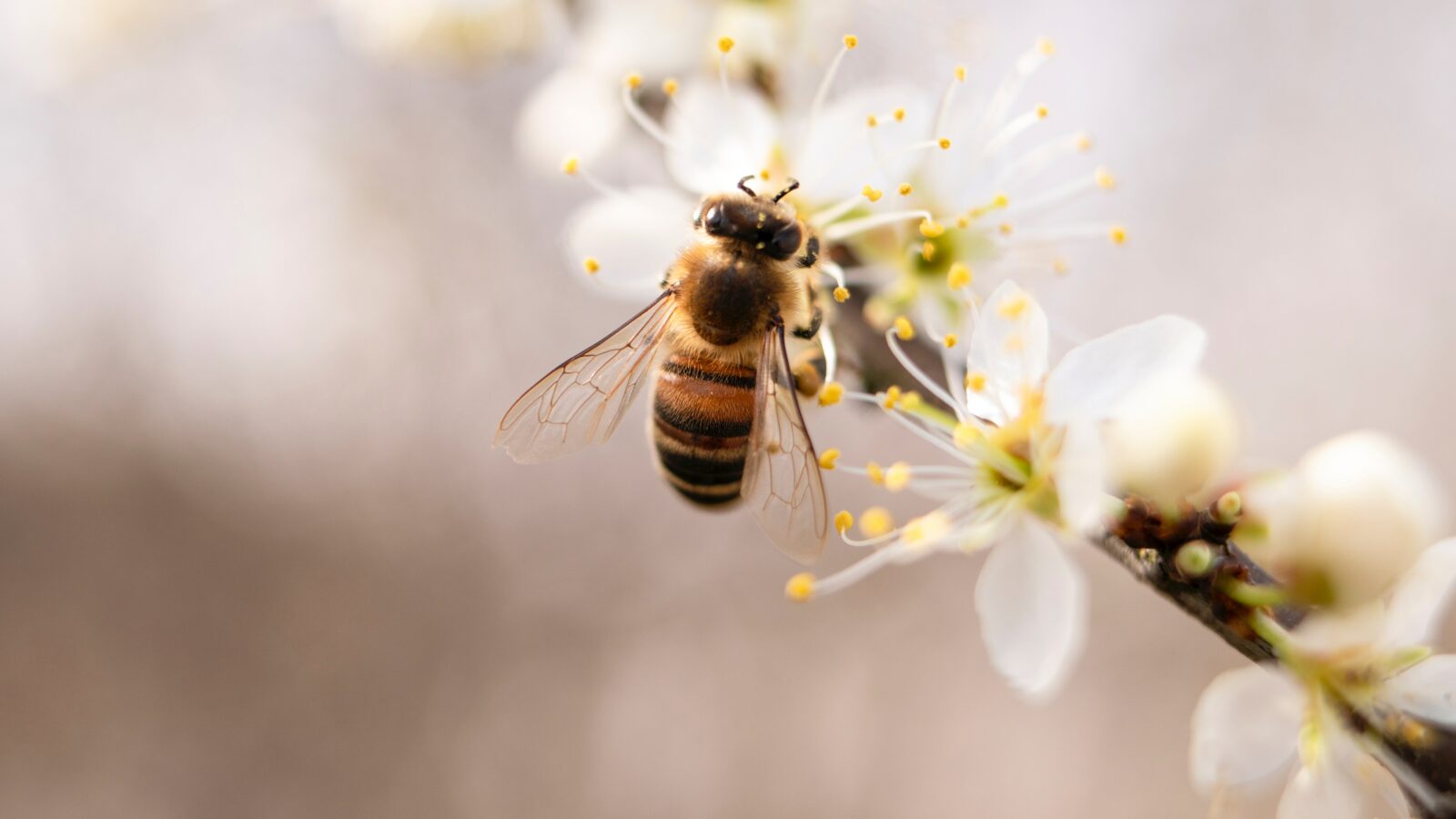
We associate bees with honey and pollen. However, another bee product is used to treat certain illnesses: bee venom. And, scientists are investigating bee venom as a treatment for cancer.
Bee honey has medicinal properties. Tea with honey has long been a remedy of choice for sore throats. And some nutritionists consider bee pollen to be a near-perfect source of protein.
However, bee venom isn’t typically thought of as medicinal although it has been used for thousands of years all around the world. Of course, that is because of our association with bee venom to very painful stings. Clinical studies are still being conducted to scientifically prove the medicinal uses, which is called apitherapy. Initial results are very promising.
Ancient medicinal uses of bee venom
Ancient Egyptians used bee venom for medicinal purposes, and some reports exist showing that it was used throughout history in Europe and Asia. Hippocrates used bee venom to treat joint pain and arthritis. Interest in the effects of bee venom was renewed in 1888 with the publication of a clinical study conducted in Europe on its effect on rheumatism. Since then, interest in bee venom treatment has grown albeit inconsistently.
Current medicinal claims for bee venom
As more people accept alternative approaches to conventional medicine, interest in the therapeutic value of bee venom has grown. Without many large randomized studies, the evidence on bee venom as an effective therapy is mixed. For example, a small, randomized trial did not show any effectiveness for bee venom in the treatment of multiple sclerosis. But, a review of studies did find that the venom may show some promise as an arthritis treatment.
Despite these contradictory findings, there are numerous conditions that bee venom has been proposed to treat, such as:
- Gout
- Shingles
- Burns
- Chronic injuries, such as bursitis and tendonitis
- Hay fever
- Removal of scar tissue
Components of bee venom
Scientists do not definitively understand how bee venom, which is a complex mixture of numerous compounds, acts on the human body. However, a number of components of bee venom that have been identified and studied include:
- Mellitin
- Adolapin
- Apamine
Rather than these individual components having an effect, it may be more likely that the body has an immune reaction to bee venom that proves beneficial in certain circumstances.
Administering bee venom: injection or sting?
Before the invention of the syringe, bee venom was always administered directly from bees via the bee’s stinger. While rare today, it is still administered by letting a bee sting the patient occasionally. The live bee is held (with tweezers or some other small instrument) by the person administering the bee venom, who then places the bee on the part of the patient’s body to be treated, at which point the bee reflexively stings. Depending on the condition, the treatment schedule can vary.
Today, it is more common to collect the venom and administer it via injection. Or components of bee venom may be synthesized.
Allergic reactions and drug interactions
The greatest risk of bee venom therapy is the risk of a severe allergic reaction, including anaphylactic shock, which can cause a person to stop breathing. If not treated immediately, anaphylactic shock can result in death. Though only a small percentage of the population is allergic to bee venom, it is very important that the person is tested for a bee sting allergy before the treatment. The health care professional who gives the bee therapy should also have a bee sting kit on site in case of an emergency.
Considering bee venom therapy
If you are thinking of trying bee venom therapy, remember that current evidence is promising but not conclusive. Be absolutely certain that you are not allergic to bee stings before trying it. Talk to your doctor, and remember that this therapy should be used in addition to, not instead of, other treatments prescribed by your doctor.