
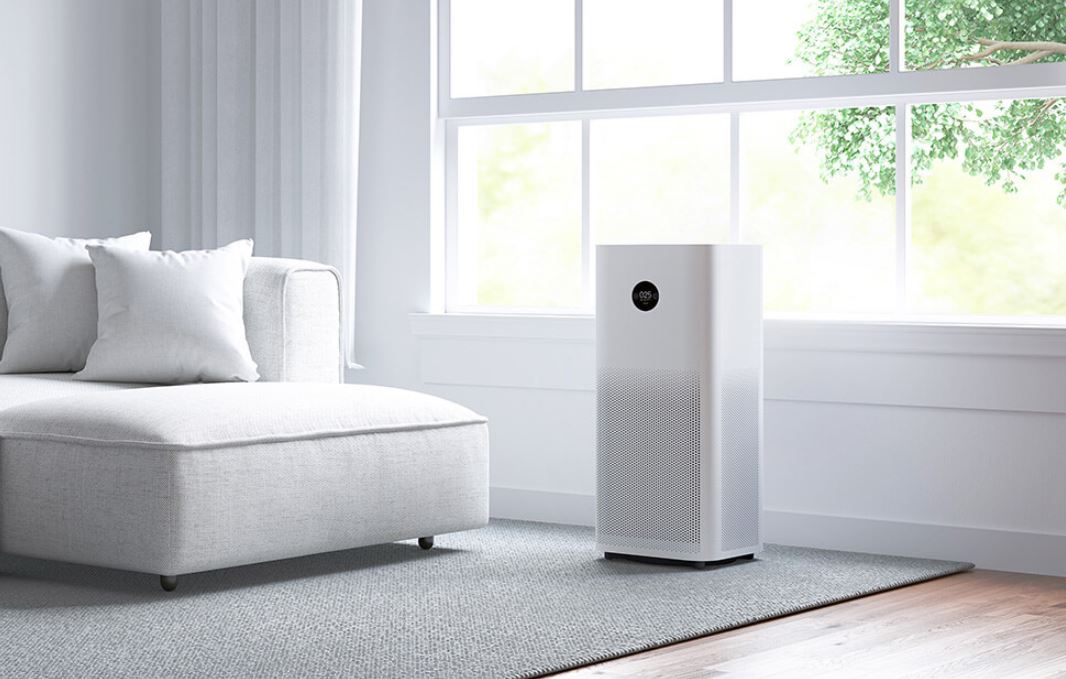
How do air purifiers work? It’s a question more people have asked recently after spending so much time indoors due to the COVID-19 pandemic. We are a lot more concerned about the quality of the air we breathe.
The United States Environmental Protection Agency issued a report recently about pollutants in indoor air. Indoor air can have up to 5 times more pollutants like pesticides, particulates, and mold than outdoor air. This makes an air purifier more attractive because they can remove allergens like pollen, pet dander, and dust. But how do air purifiers work, what do they remove, and can they protect against COVID-19?
How do air purifiers work?
Air purifiers sanitize the air by taking out allergens, toxins, and pollutants. This is different from air filters, which only remove them from circulation.
Air purifiers begin with a simple functionality: a fan that pulls in air and runs that air through one or more filters. The filters, which are paper, mesh, or fiberglass, capture and neutralize the pollutants and particles. The clean air is recirculated into the room.
They’re effective at filtering out most polluting particles, although some will remain on soft and hard surfaces like furniture or walls. The particular airborne particles that get pulled out of the air depend on the type of air purifier and filter used.
Most filters trap relatively large molecules that measure 5 microns or more, such as pollen and dust mites. What about smaller particulates? High-efficiency filters use a dense network of fibers and several layers to remove allergens and pollutants as small as 2.5 microns, which is around the size of most pet dander. Some air purifiers use ultraviolet filters that tackle biological impurities like bacteria and mold. Filters with activated charcoal can remove gases like volatile organic compounds (VOCs) and smoke particles.
Can air purifiers help protect against COVID-19?
In the early months of the pandemic, many manufacturers of air purifiers suggested that their devices could help protect against COVID-19.
However, COVID-19 airborne particles are around 0.1 micron, which is 1,000 times smaller than a millimeter. This is smaller than a strand of spider web silk. The COVID-19 particles are bound to things that are much larger, like an aerosol or water droplet. The air purifiers can remove those larger particles.
Therefore, the novel coronavirus that causes COVID-19 should be filtered out by air purifiers that use HEPA filters. These air purifiers can help to reduce the transmission of the virus. However, whether they stop the direct transmission of the virus is not clear. An air purifier takes time to pull in the air and capture the particles. You could inhale the virus before the air purifier has done its job.
Scientists are still at the beginning of their research on how to manage and protect the population from COVID-19 and its numerous variations, COVID particles do fall within the particle-size range that high-efficiency particulate air (HEPA) filters, found in some air purifiers, can capture, which is 0.01 µM/micron and larger. Air purifiers may improve the environment when placed next to a sick patient but will not protect from COVID.
A CDC report this year suggested that this might be accurate. They conducted a controlled study that showed HEP air purifiers could decrease exposure to COVID-19 aerosols indoors, such as in offices and conference rooms. However, the researchers did not consider factors like airflow, the size of the room, and open windows. These factors would impact how an air purifier works in real-world conditions.
Can air purifiers help protect against wildfire smoke?
NASA satellite data suggest that climate change is linked to an increase in the average number of wildfires worldwide, but especially in the United States. These fires generate large amounts of smoke, which is a combination of fine particulates, some of which are 30 times smaller than the diameter of a single strand of human hair, and gases like VOCs, nitrogen oxides, and carbon monoxide.
These gases and particulates can be harmful to human health. This is why residents near a wildfire are advised to stay inside and keep doors and windows shut until the smoke clears. But what about particles that have already entered living spaces? How do air purifiers work against these?
Published in the Environmental Health journal, a 2016 study suggested air purifiers, or portable air cleaners, should be at the forefront of the public health response against indoor wildfire smoke exposure. How do air purifiers work to reduce particulates from wildfires? The study recommended devices with HEPA filters to eliminate particles and the acrid smell. It also noted that air purifiers with electrostatic precipitators — which use electrical energy to charge an incoming stream of particles and collect them on an oppositely charged metal plate — could lower the concentrations of fine particulate matter.
Will a DIY air purifier work?
Can you make your own air purifier? Yes. You need a box fan and a HEPA or high-quality filter. There are two types of air purifier you could make: the first uses a fan and one filter, while the second, which is a bit more complex to construct, use a double filter set up over the fan.
These homemade air purifiers work in the same way as manufactured devices, and are fairly effective, Research from the Agency for Science, Technology, and Research (A*STAR) in Singapore tested different filter materials for their DIY air purifiers, including HEPA filters, surgical masks, and melt-blown polypropylene. They found each material was around 80% effective at filtering particles and aerosols.
However, box fans aren’t designed for this purpose, and their motor has to work much harder to pull air through a filter, so these homemade air purifiers present an increased fire risk and should be used with caution.
So, how do air purifiers work? By trapping most pollutants and allergens, but some will always remain in the air. Therefore, air purifiers are best used not necessarily by themselves, but to complement other air quality improvement strategies such as increased cleaning or cleaning with eco-friendly products to reduce irritants, and improving ventilation in the home.