
In the long and painful ledger of smoking’s effects on the human body, the heart often pays the steepest price. Decades of research have tied cigarette smoke to thickened arterial walls, reduced oxygen delivery, and structural enlargement of the heart known as cardiac hypertrophy—a condition that can precede heart failure. Conventional medicine teaches us that once this damage occurs, it’s largely irreversible. But what if that assumption is wrong?
A remarkable study published in Frontiers in Pharmacology has turned this belief on its head, showing that something as simple—and delicious—as pomegranate juice can reverse up to 75% of cigarette-smoking-induced cardiac hypertrophy. The research, titled “Cigarette Smoking-Induced Cardiac Hypertrophy, Vascular Inflammation, and Injury Are Attenuated by Antioxidant Supplementation in an Animal Model,” suggests that the pomegranate may not just be a fruit, but a potent cardiac repair tool.
The Study: Testing Nature’s Antioxidant Arsenal
To explore whether antioxidants could undo smoke-induced cardiovascular damage, scientists designed a carefully controlled animal experiment using four groups of rats:
- Control Group: No smoking, no pomegranate.
- Cigarette Smoke (CS) Group: Exposed to smoke daily.
- Antioxidant (AO) Group: Received pomegranate juice but no smoke exposure.
- Cigarette Smoke + Antioxidant (CS + AO) Group: Exposed to smoke and supplemented with pomegranate juice.
Over the course of one month, the rats in the smoking groups were subjected to controlled cigarette smoke exposure—enough to induce measurable heart and vascular damage similar to that observed in chronic human smokers. The pomegranate juice was administered daily at a concentration equivalent to 80 µM polyphenols per milliliter, representing the fruit’s potent antioxidant fraction.
At the end of the experiment, researchers measured a range of markers:
- Heart-to-body-weight ratio, a key indicator of cardiac hypertrophy.
- Levels of oxidative stress, the cellular “rusting” caused by reactive oxygen species.
- Inflammatory biomarkers, including cytokines and tissue fibrosis indicators.
- Aortic calcification and vascular injury, which reflect arterial stiffening and early atherosclerosis.
The Results: A Stunning 75% Reversal of Heart Enlargement
The results were nothing short of astonishing. In the cigarette-smoke-only group, the rats developed significant heart enlargement—their hearts working overtime to compensate for smoke-related vascular injury and oxygen deprivation. But in the group that received pomegranate juice alongside smoke exposure, cardiac hypertrophy was reduced by three-quarters.
Further analysis revealed:
- Oxidative stress markers plummeted, showing that pomegranate’s antioxidants had neutralized much of the free-radical burden triggered by cigarette smoke.
- Inflammatory cytokines and fibrotic proteins—key drivers of heart thickening and scarring—fell dramatically.
- Aortic calcification was prevented, indicating that the fruit’s compounds also shielded blood vessels from hardening and obstruction.
In other words, the pomegranate didn’t just prevent further damage—it actively reversed much of the existing harm.
How Does Pomegranate Achieve This? The Science Behind the Miracle
Pomegranates are uniquely rich in polyphenols, a class of plant compounds known for their antioxidant and anti-inflammatory properties. Among them are punicalagins, anthocyanins, and ellagic acid—molecules capable of scavenging the highly reactive free radicals generated by smoking.
When cigarette smoke enters the bloodstream, it introduces toxic chemicals that trigger chronic oxidative stress, damaging cell membranes, DNA, and the delicate endothelium (inner lining) of blood vessels. The heart, constantly pumping against this stress, begins to enlarge—a maladaptive response that eventually leads to weakness and failure.
Pomegranate compounds interrupt this process at multiple points:
- Neutralizing free radicals, preventing oxidative injury to cardiac tissue.
- Suppressing inflammatory signaling, lowering cytokines like TNF-α and IL-6 that drive hypertrophy.
- Improving endothelial function, allowing arteries to dilate more easily and reduce cardiac workload.
- Chelating calcium and reducing vascular calcification, preserving arterial flexibility.
Essentially, the fruit’s antioxidants act as a biochemical repair crew—mopping up the oxidative chaos, calming inflammation, and restoring the heart’s structure and resilience.
What This Means for Smokers and Former Smokers
If these findings translate to humans—and previous studies suggest they very well might—pomegranate juice could become a powerful ally for smokers and former smokers alike. Cardiovascular damage from smoking can persist for decades after quitting, as inflammation and arterial stiffness linger. Daily consumption of pomegranate juice may help:
- Reduce heart enlargement and restore normal cardiac structure.
- Improve circulation by reversing endothelial dysfunction.
- Slow or reverse atherosclerosis, the buildup of plaque inside arteries.
- Lower overall risk of heart attack and stroke, even in former smokers.
In essence, pomegranate juice may not just protect the heart—it may help the heart heal.
How Much Pomegranate Juice Is Enough?
Based on the animal study’s dosing and the fruit’s polyphenol concentration, an equivalent human dose would be 8 to 16 ounces (240 to 480 mL) per day—roughly one to two glasses.
To maximize benefits, it’s best to choose:
- 100% pure pomegranate juice (not blends or sweetened varieties).
- Cold-pressed or fresh-squeezed options, which retain more active polyphenols.
- Daily consistency, since the heart-protective effects likely depend on steady intake.
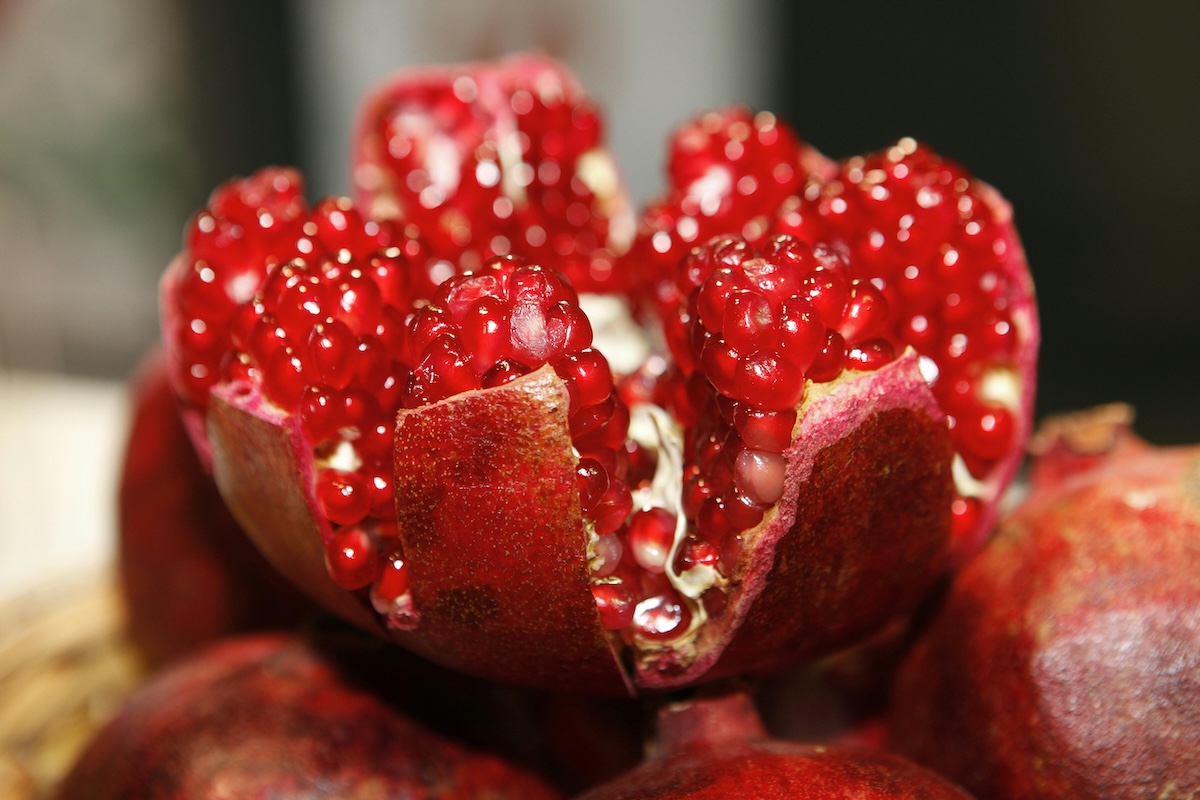
Some researchers also note that whole pomegranate arils (the edible seeds) provide additional fiber and nutrients, complementing the juice’s concentrated antioxidant power.
The Bigger Picture: Building on Decades of Cardiac Research
This new study isn’t emerging in isolation—it builds upon a foundation of earlier human research that has already hinted at pomegranate’s extraordinary cardiovascular potential.
In a landmark clinical trial published in Atherosclerosis (2004), patients with carotid artery stenosis who drank pomegranate juice daily experienced a 30% reduction in arterial plaque after one year, while the control group’s plaque actually increased by 9% during the same period.
Another study published in Clinical Nutrition (2006) found that pomegranate juice improved blood flow to the heart by 17% in patients with coronary artery disease. These findings, combined with the recent animal data, suggest a consistent pattern: pomegranate doesn’t just slow heart disease—it can reverse it.
Why This Matters: From Medicine Cabinets to Market Shelves
The implications of this research extend far beyond the laboratory. Smoking remains the world’s leading preventable cause of heart disease, responsible for roughly 20% of all cardiovascular deaths. While medications like statins and ACE inhibitors manage symptoms and progression, they do not undo existing structural damage.
Pomegranate juice, by contrast, represents a non-pharmaceutical, food-based therapy with the power to restore what smoking destroyed. It’s affordable, accessible, and comes without the side effects that often accompany prescription interventions.
If even a fraction of these results can be replicated in large-scale human studies, incorporating pomegranate juice into daily life could transform cardiac rehabilitation and prevention programs worldwide.
The Takeaway: Nature’s Heart Healer
The humble pomegranate—once revered as a symbol of life and renewal in ancient Persia and the Mediterranean—may indeed live up to its mythic reputation. In the modern scientific lens, it emerges as a potent agent of cardiovascular regeneration, capable of reversing some of the most entrenched forms of heart damage caused by smoking.
For smokers and former smokers, the message is simple yet profound:
You can’t undo the past, but you can nourish the repair.
A glass of pomegranate juice each day might not only sweeten your morning but give your heart the second chance it’s been waiting for.
REFERENCES:
- Aviram, M., et al. (2004). Pomegranate juice consumption for 3 years by patients with carotid artery stenosis reduces common carotid intima–media thickness, blood pressure, and LDL oxidation. Atherosclerosis, 172(2), 231–239.
- Sumner, M. D., et al. (2005). Effects of pomegranate juice consumption on myocardial perfusion in patients with coronary heart disease. American Journal of Cardiology, 96(6), 810–814.
- Al-Ghamdi, S. S., et al. (2024). Cigarette Smoking-Induced Cardiac Hypertrophy, Vascular Inflammation, and Injury Are Attenuated by Antioxidant Supplementation in an Animal Model. Frontiers in Pharmacology.