
The journal Atherosclerosis has published a study indicating that pomegranate extract can potentially halt or reverse the progression of coronary artery disease, which is the primary cause of cardiac mortality. The accumulation of fatty materials, or atherosclerosis, causes thickening of the coronary arteries. The researchers administered pomegranate extract to mice that were genetically susceptible to spontaneous coronary artery blockages through their drinking water, starting at three weeks of age for a period of two weeks. Despite the fact that pomegranate treatment raised cholesterol levels, the treatment reduced the size of the atherosclerotic plaques in the aortic sinus and the proportion of coronary arteries with occlusive atherosclerotic plaques. The researchers found that pomegranate extract treatment also led to seven beneficial effects, including reduced levels of oxidative stress and reduced lipid accumulation in the heart muscle. The study suggests that our evolutionary history may explain why certain foods, such as fruits, can play a crucial role in maintaining proper organ function. Linus Pauling, a two-time Nobel Prize winner, argued that vitamin C deficiency is a fundamental cause of cardiovascular disease, since our ancestors once had access to fruits year-round and lost the ability to synthesize it.
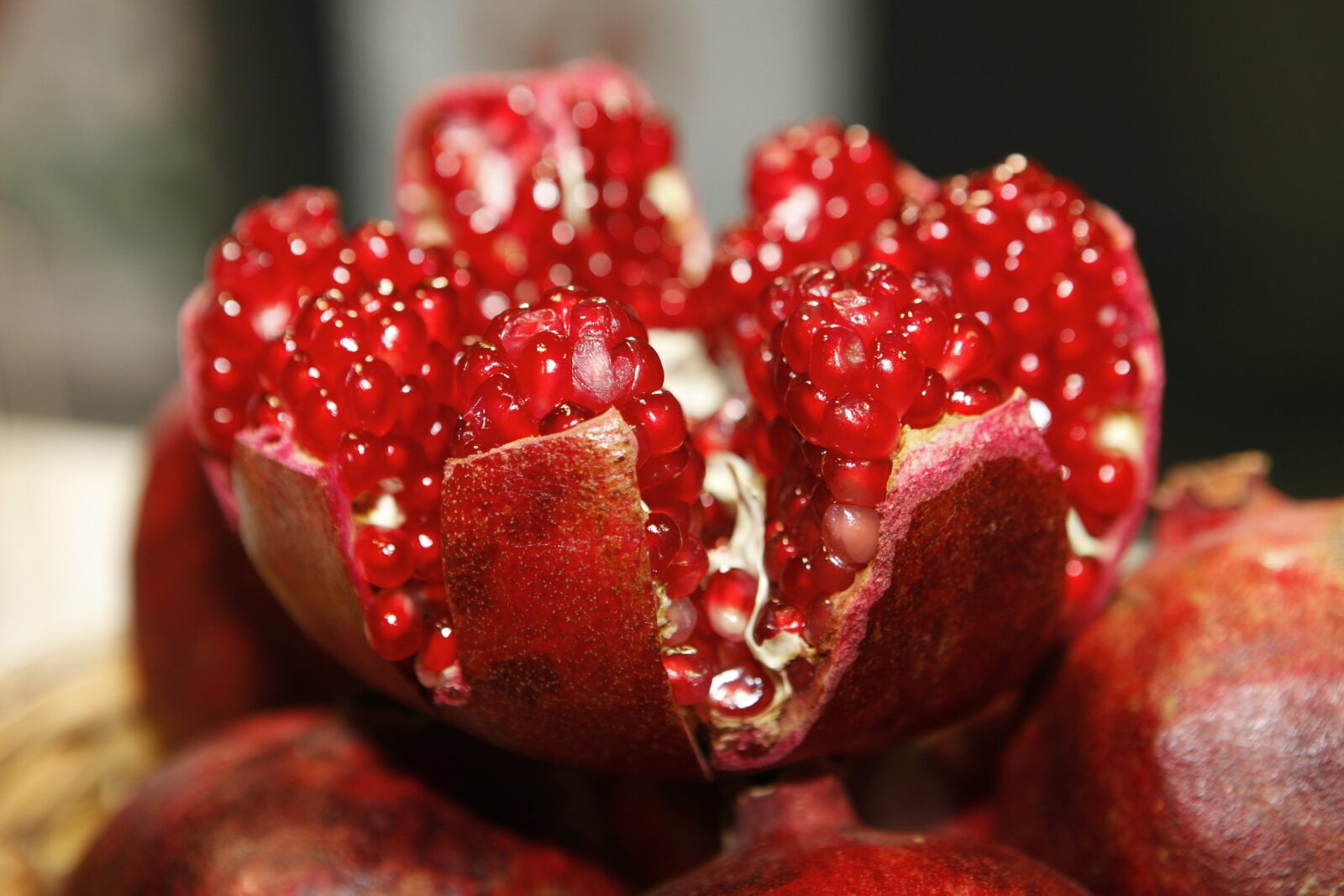
Pomegranate’s ability to open up arteries may be attributed to its astringency, which can be easily perceived by anyone who has tasted the fruit or its juice. This dry and puckering mouth feel results from the astringent properties of pomegranate, which disinfect and shrink mucous membranes, similar to other astringents. Pomegranate’s effectiveness in cleansing the circulatory system can also be visually inferred, as its juice resembles blood and its appearance resembles a multi-chambered heart compared to other fruits. The epithelial cells that line the mouth and arteries are of the same type, and they make up the epithelium, one of the four fundamental tissue types in animals that comprise the inner walls of the entire circulatory system, along with connective, muscle, and nervous tissues. Therefore, the cleansing sensation experienced in the mouth is akin to what the circulatory system and the endothelium/epithelium lining the interior of veins and arteries “feel.”
Israeli researchers conducted a study in 2004, published in Clinical Nutrition, titled “Pomegranate juice consumption for 3 years by patients with carotid artery stenosis reduces common carotid intima-media thickness, blood pressure and LDL oxidation.” The study aimed to investigate the effects of pomegranate juice on plaque accumulation in the carotid arteries of patients with severe, yet asymptomatic, carotid artery stenosis, which is defined as 70-90% blockage in the internal carotid arteries. The study included 19 non-smoking patients, 5 women and 14 men aged 65-75 years, who were randomized to receive either pomegranate juice or a placebo. The two groups had similar blood lipid and glucose concentrations, blood pressure, and medication regimens consisting of blood-pressure and lipid-lowering drugs such as ACE inhibitors, β-blockers, calcium channel blockers, and statins. The treatment group, consisting of ten patients, received 8.11 ounces (240 ml) of pomegranate juice daily for one year, and five of them continued to consume it for up to three years.
The results of the study published in Clinical Nutrition in 2004 were remarkable. Patients with severe, asymptomatic carotid artery stenosis who consumed pomegranate juice for up to one year showed a reduction in mean intima media thickness in the left and right common carotid arteries by 13%, 22%, 26%, and 35% after three, six, nine, and twelve months of consumption, respectively, compared to baseline values. These results are so impressive that one can only imagine the reaction if a pharmaceutical drug was shown to reverse plaque build-up in the carotid arteries by 13% in just three months. The study included 19 patients, five women and 14 men, aged 65-75, who were randomized to either receive pomegranate juice or a placebo. The treatment group received 8.11 ounces (240 ml) of pomegranate juice daily for one year, and five of them continued to consume it for up to three years.
The researchers identified three likely mechanisms of action behind pomegranate’s anti-atherosclerotic activity: antioxidant properties, blood pressure-lowering properties, and plaque lesion stabilization. Pomegranate reduces oxidative stress, including a decrease in autoantibodies formed against ox-LDL, which is associated with the pathological process of atherosclerosis. It also improves blood pressure, indicating its healing effect on the endothelium, or the inner lining of the artery, which fails to relax fully in heart disease. Pomegranate also reduces the lesion size in the carotid arteries, and the lesion itself may be considered less atherogenic after pomegranate consumption, as its cholesterol and oxidized lipid content decreased, and since its ability to oxidize LDL was significantly reduced.
Further studies have validated pomegranate’s value in cardiovascular health, showing it has anti-inflammatory, blood-pressure lowering, anti-infective, and antioxidant properties. In addition to the properties mentioned above, there is emerging research showing that pomegranate can also improve endothelial function. Endothelial dysfunction is a hallmark of many cardiovascular diseases, and occurs when the endothelial cells that line the blood vessels lose their ability to relax and contract properly. This can lead to a number of problems, including high blood pressure and reduced blood flow to vital organs.
One study published in the Journal of Nutritional Biochemistry found that pomegranate juice improved endothelial function in patients with coronary heart disease. The study participants drank 8 ounces of pomegranate juice daily for three months, and at the end of the study, they showed significant improvement in endothelial function, as well as reductions in blood pressure and inflammation.
Another study published in the American Journal of Cardiology found that pomegranate extract improved stress-induced myocardial ischemia (reduced blood flow to the heart due to stress) in patients with coronary heart disease. The study participants took pomegranate extract capsules for three months, and at the end of the study, they showed significant improvements in stress-induced ischemia, as well as improvements in blood pressure and lipid profiles.
Overall, the evidence suggests that pomegranate may be a powerful natural remedy for preventing and treating cardiovascular disease. Its various properties, including antioxidant, anti-inflammatory, and blood-pressure lowering effects, make it an attractive option for those looking to improve their heart health naturally. However, as with any supplement, it is important to speak with a healthcare provider before adding pomegranate to your regimen, especially if you are taking any medications or have any underlying health conditions.
Furthermore, the safety of pomegranate consumption has also been established by studies, showing that it does not have any adverse effects on liver and kidney function, blood glucose and lipid levels, or other parameters of health in the study subjects.
Pomegranate appears to have a range of therapeutic properties that can benefit cardiovascular health, including its ability to reduce plaque accumulation in the arteries, lower blood pressure, reduce oxidative stress and inflammation, and fight against bacterial and viral infections. These findings suggest that pomegranate could be a valuable addition to a heart-healthy diet and may even have the potential to be used as a complementary therapy for cardiovascular disease.