
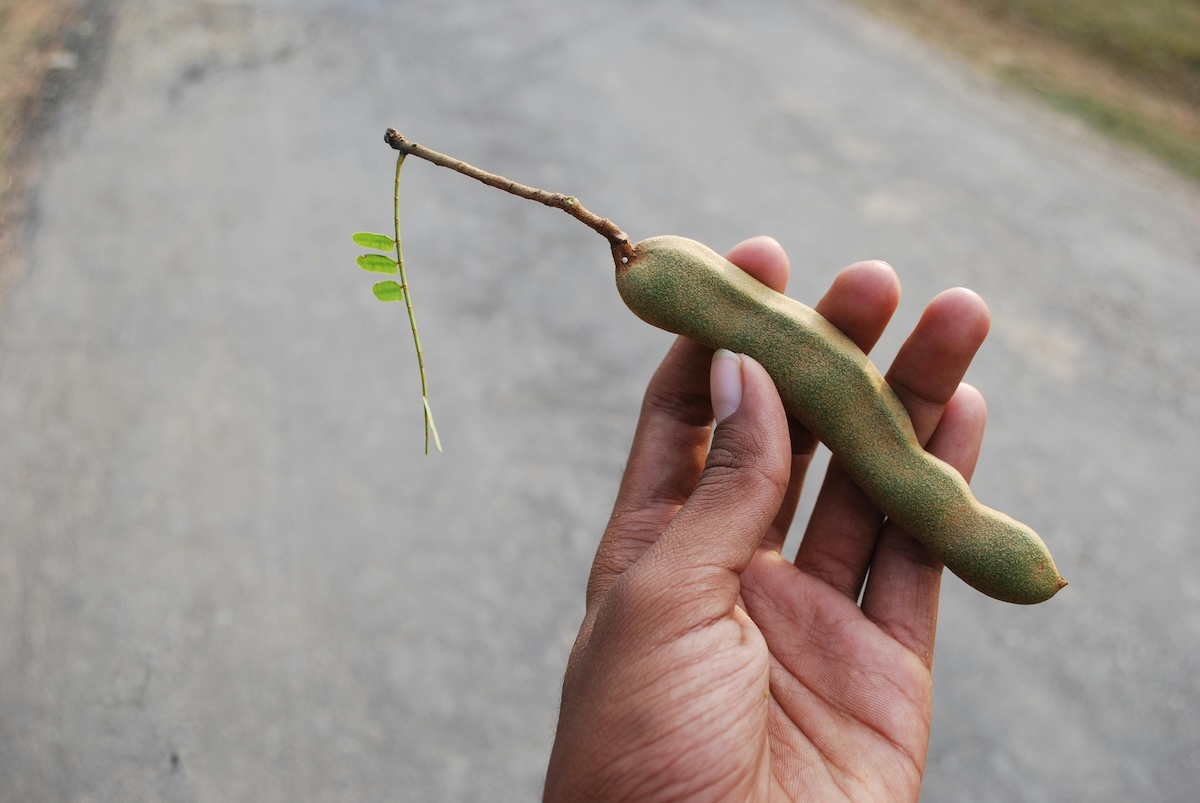
For centuries, tamarind has been a culinary treasure across Asia, Africa, and Latin America. Encased in brittle brown pods, the sticky pulp inside is both tangy and sweet, lending itself to chutneys, curries, sauces, beverages, and even candies. In Mexico, tamarind is the base for refreshing agua de tamarindo. In India, it provides the tart foundation for sambar, rasam, and chutneys. In Africa, it enriches stews and sauces, while in Thailand it adds depth to pad Thai. In the United States, tamarind pods or concentrated paste are widely available in international grocery stores, Latin markets, and increasingly in the global foods aisle of major supermarkets.
But tamarind’s role is no longer confined to flavor. Scientists are uncovering new possibilities for this plant, particularly in addressing one of today’s most insidious environmental threats: microplastic pollution. Recent laboratory studies show that tamarind’s natural polysaccharides—complex plant sugars that form long chains—can be chemically modified to bind to and remove microplastics from water. These findings open a new chapter in the story of tamarind: one where a familiar fruit might help solve an urgent global challenge.
Tamarind: Botanical and Nutritional Background
Tamarind (Tamarindus indica L.) belongs to the legume family (Fabaceae) and thrives in tropical and subtropical regions. Native to Africa, it spread centuries ago through human migration and trade, becoming naturalized in South Asia and the Americas. The tree can live for over 200 years, producing pods that contain pulp, seeds, and fibers.
Nutritionally, tamarind pulp is rich in:
- Carbohydrates, particularly polysaccharides like pectin and xyloglucans.
- Organic acids, especially tartaric acid, responsible for its sour taste.
- Polyphenols and flavonoids, which provide antioxidant activity.
- Micronutrients, including magnesium, potassium, calcium, and B vitamins.
Historically, tamarind has been used medicinally as a digestive aid, mild laxative, fever reducer, and topical remedy for wounds and inflammation. These uses point to the versatile bioactive compounds embedded in the fruit’s pulp and seeds.
The Rising Crisis of Microplastic Pollution
Microplastics—tiny fragments less than 5 mm in size—are now ubiquitous in the environment. They originate from the breakdown of larger plastic waste or are manufactured directly for industrial purposes (such as microbeads in cosmetics, now banned in many countries).
Humans are exposed to microplastics primarily through:
- Food (especially seafood, salt, and packaged goods).
- Drinking water, whether bottled or tap.
- Airborne particles, inhaled from household dust or urban environments.
Scientific studies estimate that the average person consumes tens of thousands of microplastic particles each year. Researchers have detected these fragments in the bloodstream, lungs, and even placental tissue. Though the full health consequences are still under investigation, microplastics have been linked to:
- Chronic inflammation in tissues.
- Hormonal disruption due to plastic additives like phthalates and bisphenols.
- Potential links to cancer, cardiovascular disease, and impaired fertility.
What makes microplastics particularly troubling is their persistence. Once ingested, the body lacks a known mechanism to degrade or efficiently excrete them, raising concerns about cumulative biological burden.
Tamarind as a Natural Polymer for Microplastic Removal
A breakthrough came in 2025 when researchers reported in ChemistrySelect that an acrylamide-grafted tamarind polysaccharide (TP-AM) could effectively bind and remove polyvinyl chloride (PVC) microplastics from water. Under laboratory conditions (30 °C / 86 °F, pH 6), the material removed over 91% of PVC particles from water samples.
How does it work? Tamarind polysaccharides—primarily xyloglucans—are long carbohydrate chains that naturally form viscous gels. When chemically modified through grafting, their surface charge and molecular structure allow them to attract and entrap microplastic particles. The particles clump together (a process called flocculation), making them easier to separate and filter out.
This approach is particularly promising because:
- Eco-friendly material: Tamarind polysaccharides are biodegradable and renewable.
- High efficiency: Removal rates exceeding 90% are comparable to or better than many synthetic polymer treatments.
- Low toxicity: Tamarind is widely consumed as food, suggesting a safer environmental footprint.
This discovery places tamarind at the frontier of natural solutions for one of the 21st century’s most daunting environmental issues.
Could Tamarind Work Inside the Human Body?
While the laboratory findings are focused on water purification, they naturally raise another question: could tamarind’s binding ability extend into the human body?
So far, no studies have directly tested tamarind polysaccharides for removing microplastics from human tissues. However, indirect evidence suggests the idea merits investigation:
- Polysaccharide binding: Dietary fibers like pectin, glucomannan, and alginates already bind toxins, bile acids, and heavy metals in the gut, promoting their excretion. Tamarind’s xyloglucans may function similarly.
- Traditional use as a digestive aid: Tamarind pulp has historically been used to relieve constipation and promote bowel cleansing, indicating its ability to influence intestinal transit.
- Animal studies: Tamarind seed polysaccharides have been shown to reduce oxidative stress and support detoxification pathways in rodents.
If tamarind polymers can capture microplastic fragments in the digestive tract before they cross into circulation, regular dietary intake or supplements could potentially reduce internal exposure. However, this remains hypothetical until rigorously tested.
Health Implications of Tamarind and Polysaccharides
Even aside from microplastics, tamarind’s polysaccharides offer intriguing health benefits:
- Digestive health: Tamarind pulp is mildly laxative, supporting bowel regularity. Its polysaccharides act as soluble fiber, feeding beneficial gut bacteria.
- Cholesterol lowering: Studies show that tamarind fruit pulp can reduce total cholesterol and LDL in animal models. The mechanism is partly due to binding bile acids in the gut.
- Antioxidant and anti-inflammatory activity: Tamarind seed coat extracts contain phenolics that reduce oxidative damage, potentially protecting against cardiovascular and neurodegenerative diseases.
- Metal chelation: Tamarind pulp has been shown to increase urinary excretion of fluoride in children exposed to high levels in drinking water, demonstrating a detoxifying effect.
These established benefits suggest that tamarind is not only safe but biologically active in ways that may translate to binding microplastics as well.
Environmental Applications Beyond Microplastics
The tamarind polysaccharide research is part of a broader trend: using natural plant polymers for environmental remediation. Polysaccharides from guar gum, cassia, and alginate have been tested for wastewater treatment, dye removal, and heavy metal binding. Tamarind stands out because:
- Its polysaccharides are abundant and relatively easy to extract.
- Tamarind trees are widely cultivated, making supply chains feasible.
- It combines culinary, medicinal, and industrial relevance, ensuring broad public familiarity.
Future applications could include:
- Municipal water treatment plants using tamarind-based flocculants.
- Portable filters for households in areas with plastic-contaminated water.
- Industrial wastewater management, particularly in textile and plastics manufacturing.
Challenges and Future Research
Despite its promise, several challenges remain:
- Scalability: Producing acrylamide-grafted tamarind polysaccharide at industrial scale must be cost-effective and sustainable.
- Selectivity: The tested study focused on PVC microplastics; further work must confirm efficacy across polyethylene, polypropylene, polystyrene, and other common plastics.
- Safety in humans: While tamarind is safe as food, chemically modified polysaccharides (like TP-AM) would need toxicity testing before any dietary use.
- Real-world complexity: Environmental water sources contain diverse pollutants, pH levels, and temperatures that may influence performance.
Nevertheless, the path forward is clear. Tamarind is an extraordinary candidate for bridging traditional plant knowledge with modern sustainability science.
Conclusion
Tamarind’s story reflects the intersection of tradition and innovation. Long valued for its culinary richness and medicinal uses, it is now emerging as a potential eco-tool for tackling microplastic pollution. Laboratory studies demonstrate that tamarind polysaccharides, when modified, can remove over 90% of PVC microplastics from water. While its role inside the human body remains speculative, the fruit’s long record of digestive and detoxifying benefits suggests exciting avenues for exploration.
As microplastics continue to infiltrate our food, water, and air, natural allies like tamarind could be crucial. From the kitchen to the laboratory, this ancient pod is gaining new relevance for the health of both people and the planet.
REFERENCES:
- Bharti, R., Shanker, U., & Upadhyay, S. (2025). Acrylamide-grafted tamarind polysaccharide for efficient removal of PVC microplastics from water. ChemistrySelect, 10(4), e202402345.
- Ghosh, A., & Bandyopadhyay, P. (2007). Polysaccharides from tamarind: Structural features and applications. Carbohydrate Polymers, 70(2), 164–172.
- Prabhu, S., & Rajendran, R. (2020). Natural polymers for water purification: A review. Environmental Chemistry Letters, 18(2), 439–458.
- Shrivastava, A., Jain, S., & Saxena, A. (2016). Tamarind seed polysaccharides: A promising biopolymer in pharmaceutical applications. International Journal of Biological Macromolecules, 88, 387–394.
- Mandal, S., & Mandal, M. (2015). Tamarind seed polysaccharide: An emerging excipient for pharmaceuticals and nutraceuticals. Journal of Pharmacy & Bioallied Sciences, 7(3), 159–167.
- Sharma, A., Kumar, R., & Gupta, P. (2018). Dietary fiber and human health: A review. Journal of Food Science and Technology, 55(2), 465–476.
- Shankar, P., & Anitha, J. (2014). Detoxification potential of tamarind fruit pulp in fluoride-exposed children. Journal of Clinical Nutrition & Dietetics, 7(2), 25–32.
- Prata, J. C., da Costa, J. P., Lopes, I., Duarte, A. C., & Rocha-Santos, T. (2020). Environmental exposure to microplastics: An overview on possible human health effects. Science of the Total Environment, 702, 134455.