
Functional medicine highlights the importance of mitochondrial health for greater overall well-being. They have so many integral components for your body to function well. You need to take care of them. Generally, your body does this automatically by adjusting and managing the biological processes and regulating homeostasis.
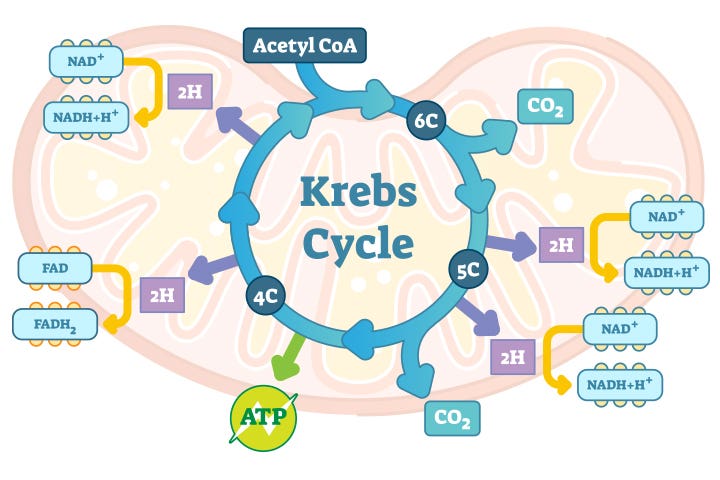
However, problems can arise when any of these biological processes are blocked. The body becomes imbalanced and illness can occur. One important biochemical process happens within the mitochondria. This is the Krebs cycle, also known as the citric acid cycle or the tricarboxylic acid cycle (TCA cycle). It comprises the chemical reactions that are a major source of energy in living organisms and is present in every cell that uses oxygen to produce energy.
The essence of the Krebs cycle
The metabolic process in cellular respiration repeats itself rather than being a straight-line chain. A series of enzyme-catalyzed and oxidation reactions help cellular metabolism.
The body’s regulation, or homeostasis, of this cycle is critically important because blockage of any parts of the reaction can result in large wasted metabolic energy. The processes can become inefficient. Cells metabolize glucose and change it into carbon dioxide and water, which produces energy when in the presence of oxygen. This cycle is complex but necessary for the body to function well. Impairments in the Krebs cycle can cause problems with metabolism and respiration.
How the Krebs cycle works
The Krebs cycle involves many chemical reactions at the cellular level. It occurs in the mitochondrial matrix, which comprises the folded membranes, proteins, and DNA and RNA molecules. Efficient metabolic operation of the cycle depends on the enzymes that ensure the channeling of substrates, also called intermediates or metabolites. The gene coding for these enzymes produces the metabolic demand for tissue, which is adjusted based on need.
Glycolysis and cell respiration
The Krebs cycle is one phase in cellular respiration. Glucose is oxidized to carbon dioxide, and oxygen is reduced to water. The main intermediates of the Krebs cycle are:
- Acetyl CoA
- Citrate
- Isocitrate
- α-ketoglutarate
- Succinyl CoA
- Succinate
- Fumarate
- Malate
- Oxaloacetate
Glycolysis is the preferred source of acetyl coenzyme A (acetyl CoA). This is when a glucose molecule enters the cell and is broken down in the cytoplasm into pyruvate, a two three-carbon keto acid important in the Krebs cycle. The pyruvate is then converted to acetyl CoA, which becomes the fuel for energy production. This acetyl CoA initiates the Krebs cycle.
The steps of the Krebs cycle
These are the fundamental steps in a Krebs cycle:
- The initial reaction begins by joining acetyl CoA with oxaloacetate and water to form citrate.
- The reaction of citrate with the enzyme aconitase creates isocitrate.
- The reaction of isocitrate and NAD+ with the enzyme isocitrate dehydrogenase creates alpha-ketoglutarate, or α-ketoglutarate, NADH+H, and CO2.
- α-ketoglutarate undergoes oxidative decarboxylation to form succinyl CoA. The reaction is catalyzed by α-ketoglutarate dehydrogenase enzyme complex. One molecule of CO2 is released and NAD+ is converted to NADH.
- Succinyl CoA is converted to succinate by the enzyme succinyl CoA synthetase. This is combined with substrate-level phosphorylation of GDP to form GTP and transfers its phosphate to ADP forming ATP.
- Succinate is oxidized to fumarate by the enzyme succinate dehydrogenase. In the process, FAD is converted to FADH2.
- Fumarate gets converted to malate by addition of one H2O. The enzyme catalyzing this reaction is fumarase.
- Malate is dehydrogenated to form oxaloacetate, which combines with another molecule of acetyl CoA and starts the new cycle. Hydrogens removed get transferred to NAD+, forming NADH. Malate dehydrogenase catalyzes the reaction.
Each step is regulated by specific enzymes. The energy output is determined by an efficient process, which depends on the nutrients available. Dysfunction at any step can lead to tumor formation, disease, and other serious health conditions.
Oxidative stress, oxygen consumption, and ATP
The availability of the coenzymes of NAD+ and FAD substrates control and regulate the Krebs cycle. However, high concentrations of NADH inhibit it. FAD and NAD become energy shuttles by attaching hydrogen and electrons to form FADH and NADH2. NADH and FADH2 feed into the respiratory cycle also located in the mitochondria. This is the step that creates ATP and is responsible for consuming oxygen.
FADH2 and NADH carry energy to the electron transport chain (ETC), which is an element of oxidative phosphorylation. Oxygen is necessary for the Krebs cycle. Without it, the respiratory cycle cannot continue to accept the hydrogen ions after they have participated in the ETC. Thus, the Krebs cycle is an aerobic pathway for energy production.
If the body makes enough ATP from the Krebs cycle and ETC, it doesn’t need to keep making NADHs in the Krebs cycle. However, if the body doesn’t have enough ATP in the cell, it needs to continue the Krebs cycle. Having enough oxygen in the body is essential because the mitochondria can initiate cell death (apoptosis) or activate genes that promote cell survival in response to low oxygen. However, reactive oxygen species (ROS) can also provoke damage if there is an imbalance between their production and the antioxidant defenses protecting the cells. Research shows that this imbalance is the pathogenesis of various diseases.
The Krebs cycle can produce and detoxify ROS. Because oxidative stress from external stimuli can cause mitochondrial dysfunction, this cycle is very effective at modulating the redox status of a cell and triggering cell death.
This metabolic network is an integral part of the oxidative defense in living organisms. For example, α-ketoglutarate is a key participant in the detoxification of the ROS. Its function as an antioxidant includes other key enzymes in the cycle, indicating a complex link between the Krebs cycle and ROS homeostasis.
The signaling power of the Krebs cycle
Metabolism in immune cells is more than a process for ATP production, biosynthesis, and catabolism. The reprogramming of metabolic pathways upon activation is also for the production of the metabolites that can act as immune-signaling molecules. The cycle is highly regulated, and the mitochondria have strategies to respond to environmental signals while communicating their health status to the rest of the cell.
Each step in the Krebs cycle releases a signal that triggers what the body needs. Throughout the cycle, various metabolites can change the response of both the innate and adaptive immune systems. Researchers are looking at pathways within the Krebs cycle to develop therapies for metabolic reprogramming. This may prevent the oxidative stress that causes mitochondrial dysfunction leading to disease. Scientists are looking specifically at these:
- Acetyl CoA — regulates chromatin dynamics (gene regulation), affects cancer, immune, and stem-cell functions.
α-ketoglutarate — a key modulator of hypoxic response that has multiple functions in physiology by regulating epigenetic changes. - Citrate — has a direct antibacterial effect and has been shown to act as an anti-inflammatory agent.
- Fumarate — regulates the epigenome, immune cell function, and innate immune memory, is a mitochondrial messenger of the immune system and tumor microenvironment, and is an anti-inflammatory signal.
- Itaconate (from cis-aconitate) — induces electrophilic stress and is an important immunomodulator and antibacterial agent.
- Succinate — helps regulate innate immunity by mediating inflammation signaling, has organismal effects, and can also be an oncometabolite as a signal in macrophages and tumor cells.
Krebs cycle and disease
These are critical findings because functional medicine seeks the root causes of various illnesses. The intermediates listed above activate specific signaling transduction pathways and produce biological actions like neuroprotection, anti-aging, and osteogenesis.
Krebs cycle and cancer metabolism
New evidence suggests that cancer may be a mitochondrial metabolic disease. Cancer metabolism research shows that cancer cells rely heavily on glycolysis for growth. Other evidence points to cancer originating from damage to the mitochondria in the cytoplasm rather than from damage to the genome in the nucleus. The genomic damage in tumor cells follows the disturbances in cellular respiration.
The Krebs cycle is a key player in certain cancers that involve enzyme dysfunction. New evidence demonstrates that certain cancer cells, especially those with deregulated oncogene and tumor-suppressor expression, rely heavily on the Krebs cycle for energy production and macromolecule synthesis. Although glucose provides the main source of pyruvate entering the Krebs cycle in normal cells, cancer cells often divert glucose away from the Krebs cycle for catabolism through anaerobic glycolysis.
Because mitochondrial function plays a crucial role in the development and pathology of different cancers, different therapeutic methods are under development to address the progression of mitochondrial enzyme malfunction.
Krebs cycle and cardiovascular disease
The heart has a high rate of ATP production and turnover. Because myocardial infarction is the leading cause of heart failure, changes in mitochondrial metabolism in heart disease are progressive and proportional to the degree of cardiac impairment. Essentially, the mitochondria no longer meet the high energy demands of the cardiac cells. When this happens along with an increase in the activation of cell death pathways, death of the myocytes occurs.
According to an animal study in which researchers looked at impaired in vivo mitochondrial Krebs cycle activity after myocardial infarction, they found that alterations in cardiac metabolism are linked to reduced Krebs cycle activity and the progression of heart disease.
Although cardiovascular disease can result from mitochondrial dysfunction in the Krebs cycle, this cycle can also be involved in cardioprotection. Fumarate is cardioprotective via the activation of the Nrf2-antioxidant pathway, which aids cell defense.
Krebs cycle and neural damage
The intermediates remain essential for neural activity in the body. If there is a limited function of α-ketoglutarate dehydrogenase, the mitochondria in nerve terminals are likely unable to meet the energy demand imposed by neuronal activity. Eventually, this leads to impaired function. There is growing evidence of the role of Nrf2 in metabolism and mitochondrial bioenergetics and function, which are commonly altered in neurodegenerative disorders. The ability of Nrf2 activation to increase in availability for the mitochondrial Krebs cycle enhances the mitochondrial membrane potential and ATP production. This is especially important in the neurons because of their high energy demand and their low glycolytic capacity. A growing body of evidence shows how the Krebs cycle intermediates function as energy in the mitochondria and exert antioxidant effects on the brain. Because of the neuroprotective effects displayed by these intermediates, they have potential use for therapeutic intervention against chronic neurodegenerative diseases.
What causes impairment of mitochondrial health?
Damage to the mitochondria plays a role in the pathogenesis of a wide range of seemingly unrelated disorders, such as Alzheimer’s disease, ataxia, bipolar disease, cardiomyopathy, chronic fatigue syndrome, coronary artery disease, dementia, diabetes, epilepsy, fibromyalgia, hepatitis C, migraine headaches, neuropathic pain, Parkinson’s disease, primary biliary cirrhosis, retinitis pigmentosa, schizophrenia, strokes, and transient ischemic attack.
Because many of these disorders stem from a disruption of the Krebs cycle, it’s pertinent to look into the chemicals, deficiencies, and toxins that can impede mitochondrial health:
- Antibiotics — Clinically relevant doses of bactericidal antibiotics — aminoglycosides, β-lactams, and quinolones — cause mitochondrial dysfunction and ROS overproduction in mammalian cells.
- Chemical toxicity — Available experimental evidence supports a link between exposure to environmental toxins and common neurodegenerative diseases that share a common feature of mitochondrial dysfunction.
- Medications: Analgesics (painkillers) such as acetaminophen, all classes of psychotropic drugs, and statin medications have all been linked to mitochondrial damage and interference with the mitochondrial pathways. Often overlooked, antidepressants create dysfunction of the mitochondrial respiratory chain and decrease ATP production.
- Metal toxicity: Heavy metals — such as arsenic, cadmium, mercury, and lead — are most commonly found in mitochondria, causing excess lactic acid production or lack of ADP to ATP conversion. Lactic acid is produced in cells when pyruvate’s conversion is blocked by damaged nano motors, a vitamin or mineral deficiency, oxygen deficiency, or toxicity. Aluminum impedes ATP production and has been linked to a variety of pathological conditions such as Alzheimer’s disease, dialysis dementia, osteomaLacia, and Parkinson’s disease.
- Mycotoxins: Mycotoxins can induce oxidative stress, even at low concentrations, which may be one of the major causes of mitochondrial dysfunction and related to several chronic diseases. Activation of apoptotic caspases and other proteins by mycotoxins may lead to apoptotic cell death.
- Nutritional deficiencies: Calcium, iron, and vitamins B and D are relevant micronutrients in mitochondrial disorders because deficiencies in these micronutrients may induce fatigue and muscle pains.
- Lyme disease: Oxidative stress and interrupted intracellular communication may ultimately contribute to mitochondrial dysfunction in the immune cells of Lyme borreliosis and other coinfections.
- Obesity: Mitochondrial dysfunction can result from an excess of calories from food because the Krebs cycle can no longer find a balance between the molecules to be degraded and the number of molecules available. As a mitochondrial alteration, obesity increases oxidative stress and the production of apoptosis, inflammation, and ROS.
- Parasites: Toxoplasma gondii infection is associated with mitochondrial dysfunction in-vitro. Also, the parasite Leishmania donovani inhibits the apoptotic machinery of the host cell, which helps the dissemination of this parasite in the blood and prevents it from dying.
- Pesticides: Some pesticides can alter the operation of the mitochondrial and endoplasmic reticulum ETCs, leading to ROS overproduction and/or apoptosis.
- Plastics: Phthalate esters (substances added to plastics to increase their flexibility) affect mitochondrial activities by altering the permeability properties of the inner membrane and by inhibiting succinate dehydrogenase activity. Nanoscale microplastics can cause further depolarization of mitochondria due to their large specific surface area adsorption of BPA, which leads to enhanced cytotoxicity of microplastics after BPA adsorption.
- Radiation: Mitochondria are sensitive to both low-level direct radiation exposure and radiation-induced bystander factor-mediated damage due to loss of function in the enzymes from oxidative phosphorylation.
Natural supports for the Krebs cycle function
Detoxification is an essential element for greater overall health. It helps fix the mitochondrial damage from toxicity. While drainage and detox are key, you also need to feed your mitochondria with adequate nutrients like essential vitamins and minerals.
When feeding the mitochondria, adequate nutrient levels from essential minerals and vitamins are integral because many specific micronutrients play crucial roles in energy metabolism and ATP production. For instance, B vitamins are required for cellular function. Any deficiency compromises the mitochondria because they are a part of various enzyme cofactors. These are the key nutrients for mitochondrial health:
- Thiamin (B1) — essential for the oxidative decarboxylation of the multienzyme branched-chain ketoacid dehydrogenase complexes of the Krebs cycle
- Riboflavin (B2) — required for the flavoenzymes of the respiratory chain
- Niacin (B3) — synthesizes NADH and is required to supply protons for oxidative phosphorylation
- Pantothenic acid (B5) — required for coenzyme A formation and is also essential for α-ketoglutarate and pyruvate dehydrogenase complexes, as well as fatty acid oxidation
- Biotin (B7) — the coenzyme of decarboxylases required for gluconeogenesis and fatty acid oxidation
Taking care of your mitochondria may involve some lifestyle changes as well. Toxins can affect the functionality of the Krebs cycle and lead to mitochondrial damage. The homeostasis of the Krebs cycle must be naturally supported because of its role in cancer metabolism, cardiovascular health, immune defense, and neurological health.