
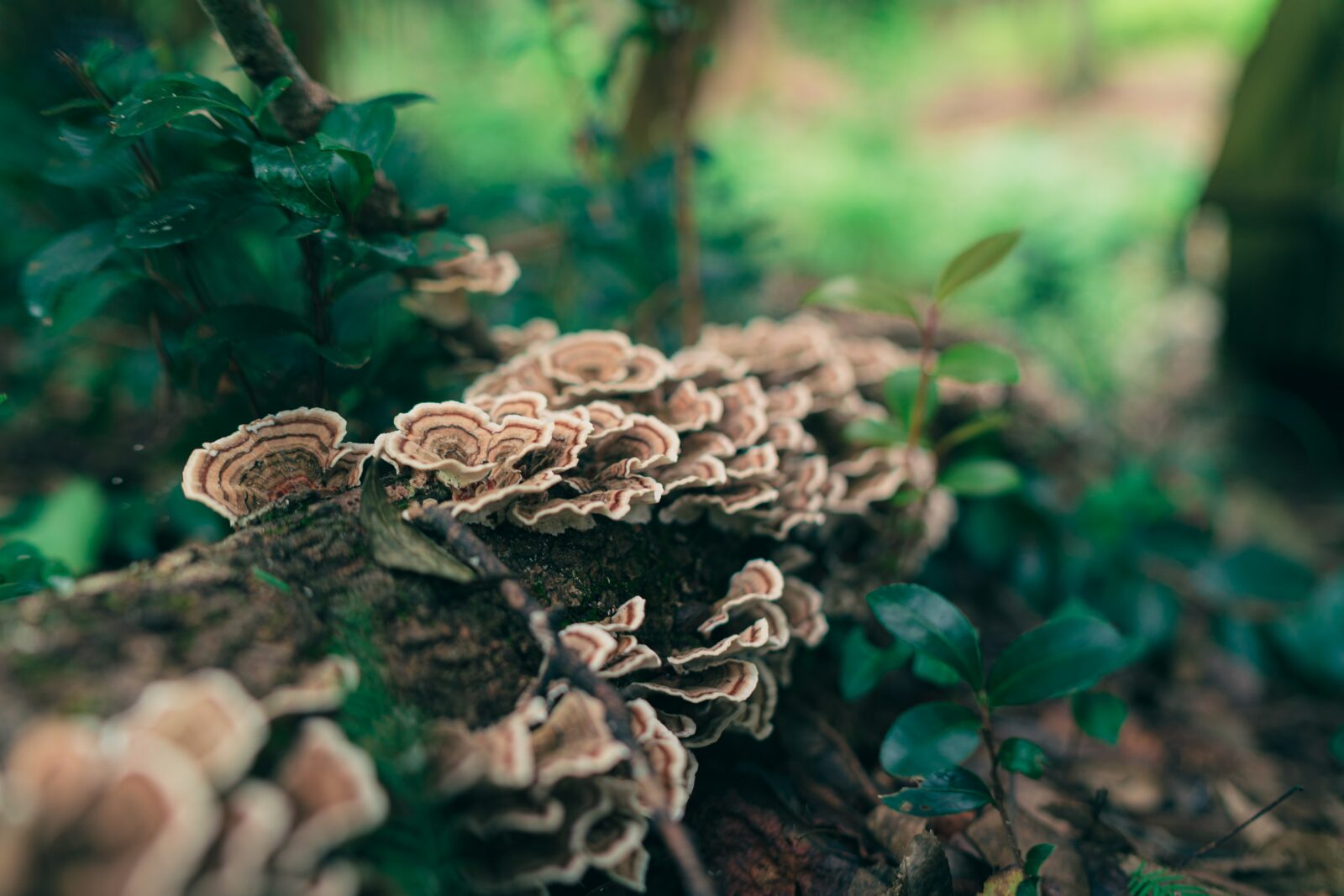
We have an expanding body of scientific evidence that confirms the powerful health-boosting potential of some mushrooms. While modern medicine is just catching up, traditional medicine, like traditional Chinese medicine, has used certain mushrooms for thousands of years to address a variety of health issues. The health benefits of turkey tail mushrooms are well documented in the historical and modern scientific literature.
Let’s take a closer look at these powerful health benefits.
Turkey tail mushrooms
Turkey tail mushrooms have a wide variety of bioactive compounds that help strengthen the actions of the immune system, among other benefits. Many mushrooms contain beta-glucans or beta-D-glucans. These polysaccharides are responsible for the immune-modulating effects of mushrooms. They have been shown to activate immune cells like monocytes, natural killer (NK) cells, neutrophils, macrophages, and dendritic cells in test tube studies.
Turkey tail mushrooms have an abundance of beta-D-glucans. In addition, they contain other bio-compounds that provide other unique health-supporting benefits.
Two key compounds in turkey tail mushrooms
Turkey tail mushrooms contain a wide array of primary and secondary compounds. The secondary compounds are medicinal components such as terpenoids, flavonoids, and phenolic acids. Scientists have identified 38 different phenolic compounds, including baicalein and quercetin. Baicalein and quercetin are 2 phenolic compounds with plenty of research behind them that shows their health benefits.
Turkey tail also has protein-bound polysaccharides, also known as polysaccharopeptides (PSPs). There are naturally occurring protein-bound polysaccharides in turkey tail mushrooms and there are two commercially isolated protein-bound polysaccharides available called PSP and PSK. Both PSP and PSK have been shown to stimulate the immune system in both preclinical and clinical studies.
PSK
PSK was isolated from the CM-101 strain of the turkey tail mushroom in 1971 and was commercialized by Kureha Chemicals. In 1977, the Japanese Ministry of Health approved PSK for clinical use. It has since been extensively studied for its role in supporting immune system health in a variety of situations, but primarily in oncology.
PSP
In the 1980s, Chinese scientists chose a specific strain of turkey tail mushroom to extract PSP, which was later approved for use in clinical settings in 1987.So far, over 45 independent PSP-related preclinical and clinical studies have been conducted.
Both PSK and PSP belong to a group of substances called biological response modifiers (BRMs). As non-specific immune supportive agents, they help restore balance to the immune system.
It’s important to note that there are over 120 varieties of turkey tail mushrooms. Thus, the molecular weight and structure of PSPs can differ depending on the strain, growing conditions, and extraction technique.
Let’s review the health benefits of turkey tail mushrooms.
Traditional uses for turkey tail include:
- Increasing energy
- Removing toxins
- Strengthening the immune system
- Draining excessive fluids
- Support for lung, liver, and spleen functions
- Joint pain
- Coughing
- Breathing difficulties
Modern conventional medicine uses turkey tail for:
- Support for weakened immune systems
- Anti-oxidant properties to protect against free radical damage
Turkey tail mushrooms are adaptogenic mushrooms
Like other functional mushrooms, turkey tail mushrooms are adaptogens. Adaptogens help the body adapt to the various types of stressors in our daily lives. This includes biological, physical, and chemical stressors. Adaptogens interact with the hypothalamic-pituitary-adrenal (HPA) axis to help stabilize cortisol levels under stress and help the body reach balance again.
Turkey tail promotes a healthy inflammation response
Reactive oxygen species (ROS) include free radicals and other by-products of cellular metabolisms, such as superoxide anion (O2•-), hydrogen peroxide (H2O2), and hydroxyl radical (•OH). Your cells produce ROS in response to toxins like cigarette smoke, ozone, industrial chemicals, and air pollution.
Reactive oxygen species are critical cell signaling mediators of normal biological processes. There is a delicate balance between ROS and antioxidants that protect cells. An alteration to this balance can lead to excessive amounts of ROS, which produces oxidative stress.
Research shows that avoiding oxidative stress and supporting a healthy inflammation response are important things you can do to maintain a healthy body. In addition, the healthy support for the immune system may be enhanced when turkey tail is used in conjunction with Ginkgo biloba.
Turkey tail supports the immune system
Bioactive compounds in turkey tail mushrooms can have powerful, positive effects on your immune system. Turkey tail enhances both the innate and adaptive immune responses, the body’s first and second lines of defense.
Our innate immune system is also called a non-specific immune response and employs cellular, physical, and chemical defenses.
Adaptive immunity is acquired and specific. This response expands the T and B lymphocytes, which are types of white blood cells. Preclinical studies show that polysaccharides from turkey tail can induce the proliferation of both T and B cells. These studies suggest that using turkey tail may enhance the immune response in people with weakened immunity.
Turkey tail supports gut health
The composition of our gut microbiota impacts everything from digestion to cognitive function.
Beta-glucans contain bonds that cannot be broken down by human digestive enzymes. Large indigestible glycans also cannot cross the lining of the gut, so they must remain there until they are either used or excreted. Thus, beta-glucans may be a source of prebiotics, which help support a healthy gut microbiome.
Polysaccharides in turkey tail may also increase levels of beneficial Lactobacillus and Bifidobacterium species when reducing harmful bacteria.
In addition, the immunomodulating effects and prebiotic activity of PSPs may help with weight management. However, human studies have not been conducted to confirm this.
Turkey tail supports liver health
Researchers identified one polysaccharide peptide (PSP) in turkey tail, called PSP-1b1, that had hepatoprotective effects in mice. Results from another study showed that mice that consumed PSP had lower levels of liver enzymes, indicating enhanced liver health.
The antioxidant activities of turkey tail may also help support liver health. Animal studies investigating liver impact commonly use the hepatotoxin carbon tetrachloride (CCl4). This toxin produces ROS and a free radical called trichloromethyl (CCl3-), which can cause harm to the liver. Results from animal studies suggest that PSP could help protect the liver against CCl3- by regulating the immune response to the free radical, such as increasing levels of the protective antioxidants SOD, glutathione peroxidase (GSH-Px), and glutathione (GSH).
Turkey tail protects DNA from damage
Free radicals can be harmful to your DNA. Results of one study suggest that extracts from T. versicolor may have activities that can protect DNA, likely due to the high levels of phenolic compounds in the mushroom.
Turkey tail may support blood sugar balance
Two hormones help ensure blood sugar levels stay within a narrow range: Insulin, which lowers blood sugar by eliminating it from the blood and to the cells, and glucagon, which raises blood sugar by prompting the liver to convert stored glycogen into glucose. Maintaining the body’s sensitivity to insulin is important to glucose homeostasis.
Animal studies show that PSPs may do just that. They have been shown to support normal insulin sensitivity, which helps maintain blood glucose levels already within a healthy range. These are initial results, and further studies are needed. However, the results are promising.
How to take turkey tail mushroom
In traditional Chinese and Japanese medicine, turkey tail was prepared as tea. That option is still available for those who can find and identify wild turkey tail. However, it is far more convenient to use turkey tail extract in powder or capsule form.
It is very important to select a high-quality supplement. Most importantly, look for a product whose label indicates that only the turkey tail mushroom is used and not mycelium. Mycelium is essentially the root structure of the fungi. It contains fewer of the active bio-compounds.
Taking an extract of turkey tail in powder or capsule format is an easy way to get a concentrated dose of the beneficial compounds found in this mushroom.
Final thoughts
Turkey tail is a potent mushroom. Turkey tail has been a respected and valuable remedy for thousands of years. Researchers will continue to discover how turkey tail supports the immune system.
Our lives contain more stressors than ever before. Adding a turkey tail supplement to your daily routine can be a powerful antidote.