
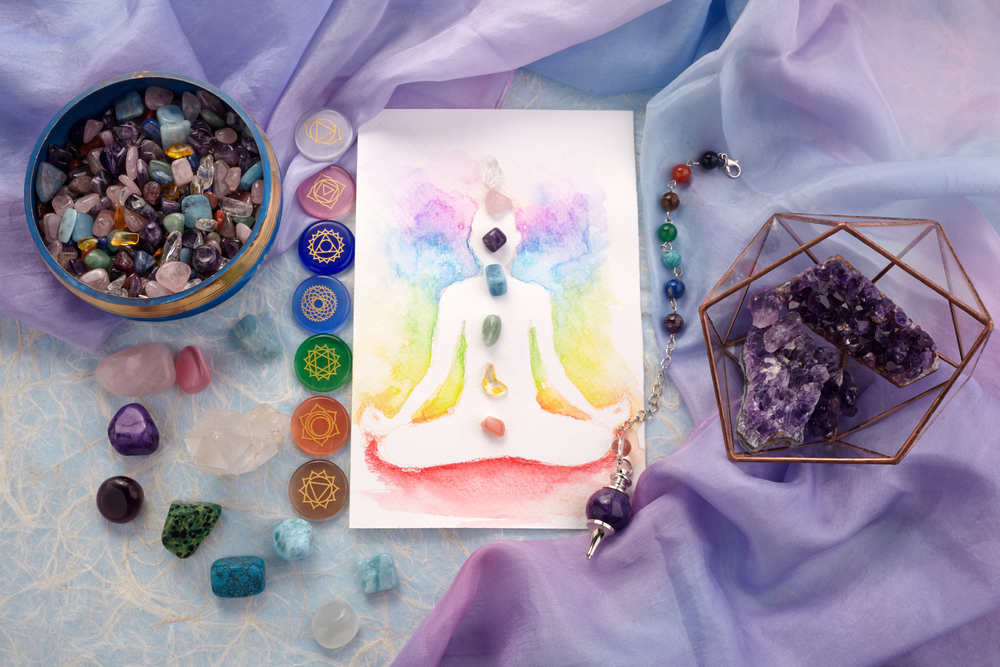
If you practice yoga, you most likely have heard the term “chakra.” Translated from Sanskrit, chakra means “to wheel.” Each of the 7 chakras represents a center of energy in different parts of your body. Each chakra represents a different element of your body, with varying qualities that impact your emotions and personality.
The 7 chakras begin at the top of your head and extend down to the base of your tailbone. Each has a different color and ancient element, like fire, air, or earth. And, each has physical and psychological characteristics. According to yogic philosophy, your chakras can be imbalanced. You can be excessive or deficient in one or more chakra, and the imbalances manifest themselves in different ways.
However, when your chakras are balanced, you will live a healthier, happier life. This is an ancient philosophy rather than modern science. Still, practicing this method can lead to a more mindful life and greater overall well-being. Let’s take a look at the 7 chakras.
The 7 chakras and how to balance them
1. Crown chakra
Element: Cosmic Energy/Divine Consciousness
Color: Purple
This chakra, sahasrara, is located at the top of the head. It enables us to connect to all things—in particular, to a realm … not really in the physical world, but in a cosmic realm. Essentially, the crown chakra is what allows you to connect to your spirituality, to something deeper than just yourself.
Excessive: a feeling of disconnect from the material world
Deficient: lacking in faith or spirituality
How to balance: Learn to embrace silence and practice meditative breathing techniques and inversions.
2. Third eye chakra
Element: Light
Color: Indigo
In Sanskrit, this chakra’s name translates to “command.” It is linked with the pituitary gland, also known as your body’s master gland. Intuition, imagination, and your personal perceptions of the outside world are all governed by ajna, the third-eye chakra.
Excessive: distorted perceptions
Deficient: unable to see things in a new way
How to balance: This chakra is best balanced by meditation and breathing techniques.
3. Throat chakra
Element: Sound or Space
Color: Blue
This chakra, vishuddha, controls how we communicate. When it’s in balance, we’re able to speak our own truths and actively listen to those of others. In the body, this chakra is associated with the cervical spine, neck, and throat regions.
Excessive: overly talkative and unable to be in silence
Deficient: unable to effectively communicate or express yourself
How to balance: Practice active listening strategies. Use affirmations to establish what you want to say before you communicate.
4. Heart chakra
Element: Air
Color: Green
Associated with the element of air, anahata serves as a sort of bridge between the lower and upper chakras. It deals with balance and harmony. The heart chakra is associated with many emotions including love for ourselves and others.
Excessive: overly concerned about others, but not in a good way
Deficient: lack of emotion or compassion
How to balance: Try heart-opening yoga poses; add a mantra into your meditation, with the sound “yum,” which correlates with the fourth chakra.
5. Solar plexus chakra
Element: Fire
Color: Yellow
Also called manipura, this chakra deals with transformation. It is associated with how we process thoughts and emotions that contribute to our sense of individuality and independence. Located just above the navel and represented by the element of fire, when this chakra is in balance, you’ll have a healthy sense of self-esteem and autonomy.
Excessive: feelings of hot-headedness and arrogance
Deficient: timidity and shyness
How to balance: Try yoga asanas like boat pose and warrior poses, and focus on healthy digestion.
6. Sacral or pelvic chakra
Element: Water
Color: Orange
The sacral chakra, svadhishthana, is all about the flow of creativity and passion. This chakra is associated with our attachments and aversions. It is also linked to sexuality and sensuality.
Excessive: hyper-sexual, easily giving into temptation
Deficient: an inability to experience pleasure
How to balance: Maintain a healthy sex life and respect your body.
7. The root chakra
Element: Earth
Color: Red
The root chakra, muladhara, is all about physical and emotional survival needs and our sense of stability and groundedness. It exists at the base of the spine and is connected to the earth element.
Excessive: feelings of greed, stubbornness, and heaviness (both physical and emotional)
Deficient: flighty and disconnected from your physical needs
How to balance: Use meditation to establish a sense of groundedness.