
Why do some women experience pain during their period?
During your monthly menstrual cycle, the uterine lining (endometrium) naturally thickens to provide a fertilized egg a nutrient-rich place to latch onto. If conception does not happen, your body sheds that lining and the process repeats each monthly cycle.
Estrogen helps your body build the lining. Prostaglandins help shed the lining. Prostaglandins are inflammatory and cause the blood vessels in the uterine lining and the uterus itself to contract. Prostaglandins also increase overall inflammation and sensitivity to pain.
Approximately 50% of all menstruating women will experience pain during their periods. Some women experience debilitating pain. This is called dysmenorrhea. There are 2 types of dysmenorrhea:
The first type is typical. It begins around 1 to 2 days prior to the start of your period and lasts for the first 1 to 3 days of bleeding. There may be some bloating in your abdomen, lower back, or inner thighs. You may also experience minor cramping.
If the pain is more severe, it is most likely caused by underlying inflammation, hormonal imbalances, or being deficient in nutrients that counteract prostaglandin-induced inflammation. These nutrients are vitamin D and essential fatty acids like EPA and DHA found in fish and fish oil. In addition, calcium and magnesium help prevent cramping.
The second type of dysmenorrhea, referred to as secondary dysmenorrhea, is caused by an underlying or concurrent gynecologic condition like adenomyosis or endometriosis. The pain is quite severe and typically begins earlier and lasts longer than primary dysmenorrhea. Other symptoms can include pain with sexual intercourse, urinary symptoms, bowel symptoms, or chronic pelvic pain.
Many women with primary dysmenorrhea rely on OTC pain relievers rather than addressing the root causes of the occasional painful period.
Concerns about NSAIDs
The most common OTC medications used for occasional menstrual discomfort are non-steroidal anti-inflammatory drugs (NSAIDs), like ibuprofen. They inhibit an enzyme, COX-2, involved in the production of prostaglandins, which is how NSAIDs help reduce inflammation, pain, cramping, and heavy menstrual bleeding. However, they also inhibit COX-1, which can result in stomach and digestive symptoms like heartburn, gas, and bloating.
NSAIDs use also comes with potential adverse effects including:
- Risk of stomach bleeding
- Increased heart attack risk even with short-term use. The risk increases with regular use, especially in those who do have heart disease risk factors such as smoking, high blood pressure, high cholesterol, and diabetes.
- Inhibition of ovulation and reduction in progesterone levels, which can undermine fertility,
NSAIDs do provide occasional relief. However, it’s best to pursue natural alternatives to avoid unwanted side effects.
Cannabis for period pain relief
The medicinal use of Cannabis dates back thousands of years. Evidence exists that it was used in ancient Egypt as early as 1550 BCE. An early pharmacy book written around 2737 BCE in China describes the use of Cannabis and another Chinese text dating back to 1596 BCE specifically mentions the use of Cannabis for menstrual pain. Other evidence has been found in Persian, Ayurvedic, Semitic, and Middle Eastern writings.
Documentation regarding the efficacy of Cannabis in relieving menstrual and pelvic pain occurs in American and British medical literature beginning in the 1800s. Queen Victoria used Cannabis extract to treat menstrual pain. Her physician, Sir J. Russell, wrote an article on the use of Cannabis for menstrual pain, which was published in 1890 in the medical journal The Lancet.
Cannabis extracts were commonly used for medicinal purposes and could be purchased at a pharmacy, without a prescription, through the early 1940s in the United States. A pharmaceutical for the treatment of dysmenorrhea, Dysmenine Compound, was produced in the US in the late nineteenth century by the Keysall Pharmacal Company. The active ingredient was Cannabis.
Cannabis remained an official medication of the US Formulary and wasn’t removed from the United States Pharmacopoeia until 1942. After that, physicians used it less, and Cannabis began to be viewed with a stigma attached to it. However, it remained a medicine of interest. In 1971, Solomon Snyder, a neuroscientist at Johns Hopkins University said that for many conditions, “such as migraine headaches or menstrual cramps, while something as mild as aspirin gives insufficient relief and opiates are too powerful, not to mention their potential for addiction. Cannabis might conceivably fulfill a useful role.”
Evidence versus research
Critics of Cannabis as a medicine point to the lack of scientific research regarding its effectiveness. They are correct. Plenty of anecdotal evidence exists. Yet, very little scientific proof exists showing its efficacy for menstrual pain. This is primarily due to the decades of illegal status, which limited scientific research. Plus, women’s health remained under-researched as well.
The illegal status impacted how women discussed its use with their doctors. However, when surveyed, many women confirm the relief it brings them. In 2015, researchers from the University of British Columbia asked a sample of 192 women if they had used Cannabis to relieve menstrual pain. Among these women, many had severe period pain as well as PMS and digestive symptoms; 88.5% said they had used marijuana (most had smoked or ingested it) and of these, 89.4% said it helped. While Cannabis has been devalued by conventional medicine, consensus by a large number of individuals and historical use has validity and importance as forms of evidence.
How cannabis relieves pain
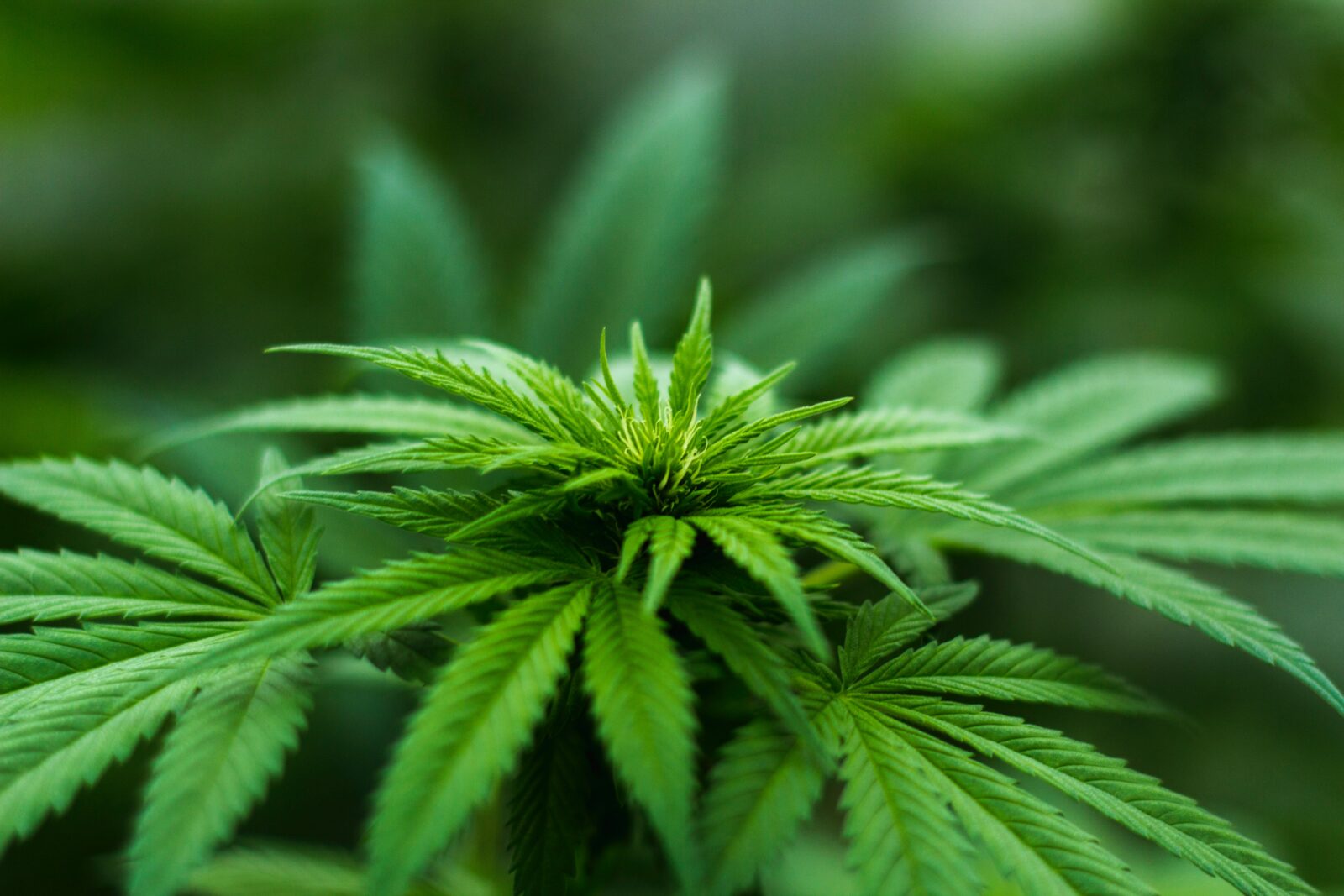
Cannabis is also backed by research into its pharmacology that strongly supports clinical use. The plant is rich in two cannabinoids, active chemical compounds among over 100 compounds in this herb. The most well-known of these are tetrahydrocannabinol (THC) and cannabidiol (CBD). THC is associated with psychoactive responses – ‘getting high’ – while CBD appears to modulate inflammation, muscle cramping, and mood.
The mechanism behind Cannabis’ purported effectiveness in relieving period pain lies in the endocannabinoid system, (ECS). Discovered in the early 1990s, the ECS is a collection of cellular receptors that are found throughout the body, including the brain, the immune system, and the female reproductive tract including the ovaries and uterus. Our own bodies produce a cannabinoid called anandamide (AEA), possibly in response to estrogen levels, which binds to these receptors and influences our moods, reproductive system immunity, and inflammation. In binding to receptors in the reproductive system, cannabinoids from Cannabis may lead to relief from menstrual and pelvic pain, digestive system symptoms like gas and bloating, migraines or menstrual headaches, anxiety, irritability, and other common PMS symptoms.
While more research is needed, it is generally thought that:
- CBD and THC decrease pain sensation by targeting specific pain receptors in the body, TRPV1 and CB1 respectively, while also allowing more positive sensations to reach the brain.
- Both THC and CBD have anti-inflammatory effects. THC prevents macrophages, scavenger immune cells, from releasing inflammatory proteins called cytokines, while CBD, like NSAIDs, block COX-2, reducing inflammation. However, unlike NSAIDs which inhibit the COX-1 enzyme as well, leading to digestive symptoms in many people, CBD only inhibits COX-2, which doesn’t lead to digestive discomfort.
- CBD slows down electrical signaling to muscles, increasing muscle relaxation, and reducing cramping.
- CBD also appears to be effective in relieving anxiety, and may therefore also be helpful in PMS with anxiety for some women.
Is cannabis safe?
Overall, Cannabis is considered relatively low risk when used occasionally, as it would be for period pain. Smoking Cannabis and eating “edibles” that contain THC are more likely to produce side effects, including acute anxiety, paranoia, focus, and attention deficits, and decreased reflex time. However, the risk of serious adverse events is very low. The most concerning risk is with a small group of people with a particular genetic predisposition. THC may trigger psychosis in this small subset. And, smoking in general is harmful to your lungs.
CBD, taken as an extract, usually in the form of CBD oil, has an extremely low side effect profile. In 2018, the World Health Organization concluded in a review: “to date, there is no evidence of recreational use of CBD or any public health-related problems associated with the use of pure CBD,” and both CBD and Cannabis are generally safer than many of the medications available for the treatment of pain.
While it has not been associated with teratogenic effects, Cannabis use is generally not recommended for use in pregnancy, so unless for a medically supervised reason, discontinue use if you are pregnant or plan to get pregnant.
Using cannabis and CBD
There is no set of dosage guidelines nor one specific form of using Cannabis or CBD that has been shown to be more effective for dysmenorrhea. More research is necessary to make those determinations. Each individual has a unique threshold for pain or symptom relief. We also have unique levels of tolerance to the psychoactive effects of THC. If you consider using Cannabis, you may need to make subtle adjustments to determine what is right for you.
It’s best to start with a small amount and increase slowly if needed. Also, used products with the greatest safety and the least likelihood of serious, long-term side effects. These products include:
- Cannabis tincture: can be effective for pain relief, is taken in water so doesn’t require smoking anything, doesn’t cause psychoactive effects, and can be combined with other pain-relieving, anti-inflammatory herbal tinctures.
- CBD oil: A good quality CBD oil product is usually made with an olive oil base, has zero to negligible THC so will not have a psychoactive effect, and can be conveniently taken by dropper with measurements on it to get accurate dosing, or in a capsule.
- CBD topical and suppository products: several providers specialize in high-quality topicals and suppositories for women’s period and pelvic health.
You can try smoking Cannabis if other forms simply do not work. If this is the case, use only small amounts on the few days of the month when you need it most. Purchase product from a Cannabis dispensary to ensure that it is a clean, good quality product, and ask for a low THC strain.
Hemp seeds may also reduce the inflammation associated with period pain. The seeds do not contain cannabinoids, are rich in gamma-linolenic acid (GLA), which are frequently low in women with PMS and dysmenorrhea. In one study, a daily dose of 150 to 200 mg over 12 weeks greatly improved symptoms; this dose could be provided by a 5-mL daily dose of hemp seed oil.
Final thoughts
While the Cannabis industry promotes its product as a panacea, it is not. It can help with menstrual pain in many cases. However, additional research is needed. Investigate the root causes of the pain and treat those. But used safely and wisely, Cannabis and CBD products may help many women with period pain to have a better experience of their menstrual cycles, and with fewer adverse effects than conventional medications.