
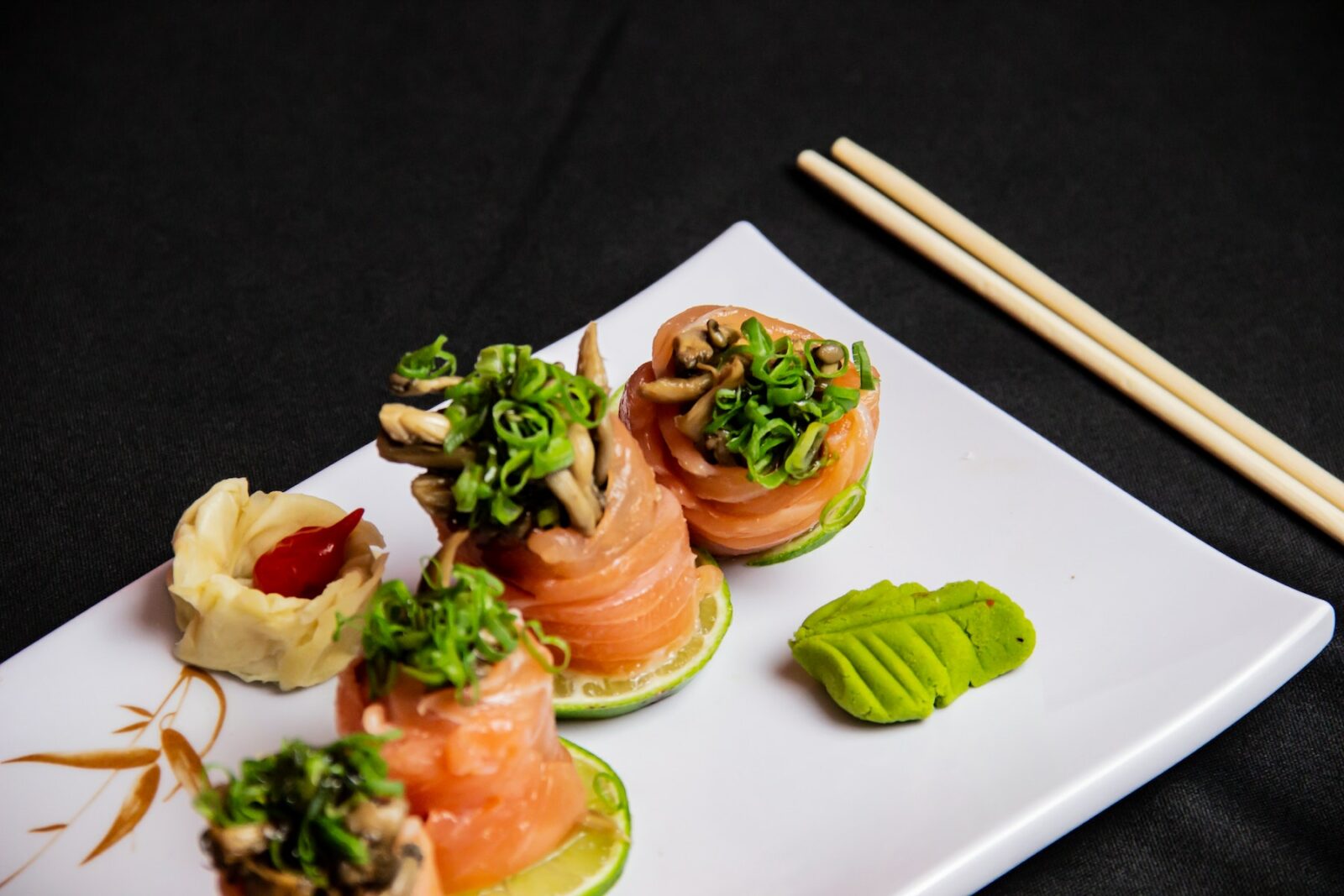
Beyond its distinctive aroma and fiery taste that accompanies sushi, wasabi, also known as Japanese horseradish, offers a multitude of significant health benefits. Wasabi, scientifically referred to as Wasabia japonica (Miq.) Matsum, is a perennial plant indigenous to Japan that has been cultivated for over a millennium. As the popularity of Japanese cuisine spreads, it is now grown in other countries as well.
Renowned for its sharp, pungent flavor and vibrant green hue, wasabi belongs to the cruciferous vegetable family and thrives along streambeds in Japan’s mountain river valleys. It is also cultivated in parts of China, New Zealand, North America, and Korea.
The compounds responsible for wasabi’s potent smell and distinctive flavor are called isothiocyanates (ITCs), which offer various health benefits. However, it is important to note that high intake of ITCs can be toxic. Let’s delve deeper into the remarkable contributions of wasabi to our well-being.
Antibacterial properties of wasabi
A study conducted in 2008 examined the antibacterial activity of Korean and Japanese wasabi roots, stems, and leaves against Helicobacter pylori. The different parts of the wasabi plant, from which allyl isothiocyanate (AIT) was extracted, exhibited antibacterial effects against strains NCTC 11637, YS 27, and YS 50, with the leaves demonstrating the highest efficacy.
Further research suggested that wasabi leaves and AIT could serve as a natural remedy for stomach lesions caused by H. pylori. This bacterium commonly infects the stomach and small intestine, playing a primary role in peptic ulcers, inflammation of the stomach lining, and stomach cancer. The prevalence of H. pylori may vary among countries due to socioeconomic factors, sanitation, and urbanization levels.
Potential anti-pancreatic cancer effects
A 2014 study published in the journal Evidence-Based Complementary and Alternative Medicine revealed that wasabi could potentially combat highly lethal pancreatic cancer by addressing its root cause and resistance to conventional treatments.
Researchers from Taiwan investigated the effects of compound 6-(methylsulfinyl)hexyl isothiocyanate (6-MITC), a naturally occurring isolate from wasabi, and its synthetic derivatives I7447 and I7557, on human pancreatic cancer cells. Through an MTT assay for cell viability and morphological observation, they observed that these wasabi-derived compounds exhibited several anticancer effects. These included inhibiting the viability of pancreatic cancer cells (PANC-1 and BxPC-3), inducing cell division arrest, and promoting apoptosis or programmed cell death.
Pancreatic cancer is notoriously challenging to treat using conventional methods. It remains the leading cause of cancer-related deaths worldwide, characterized by rapid progression, highly invasive tumors, and resistance to chemotherapy. With a dismal prognosis and low survival rates, exploring potential treatments for this disease is of utmost importance.
Aid for atopic dermatitis
In a study on animal models with atopic dermatitis, researchers investigated the effects of wasabi rhizome extract by incorporating it into the diet of hairless subjects exhibiting dermatitis symptoms. The special diet containing 5% and 10% of wasabi rhizome extract reduced scratching behavior, with the 10% diet significantly reducing it on the 28th, 35th, and 42nd days. These findings indicated that the extract improved atopic dermatitis-like symptoms in the subjects.
Potential enhancement of brain health
ITCs present in wasabi may provide neuroprotective benefits. In one study, AIT exhibited promising anti-neuroinflammatory effects on microglial cells, shedding light on its potential role in neurodegenerative conditions.
Another study focused on the neuritogenic-promoting activity of wasabi, suggesting a potential therapeutic role in neurological conditions. During extensive screening, researchers discovered that Japanese horseradish is the richest source of 6-HITC among Brassica vegetable extracts. 6-HITC is an analogue of sulforaphane, a compound isolated from broccoli known for its ability to enhance neuritogenesis.
These findings highlight the potential of wasabi components in preventing or slowing down neurodegenerative diseases associated with inflammation, such as Parkinson’s disease.
Differentiating real wasabi from fake
If you’re eager to incorporate wasabi into your diet, you can enjoy it with soy sauce alongside sushi or add it to your favorite noodles. Wasabi also makes a great condiment for roasted meats, vegetables, and grilled dishes.
However, it’s crucial to be aware that the vast majority of wasabi available in the market is not genuine. Instead, it often consists of a blend of horseradish, hot mustard, and green dye. In fact, it is estimated that as much as 99% of the wasabi sold in the United States may be fake.
Authentic wasabi is rare and expensive due to the challenges involved in its cultivation. Nonetheless, you can find real wasabi in powder, paste, and fresh forms from reputable sources online.
In conclusion, wasabi, beyond its strong smell and intense flavor as a sushi accompaniment, offers a wealth of health benefits. From its antibacterial properties and potential anti-pancreatic cancer effects to its aid in managing atopic dermatitis and potential enhancement of brain health, this Japanese horseradish proves to be more than just a condiment. So, the next time you enjoy a sushi roll, remember that you’re not only indulging in a flavorful experience but also benefiting from the health-promoting properties of wasabi.