
Our perception of the world, the formation of memories, and the experience of satisfaction play a fundamental role in shaping our lives and identities. Recent scientific research and firsthand accounts now reveal that hormonal contraception, including the birth control pill, profoundly impacts these aspects by altering brain structure and neurochemistry.
For several decades, hormonal contraception (HC) has been widely considered a relatively safe and effective method for women to prevent pregnancy. It has also been prescribed to address various conditions, such as acne and polycystic ovarian syndrome.
Approximately 80 percent of women will use some form of hormonal contraception at some point in their lives, with the birth control pill being the most common choice. However, emerging scientific evidence indicates that HC can dampen women’s stress response, influence the formation of memories, and even alter their preferences in attraction.
Mechanism of action for the pill and other hormonal contraceptives
In a naturally cycling woman, the ovarian cycle consists of two main phases. The first phase, called the follicular phase, lasts about two weeks and ends with a surge in estrogen, a group of sex hormones. Around day 14, ovulation occurs when the ovary releases an egg.
The second phase, known as the luteal phase, is characterized by an increase in progesterone, another hormone. If fertilization does not occur, menstruation takes place, and hormone levels return to baseline. The cycle then repeats, typically lasting approximately 28 days.
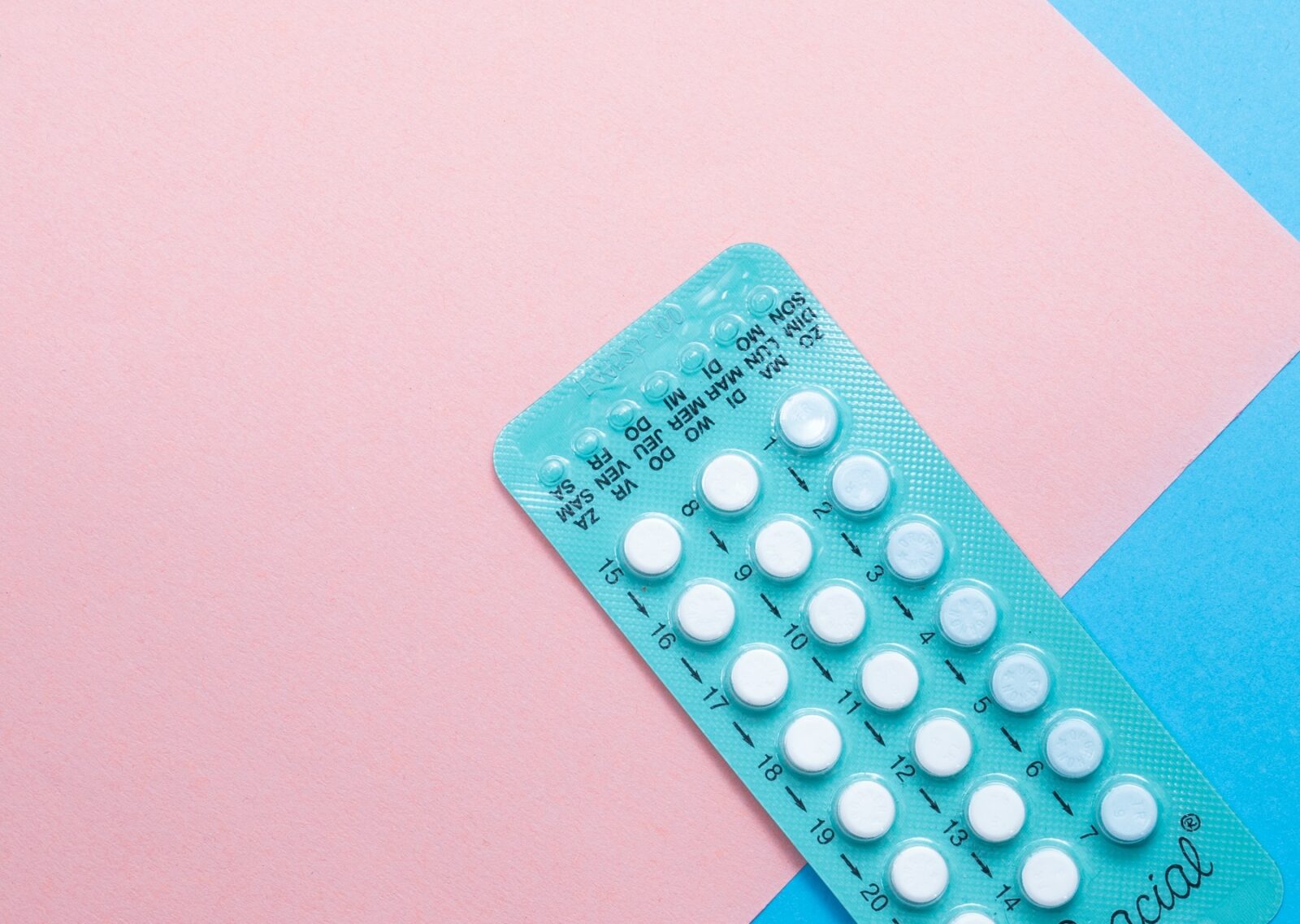
Hormonal contraception works by continuously releasing artificial hormones into the body, either through pills, injections, or intrauterine devices (IUDs). These contraceptives release synthetic estrogen, synthetic progesterone, or a combination of both, which suppresses the release of natural hormones from the ovaries. Consequently, hormone levels remain steady instead of fluctuating as they do in the natural cycle.
Impact on attraction, perception, and memory
One woman began using the Mirena IUD at the age of 17 due to her irregular cycle and challenging periods. Despite being a hormonal IUD, it eliminated her period altogether, prompting her to question the decision to use hormonal contraception and embark on her research.
She shared her insights on the effects of hormonal contraception, including its impact on attraction, through a detailed video essay. These studies build upon previous research demonstrating that the fluctuating hormone profile during the ovarian cycle leads to changes in sexual preference among women. For example, a 2008 study published in Hormones and Behavior found that as estrogen levels increase, women tend to prefer the faces of men with higher testosterone levels.
Research from 2013, published in Psychoneuroendocrinology, indicated that starting the birth control pill reduced women’s preference for masculine male faces compared to naturally cycling women. Women on the pill reported lower sexual satisfaction and were more likely to initiate separation, as revealed in a study published in the Royal Society’s Proceedings B in 2011. However, they were also more satisfied with their partner’s material provision, had longer-lasting relationships, and were less likely to separate overall. Another study published in the same journal in 2008 found that women taking the pill were more inclined to choose partners with a genetically similar smell.
The hormonal patterns observed in women taking the pill closely resemble those of individuals experiencing chronic stress. This suggests that the pill may activate the HPA axis excessively, prompting a need for self-regulation.
A study published in Nature’s Scientific Reports in 2017, which examined four markers of chronic stress exposure, found that HC users exhibited all four markers, including a reduced volume of the hippocampus—a critical brain region involved in memory and spatial navigation.
Stress is often associated with negative implications, but it plays an important role in helping us overcome challenges, identifying social opportunities, and even promoting sexual attraction, as indicated by various studies. Hill argues that without an active stress response, women’s brains might perceive the world as unstimulating, lacking exciting possibilities and challenges. Interestingly, a 2020 study published in Hormones and Behavior discovered that HC users demonstrated less perseverance in both simple and cognitively demanding tasks.
The stress response also significantly influences memory. It can enhance or hinder memory formation, depending on the circumstances, as supported by studies published in PNAS in 2009 and Annals of the New York Academy of Sciences in 2006. Building upon the impact of hormonal contraception on the stress response, researchers conducted a study published in Neurobiology of Learning and Memory in 2011. They compared the memory performance of naturally cycling women with that of HC users when recalling an emotionally arousing story or a neutral story with similar content. Naturally cycling women exhibited better recall of specific details, whereas HC users showed stronger recall of the overall gist but lacked specific details.
A tale of two estrogens
The synthetic hormones used in hormonal contraceptives are “endocrine disruptors.” In contrast, natural estrogen and progesterone have neuroprotective properties.
When taking the birth control pill, the synthetic estrogen, ethinyl estradiol, imitates estradiol—the most important and prevalent estrogen in the body. Estrone and estriol are two other estrogens naturally found in the body. Different estrogen receptors populate various brain regions: the hypothalamus and limbic system have more alpha estrogen receptors (which bind to estrone), while the cerebral cortex possesses more beta estrogen receptors (which bind to estriol). The cerebral cortex is associated with higher-order cognitive functions.
Activation of one type of receptor affects the other types. For instance, increased alpha receptor activity reduces beta receptor activity. Natural estradiol can convert into estrone or estriol, maintaining a balanced effect on all estrogen receptors.
However, ethinyl estradiol, the synthetic estrogen in hormonal contraceptives, undergoes extensive conversion into estrone in the body. This increased conversion may lead to heightened alpha receptor activity, potentially depriving the cerebral cortex of beta receptor activation.
While this hypothesis lacks strong evidence, it is crucial to acknowledge the potential impact of hormonal contraception on the brain to develop more effective fertility control methods.
Moving towards innovative fertility management approaches
There is no denying that hormonal contraception has brought numerous benefits to women since its widespread adoption. It can help regulate hormonal imbalances when other treatments fail, reduce the risk of certain cancers, and provide women with greater control over their fertility and reproductive choices.
However, when hormonal contraception was initially developed 70 years ago, our understanding of hormone function in the body was limited. Hormones play a significant role in shaping who you are. When you take birth control, it affects your hormones to such an extent that it can genuinely alter your identity.