
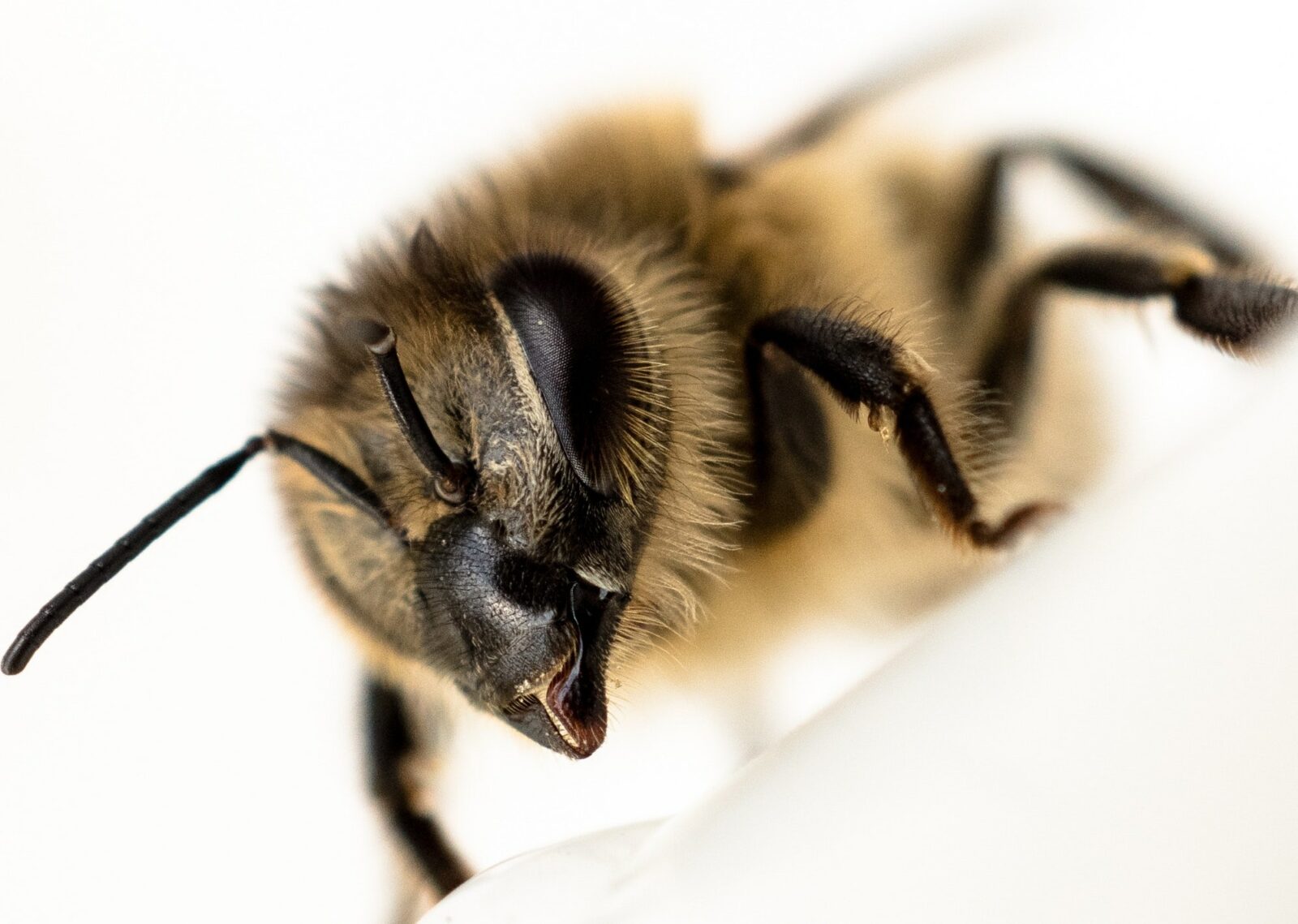
What’s in a bee sting? Generally, a lot of pain, and for a few people, an allergic reaction. However, scientists are discovering innovative uses for bee sting venom, including a potentially potent anti-cancer treatment.
Let’s take a deeper look at this exciting field of research.
Apitherapy is an alternative therapy that uses honey bee products including bee sting venom to treat a wide array of illnesses.
Specifically, this venom comes from the honey bee Apis mellifera. The medicinal use of bee venom dates back to ancient Greece and Egypt as well as ancient China. Modern interest in bee venom dates back to 1868, when Russian scientists, Lubarski and Lukomski, published their paper “Bee Venom, A Remedy.”
Today, doctors and licensed apitherapists use bee venom to treat chronic and autoimmune diseases. Bee venom can fight inflammation and the destruction of connective tissue in conditions like rheumatism and arthritis. In addition, it can support the body’s natural defenses in conditions like lupus and multiple sclerosis.
Emerging research suggests that bee venom may be an effective therapeutic against various types of cancer, and it may decrease the adverse effects of other types of medications and conventional drugs.
Hymenopteran insects
Bees, ants, and wasps belong to the entomological order: Hymenoptera. Hymenopteran venoms are highly complex combinations of salts, organic elements like alkaloids, neurotransmitters, and amino acids. The composition of the venom varies greatly between hymenopteran species. Bee venom contains some of the same compounds as wasp venoms, such as adrenaline, noradrenaline, dopamine, serotonin, histamine, hyaluronidase, phospholipases B (PLBs), and phospholipases A2 (PLA2s). However, only bee venom contains apamin, melittin, and mast cell-degranulating peptide.
Bee venom
Bee venom is secreted by a gland located in the abdominal cavity of the bees (Apis mellifera L). It is an odorless and transparent acidic liquid. Honey bee venom is a combination of different compounds including melittin, apamin, adolapin, mast cell degranulating peptide, phospholipase A2, and hyaluronidase. It also includes non-peptide components like dopamine, histamine, and norepinephrine. Melittin is approximately 50% of bee venom while phospholipase A2 is approximately 12%.
In traditional medicine, bee venom and bee-derived toxins were used for treating chronic inflammatory disorders due to anti-arthritic, anti-cancer, and painkiller potencies. In bee sting therapy, the patient is actually stung by the bee. However, bee venom therapy uses lyophilized venom collected from bees that is then injected into the patient. Injecting bee venom has been shown to be effective for autoimmune disorders, neurological disorders, chronic inflammation, pain, skin diseases, and microbial infections.
Physical properties, chemistry, and pharmacology of honey bee venom
Honey bee venom contains an array of compounds. These include proteins acting as enzymes (phospholipase A2, phospholipase B, acid phosphomonoesterase, hyaluronidase, phosphatase, and lysophospholipase), and smaller proteins and peptides such as melittin, apamin, adolapin, tertiapin, and secapin. It also includes histamine, dopamine, noradrenaline, amino acids, sugars such as glucose and fructose, pheromones, and minerals such as calcium and magnesium. The primary compound is melittin, which is comprised of 26 amino acids and represents 40–50% of the dry venom.
Bee venom has many diverse pharmacological effects such as neuroprotective, anti-arthritic, anti-metastatic, anti-mutagenic, anti-nociceptive, radioprotective, anti-hepatotoxic, cytoprotective, anti-oxidant, anti-microbial, anti-viral, anti-inflammatory, and anti-tumor effects.
Clinical applications of bee venom
Prior to using injections to deliver bee venom, live bees were used to actually sting the patient. This method is still used occasionally. The live honey bee is gently held with tweezers or some other tools by the person administering the honeybee venom, who then puts the honeybee on the part of the patient’s body to be treated. Of course, the bee senses danger and stings the site. In most cases, the stinger remains in the skin and the bee dies.
Depending on the condition being treated, the treatment schedule may vary. In this regard, bee venom can be administered by different therapy methods, which include direct sting of the bee, bee venom injection, or bee venom acupuncture. While injection is the recommended delivery method, most scientific studies use bee venom acupuncture because of the bioactivity and the stimulation of acupuncture.
Studies show that bee venom injections are effective for conditions including Parkinson’s disease, neuropathic pain, Alzheimer’s disease, intervertebral disc disease, spinal cord injury, musculoskeletal pain, arthritis, multiple sclerosis, skin disease, and cancer. The effectiveness of bee venom injection comes from its anti-inflammatory, anti-nociceptive, and anti-apoptosis effects.
One study using human participants showed that bee venom acupuncture showed efficacy in Parkinson’s disease treatment when the participants received treatment on 10 acupuncture points, twice a week for 8 weeks.
Another clinical trial found that bee venom injections in patients with MS were effective in alleviating some of the functional problems that result from the disease. The participants showed improvement in balance, coordination, bladder and bowel control, upper- and lower-extremity strength, fatigue, endurance, spasticity, and numbness over the 12-month trial using bee venom treatment. Statistically, significant improvements were seen in walking, stair climbing, car transfers, bed transfers, toilet transfers, bathtub transfers, and bed positioning.
Emerging research is showing the effectiveness of melittin against various types of cancer, which is causing a great deal of excitement in the oncology field.
Bee venom products
Depending on the type of illness, bee venom can be used in the form of cream, tablets, ointments, and injections. In Asia and Europe, bee venom solutions are used with electrophoresis or ultrasonophoresis. Some manufactures added some other bee products like royal jelly, honey, and pollen propolis to bee venom for additional benefits.
Final thoughts
Bee venom therapy has been around for many thousands of years. As modern clinical research further investigates its beneficial properties, we should expect to see new treatments and methods of delivery. We will stay on top of that research and keep you informed.